



Edwardian Arch Top Clock
The edwardian arch top clock brings architectural dignity to domestic interiors through refined wooden cases and precise mechanical movements.
Edwardian Arch Top Clock
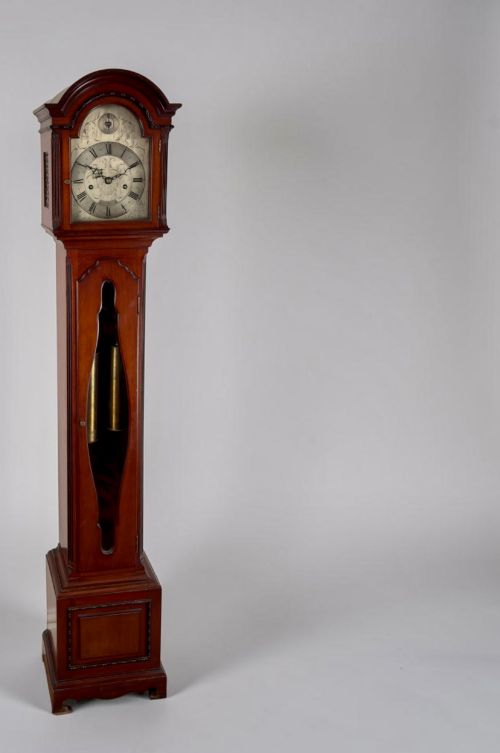
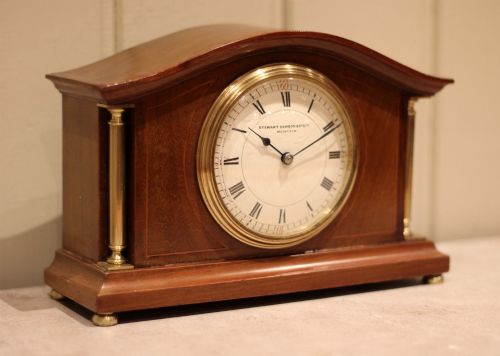
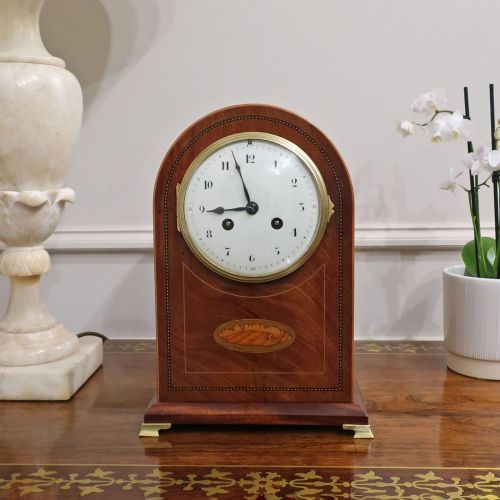
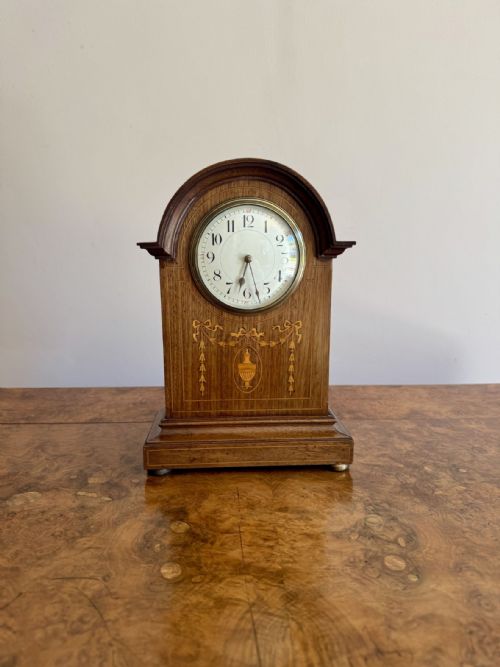
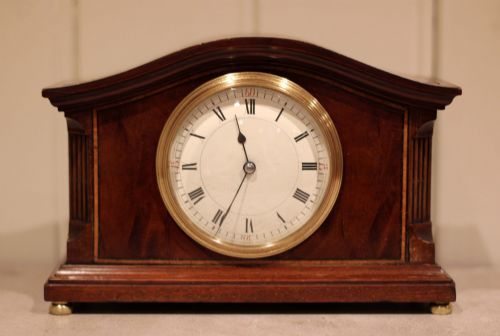
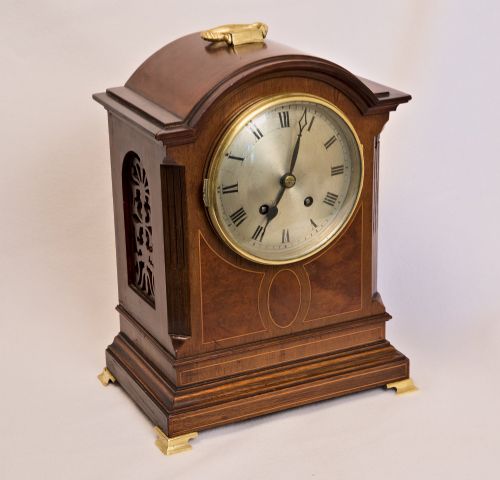
An edwardian arch top clock is typically a mantel timekeeper featuring a rounded upper profile that defines its silhouette. These domestic timepieces appear most frequently in polished mahogany and oak, often decorated with delicate marquetry or contrasting stringing.
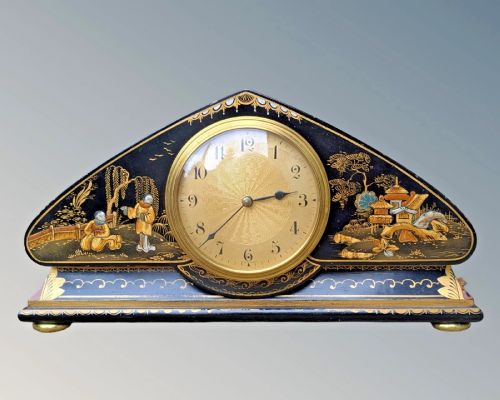
While the label points firmly to the Edwardian era, the selection includes related pieces spanning the late nineteenth century through to the early twentieth century. Most examples function as mantel clocks, sitting comfortably on shelves or sideboards with traditional dial faces protected behind flat or slightly convex glass.
Materials and Construction
Cabinet makers utilised dense hardwoods such as mahogany and oak as the foundational materials for these curved cases, frequently adding satinwood or lighter stringing for visual contrast. Brass components, including bezel rings, feet, and carrying handles, provide functional metallic accents against the dark timber surfaces.
Clockmakers housed mechanical brass movements within these wooden shells, incorporating enamelled dials for clear legibility of the hours. Intricate joinery secured the distinct arched profile of the top without relying on modern adhesives.
Listings feature mahogany, oak, and walnut timber cases paired with brass, glass, and enamel components.
Assessing Craftsmanship
The standard of timber selection and inlay work marks the primary division between ordinary pieces and superior examples. Fine execution shows crisp marquetry, tight grain matching, and substantial brass mounts rather than stamped substitutes.
Movement sophistication also dictates tier, with quarter-chiming mechanisms and named makers representing a higher grade of horological achievement than standard timepieces. The crispness of the enamel dial and the weight of the brass components further distinguish superior workshops.
Gillett And Johnston·Winterhalder And Hofmeier
The Edwardian Arch Top Clock Glossary
- Arch top
- A case design featuring a rounded or curved upper section above a rectangular body. This shape draws directly from architectural traditions popular during the Edwardian period.
- Timepiece
- A clock that indicates the time of day without striking bells or gongs. These movements focus purely on the escapement and gear train for timekeeping.
- Inlay
- Decorative pieces of contrasting wood or shell fitted into depressions within the primary wood surface. Satinwood is frequently used for this purpose on dark mahogany cases.
- Fusee
- A conical pulley designed to equalise the driving force of the mainspring as it unwinds. This mechanism helps the clock maintain steady accuracy throughout its running period.
- Mantel clock
- A portable domestic clock designed to sit on a fireplace mantelpiece or small shelf. They rely on flat bases for stability.
Edwardian Arch Top Clock: Frequently Asked Questions
How do I wind an edwardian arch top clock?
Most mechanical versions require a key inserted into specific winding holes on the dial face to tension the internal springs. Care must be taken not to overwind the mechanism.
Consulting the specific movement layout helps determine the correct frequency for winding, whether daily or weekly depending on the gear train.
Where should I place a mantel clock?
These clocks sit best on level surfaces such as mantelpieces, sideboards, or dedicated brackets attached to sturdy walls. Stability ensures the pendulum or balance wheel maintains an even beat.
Avoid areas subject to excessive vibrations or direct dampness to preserve the integrity of the wooden case and brass movement.
What is a quarter chiming movement?
A quarter chiming mechanism plays musical notes or chime sequences at every quarter hour, followed by the full hour strike. This adds an audible dimension to the timekeeping.
Such movements require additional spring power and intricate internal gear arrangements compared to simple timepieces.
How do I identify an Edwardian period piece?
Examination of the wood, inlay styles, and dial construction helps date the object to the early twentieth century or surrounding decades. Cabinet proportions during this time favoured refined classical revival motifs.
Maker signatures on the dial or movement backplate provide definitive confirmation of the production period.