


Edwardian 9ct Gold Brooch
When you handle an edwardian 9ct gold brooch, you hold a tangible piece of early twentieth-century lapidary design that combines accessible precious metal with delicate gemwork.
Edwardian 9ct Gold Brooch
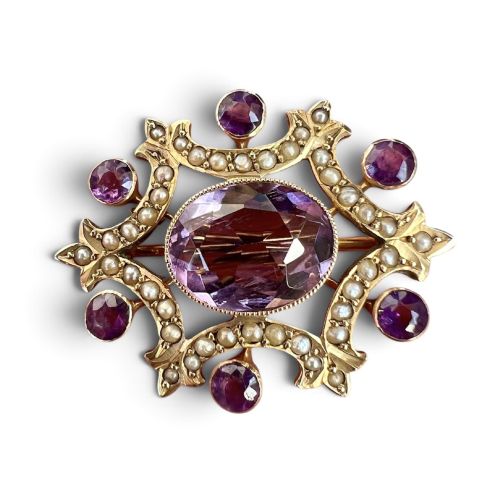
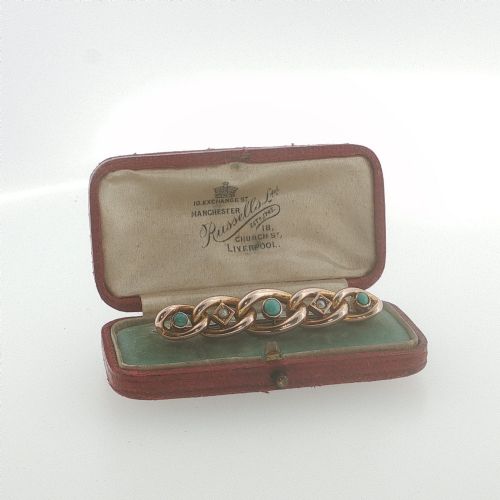
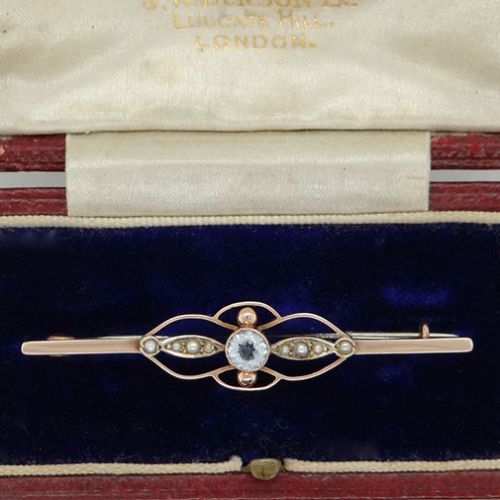
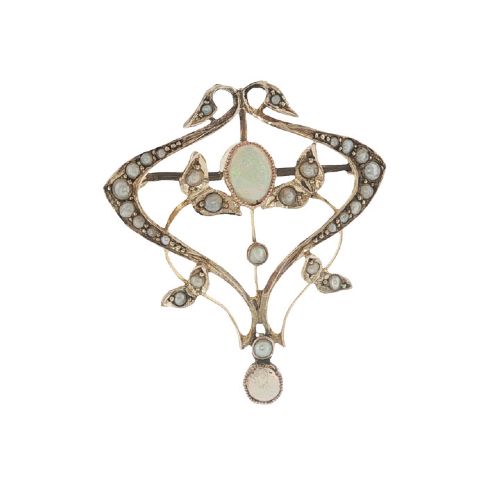
An edwardian 9ct gold brooch represents a distinct era of accessory design, most frequently encountered in floral, crescent, and bar configurations set with seed pearls and coloured stones. These pieces served as decorative bodice fastenings, lapel ornaments, and versatile convertible pendants during the early decades of the twentieth century. The inventory spans straightforward bar designs to intricate target and cluster motifs drawing on Victorian and Art Nouveau aesthetic traditions.
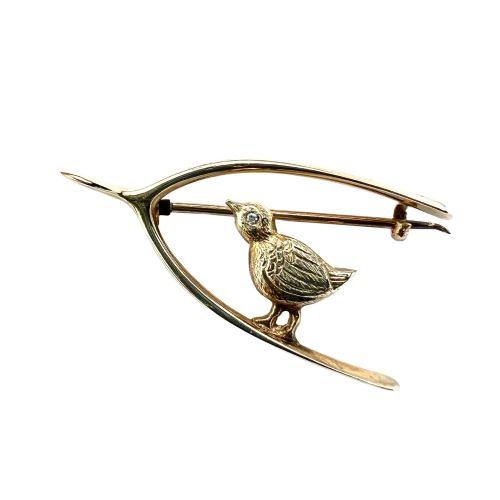
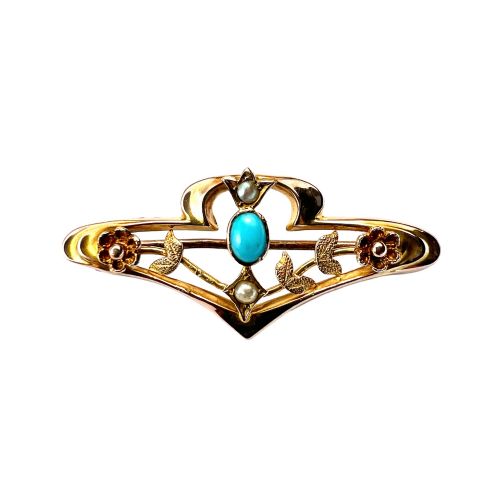
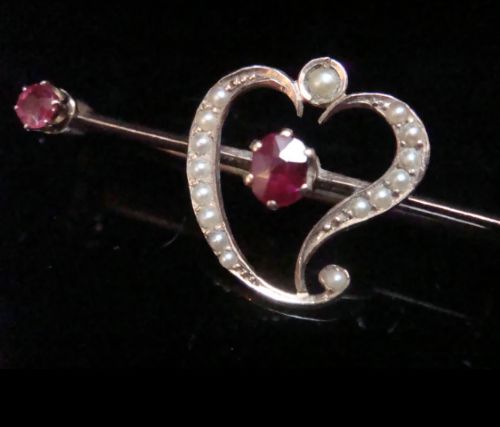
The materials paired with the gold define the visual language of these items, integrating amethysts, peridots, turquoise, and aquamarines alongside clustered seed pearls and small diamonds. Many examples incorporate figurative motifs such as insects, hearts, and lucky symbols reflecting the sentimental tastes of the period. Collectors encounter both yellow and rose 9ct gold alloy variations, occasionally bearing hallmarks from regional assay offices such as Chester and Edinburgh.
Materials and Construction
The structural framework of these items relies on 9ct gold, utilised in yellow, rose, and occasionally white alloy variations to shape delicate frames, bezels, and pin stems. Goldsmiths employed casting, wire-drawing, and sheet-metal fabrication to construct lightweight yet durable mounts capable of supporting stones without excessive weight on delicate fabrics.
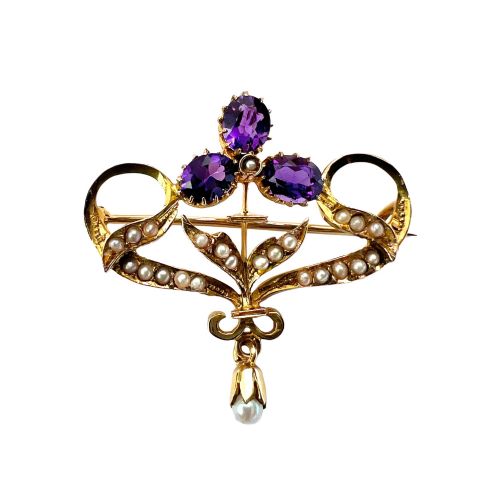
Gemstone setting techniques typical of the era include grain setting for seed pearls, claw settings for larger faceted stones such as amethysts and peridots, and closed-back foil linings in specific antique configurations. Fine metalwork details such as millegrain edges, twisted wire borders, and hand-engraved motifs frequently accent the primary settings.
Listings feature 9ct gold alongside seed pearls, amethysts, peridots, turquoise, and diamonds arranged in Edwardian, Art Nouveau, and Victorian styles.
Assessing Quality
Quality in these pieces rests primarily on the crispness of the metalwork execution and the matching of the incorporated gemstones. Superior examples demonstrate secure, even stone settings with well-matched seed pearls and clean solder joints that remain inconspicuous under magnification.
The artistry of the design itself separates standard production pieces from exceptional items, particularly where figurative motifs like insects or complex crescent clusters display superior anatomical proportion and delicate hand-chasing. Intact original pin mechanisms and clear assay or maker marks further distinguish the upper tier of survivals.
Murrle Bennett·R Pernice
The Edwardian 9ct Gold Brooch Glossary
- Seed Pearl
- A very small, naturally formed or cultured pearl used in clusters or borders. These tiny pearls are drilled and threaded or pegged onto fine metal posts.
- Bar Brooch
- A horizontal pin featuring a central decorative element mounted on a narrow metal bar. This linear format was exceptionally popular throughout the Edwardian period.
- Millegrain
- A decorative technique involving a row of tiny raised metal beads along the edge of a setting. This method softens the metallic border and adds textural detail.
- Crescent Brooch
- A curved ornament shaped like a waxing or waning moon, frequently set with graduated stones. The form symbolised growth and new beginnings in period jewellery.
- Target Brooch
- A circular piece featuring concentric rings of different gemstones or contrasting metalwork surrounding a central stone. The design draws the eye inward toward the focal point.
Edwardian 9ct Gold Brooch: Frequently Asked Questions
How do I wear an antique brooch today?
These pieces pin securely onto jacket lapels, heavy knit scarves, or the collars of structured blouses. Many versions also include concealed loops at the rear, allowing them to hang from a chain as a pendant.
When attaching the pin to modern garments, ensure the fabric is robust enough to support the weight without pulling. Using a backing disc or placing the pin through a reinforced seam provides extra stability.
Were these brooches used as pendants too?
Numerous examples from this period feature small hinged loops or removable bails integrated into the reverse side. This dual functionality allowed the owner to transition the piece from a lapel ornament to a neckchain pendant.
Examining the back of the piece reveals whether a small fold-down loop or fixed ring was included in the original design. This versatility was a practical feature of Edwardian accessory manufacturing.
What is 9ct gold?
An alloy consisting of 37.5 percent pure gold combined with base metals such as silver, copper, and sometimes zinc. This lower gold purity provided a harder, more durable material suitable for delicate, intricate settings.
The inclusion of different base metals accounts for the distinct yellow and rose colour variations found across the inventory. It offers a warm metallic tone while maintaining structural rigidity for fine pin stems.
How can I tell an Edwardian brooch from a Victorian one?
Edwardian pieces generally favour lighter, airier metalwork with whiter stones, pastel gems like peridot and amethyst, and delicate platinum-topped gold or yellow gold. Victorian designs often appear heavier, incorporating darker garnets, jet, or dense cluster formations with substantial gold bezels.
Motifs also offer clues, as Edwardian items frequently feature garlands, ribbons, crescent moons, and insects rendered with naturalistic grace. Hallmarks and date letters stamped on the reverse provide definitive confirmation of the production year.