
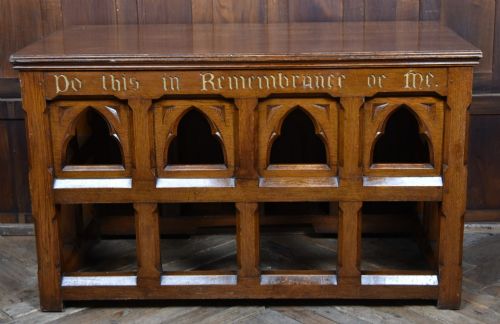
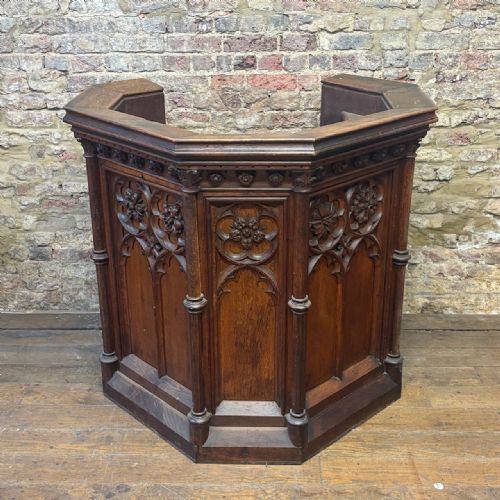
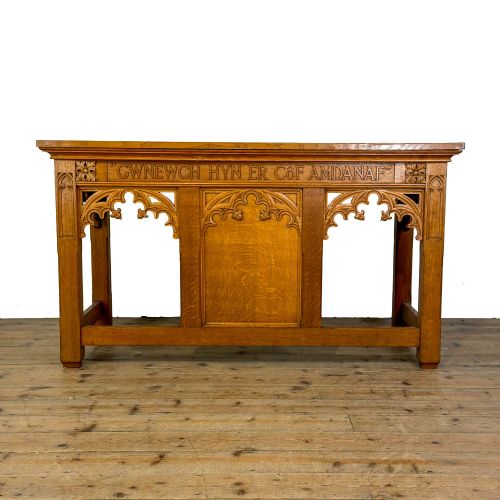
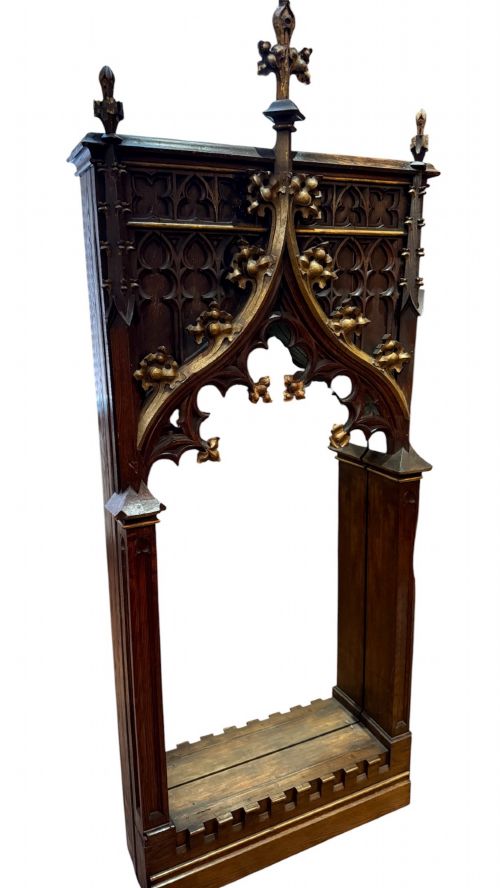


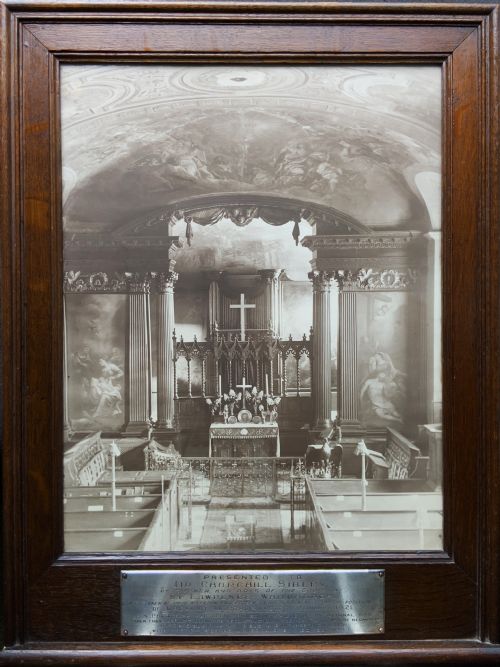


Ecclesiastical Oak Altar
An ecclesiastical oak altar brings solemn architectural presence and rich ritual history directly into domestic or sacred interiors.
Ecclesiastical Oak Altar
When you search for an ecclesiastical oak altar, you encounter robust liturgical furnishings, chapel tables, and related church woodwork produced across several centuries. These pieces carry the heavy architectural presence of places of worship into domestic or specialised interiors.
You are most likely to meet Victorian Gothic Revival examples and solid oak tables dating from the nineteenth and early twentieth centuries on this page. Alongside full altars, the selection includes pulpits, carved panels, and devotional mirrors sharing the same ecclesiastical lineage.
The materials and forms reflect centuries of religious craftsmanship, ranging from pre-sixteenth century medieval carvings to 1930s chapel furniture. Every piece demonstrates the enduring utility and solemnity of heavy oak timber shaped for sacred use.
How they were made
Makers built these pieces primarily from solid oak, often employing thick timber boards joined to withstand heavy use and centuries of movement. Carved wood details, including Gothic tracery and figurative reliefs, were shaped by hand using traditional chisels and gouges.
Surfaces frequently show the application of paint, gilded wood, or simple wax finishes to highlight the deep grain of the oak. Structural joins rely on traditional pegged mortise and tenon construction, ensuring the tables and altars remained rigid and enduring.
Listings span from pre-sixteenth century medieval carvings to 1930s chapel pieces, united by the dominant use of solid oak and Gothic Revival styles.
What varies in quality
The integrity of the timber and the retention of original surface treatments dictate the overall character of the piece. Surviving gilding, early paint layers, and unaltered structural joinery command greater appreciation than heavily restored or stripped surfaces.
The Ecclesiastical Oak Altar Glossary
- Gothic Revival
- An architectural and decorative style drawing inspiration from medieval forms, prominent in nineteenth-century church furnishings. This aesthetic emphasises pointed arches, heavy tracery, and vertical proportions.
- Solid Oak
- A heavy, durable hardwood utilised extensively for traditional church furniture and structural joinery. It resists warping well when properly seasoned and accepts deep hand carving.
- Gilded Wood
- Timber surfaces coated with a thin layer of gold leaf or metallic powder to create a reflective finish. This technique highlights carved details and adds luminosity to sacred interiors.
- Mediaeval Gothic
- The historical style prevailing before the sixteenth century, characterised by pointed structural elements and solemn religious iconography. Surviving woodwork from this era is exceptionally scarce and heavily studied.
- Altar Table
- A raised structure used for sacred rites, constructed with a sturdy top and supportive legs or panels. In domestic settings, these function as substantial side tables or console surfaces.
Ecclesiastical Oak Altar: Frequently Asked Questions
What is an ecclesiastical oak altar?
An ecclesiastical oak altar is a heavy, ritual table or architectural furnishing originally designed for use in a church, chapel, or cathedral. These pieces are constructed from durable oak and often feature traditional religious carvings and Gothic Revival motifs.
Today, they serve as striking architectural statements or sturdy serving tables in large residential spaces. Their substantial presence anchors a room with centuries of historical weight and craftsmanship.
How do I date an oak altar?
Dating relies on examining the construction methods, tool marks, and stylistic indicators present in the woodwork. Pieces displaying medieval or pre-sixteenth-century characteristics show hand-riven timbers and early joinery techniques, while nineteenth-century Victorian Gothic examples often exhibit machine-assisted preparation combined with hand finishing.
Comparing the specific Gothic Revival or Renaissance motifs against known architectural timelines helps narrow the period of origin. Original surface treatments and hardware also provide reliable clues to the exact era of manufacture.
Can I use a church altar at home?
Many people repurpose church altars and chapel tables as large console tables, sideboards, or central display surfaces in spacious rooms. Their generous proportions and robust construction make them remarkably practical for modern domestic interiors.
Placing such a piece in a home introduces a distinct sense of history and architectural gravity. Proper placement ensures the heavy timber and intricate carvings remain visible and appreciated.
What styles are common in church woodwork?
Gothic Revival and Victorian Gothic dominate nineteenth-century church furnishings, featuring pointed arches, quatrefoils, and ecclesiastical tracery. Earlier pieces often display robust Mediaeval Gothic or Renaissance characteristics with deep, figurative relief carvings.
These styles reflect the theological and aesthetic priorities of their respective periods. Understanding the stylistic vocabulary helps distinguish between nineteenth-century revival pieces and genuine medieval survivals.