
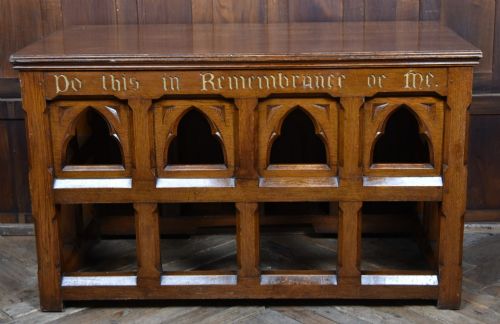
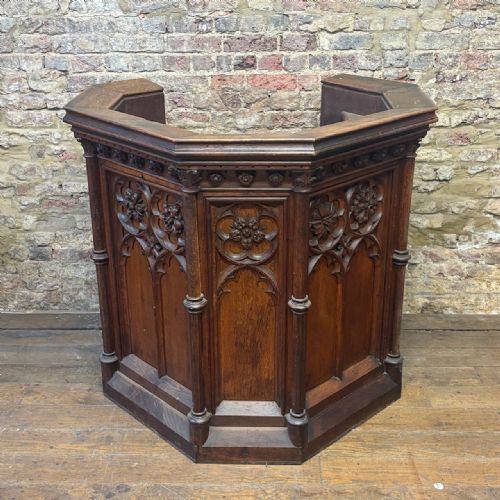
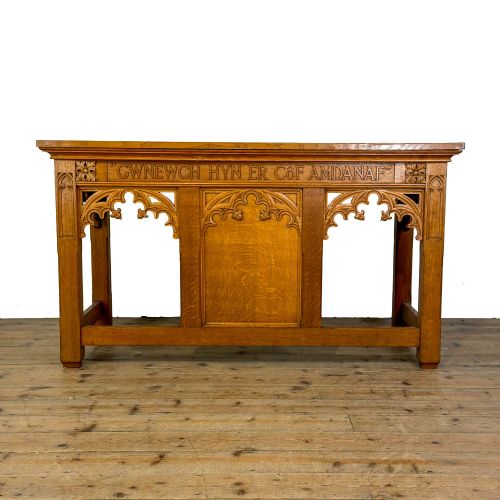
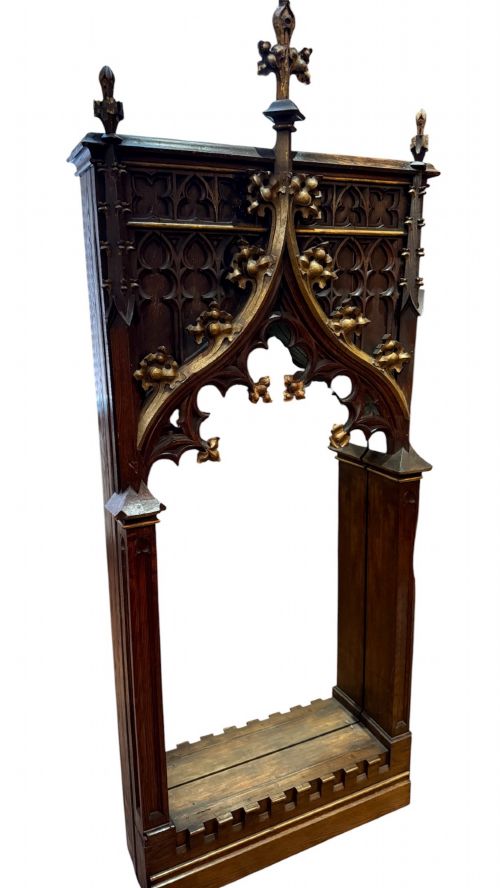
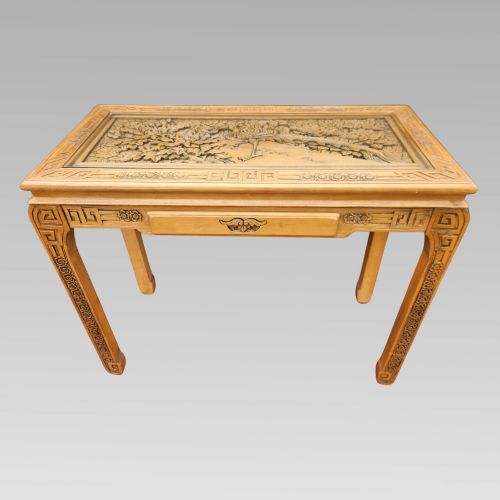


Antique Carved Oak Altar
These antique carved oak altars and related Gothic pieces bring centuries of solemn craft and timber grain straight into a room.
Antique Carved Oak Altar
An antique carved oak altar brings substantial ecclesiastical presence into a domestic setting, drawing on centuries of church architecture and religious devotion. When you search for an antique carved oak altar, you encounter heavy timber furniture and architectural elements spanning from pre-sixteenth century fragments to Victorian revivals.
The selection here includes solid altar tables, pulpits, console tables, and carved panels alongside mirrors and candlesticks. Pieces range from mediaeval European carvings and sixteenth-century panels to nineteenth-century Gothic revival and Welsh chapel pieces.
Most examples lean heavily into Gothic, mediaeval, and Jacobean revival idioms, showing deep hand-chiselled details and sturdy timber construction. These objects served sacred functions in chapels and churches before finding new life in domestic interiors.
Materials and construction methods
These pieces rely entirely on solid oak, selected for its strength and grain, shaped with traditional hand-carving techniques. Craftsmen carved deep relief panels, tracery, and figures directly into the dense timber.
Secondary elements incorporate metal, brass, and gilded wood accents, particularly on candlesticks, lamps, and structural fittings. Paint and natural wax finishes protect the wood while highlighting decades of handling and patination.
The listings here span from pre-sixteenth century wood carvings up to nineteen-thirties chapel furniture, using oak, brass, and gilded wood.
Assessing quality in carved oak
Quality rests in the crispness and depth of the hand-carving, distinguishing spirited workshop execution from flat or mechanical reproduction work. Deeply undercut figures and sharp tracery indicate skilled hand labour by proficient carvers.
The integrity of the timber and the honesty of the construction dictate the overall stature of a piece. Older structural elements retaining their original joinery and surface patination hold greater archaeological and aesthetic weight.
The Antique Carved Oak Altar Glossary
- Altar table
- A heavy wooden table designed for sacred rituals, often featuring carved friezes and sturdy legs suitable for ecclesiastical use.
- Gothic Revival
- An architectural and design movement from the eighteenth and nineteenth centuries that revived mediaeval pointed arches, tracery, and heavy carved woodwork.
- Barley twist
- A spiral turning technique shaped into wooden table legs, candlesticks, or furniture supports, popular in seventeenth-century and later revival furniture.
- Tracery
- Openwork ornamentation in stone or wood, commonly featuring intersecting ribs or geometric patterns associated with Gothic windows and panels.
- Patina
- The surface sheen and mellowing of colour acquired by oak timber through age, handling, and wax polishing over many decades.
Antique Carved Oak Altar: Frequently Asked Questions
How do I place an altar table at home?
An antique carved oak altar table works best against a plain wall in a hallway, dining room, or living space where its proportions can breathe.
Keep heavy direct sunlight away from the timber and maintain stable indoor humidity to protect the dry oak.
What is the difference between mediaeval and revival pieces?
Pre-sixteenth century and sixteenth-century pieces display authentic early hand tools, wear patterns, and construction methods tied to active religious use.
Nineteenth-century Gothic revival items consciously copied those older forms with machinery and period pattern books while retaining traditional carving styles.
How should I clean carved oak surfaces?
Dust the deep carvings regularly using a soft-bristled brush or a dry cloth to prevent dirt accumulation in the recesses.
Apply a microcrystalline wax sparingly if the timber looks dry, avoiding modern silicones or wet polishes entirely.
Are these pieces from actual churches?
Many items originated in European churches, Welsh chapels, and ecclesiastical workshops before being repurposed for private collections.
Objects range from structural pulpits and altars to mirrors and candlesticks adapted from church fittings.