


Church Communion Altar
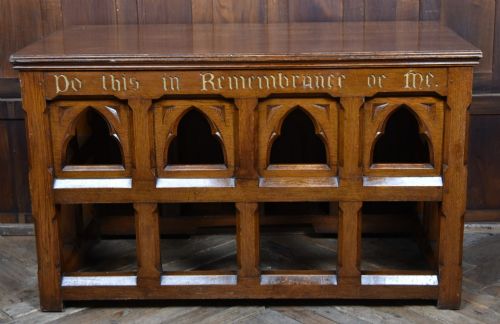
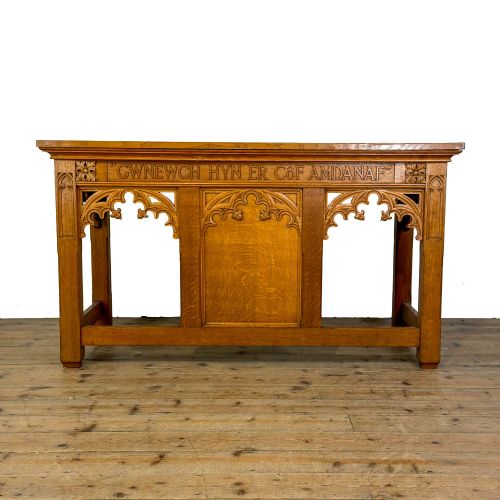
These church communion altar pieces offer solid oak construction and rich gothic revival detailing for devotional and interior spaces.
Church Communion Altar
A church communion altar encompasses robust tables and ecclesiastical metalware designed for sacred services. These items bring substantial character to a room, functioning as striking centrepieces or serving surfaces.
The pieces on this page span the nineteenth century and the early twentieth century, showing strong Victorian and Gothic Revival influences. Oak and pitch pine form the structural tables, while silver plate and brass comprise the smaller vessels.
Buyers encounter heavy wooden altar tables alongside silver plated communion chalices and sets. This mix reflects the practical requirements of period chapel and church interiors.
How they were made
Woodworkers utilised solid oak and pitch pine to build heavy ecclesiastical tables designed to endure decades of regular use. Joinery techniques from the period prioritised structural strength and permanence.
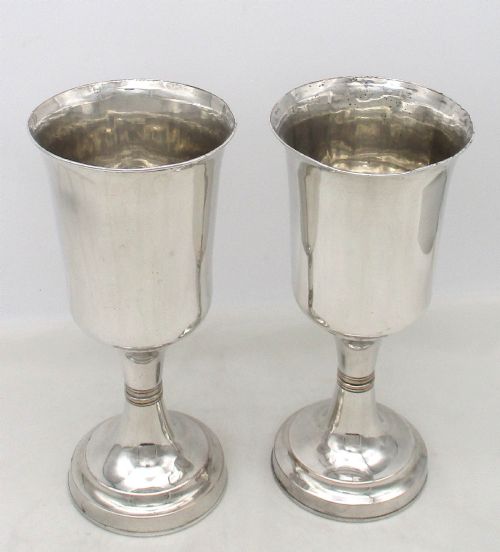
Metalworkers shaped brass and silver plate to create communion chalices and ciborium vessels with lasting durability. Surface treatments included gold gilding to enhance the liturgical metalware.
Listings span the nineteenth century and the early twentieth century, featuring solid oak, pitch pine, silver plate, and brass.
What varies in quality
Quality rests upon the weight of the timber and the precision of the Gothic Revival carving. Simple pitch pine items differ significantly from substantial solid oak tables showing detailed architectural tracery.
Metalware quality depends on the thickness of the silver plate over the base metal and the crispness of the chased decoration. Stamped maker marks from established firms indicate higher workshop standards.
Elkington Mason
The Church Communion Altar Glossary
- Gothic Revival
- An architectural and decorative style drawing inspiration from medieval forms. This aesthetic dominates the pointed arches and tracery found on these tables and metal vessels.
- Ciborium
- A covered container used in churches to hold consecrated communion bread. These vessels typically feature heavy brass or silver plated construction.
- Pitch Pine
- A dense resinous softwood utilised for ecclesiastical furniture during the nineteenth century. It provides a durable alternative to oak while taking a deep finish.
- Silver Plate
- A layer of silver bonded to a base metal such as copper or brass. This technique allowed makers to produce impressive church vessels without solid silver costs.
- Chalice
- A stemmed drinking cup used during communion services. These items appear in brass and silver plate across the nineteenth century listings.
Church Communion Altar: Frequently Asked Questions
What is a church communion altar table?
A church communion altar table is a heavy wooden furnishing built for use in chapels and religious services. These pieces often feature Gothic Revival details such as pointed arches and solid oak construction.
Today, buyers frequently utilise these sturdy tables as architectural console tables or striking centrepieces in domestic interiors.
How old are these church pieces?
The items listed here date primarily from the nineteenth century through to the early decades of the twentieth century. This era encompasses the Victorian period and the height of the Gothic Revival movement.
Construction methods and material choices clearly reflect the manufacturing standards of these Victorian and Edwardian decades.
What materials were used for communion vessels?
Communion vessels from this era were typically manufactured from brass or copper with silver plating applied to the surface. Some finer examples incorporated gold gilding to highlight specific decorative elements.
These metals provided the necessary durability for regular handling during ecclesiastical services while maintaining a bright appearance.