


Ebonised Work Table
An ebonised work table is a dark-finished piece of furniture designed for needlework and small crafts, bringing refined nineteenth-century elegance to a room.
Ebonised Work Table
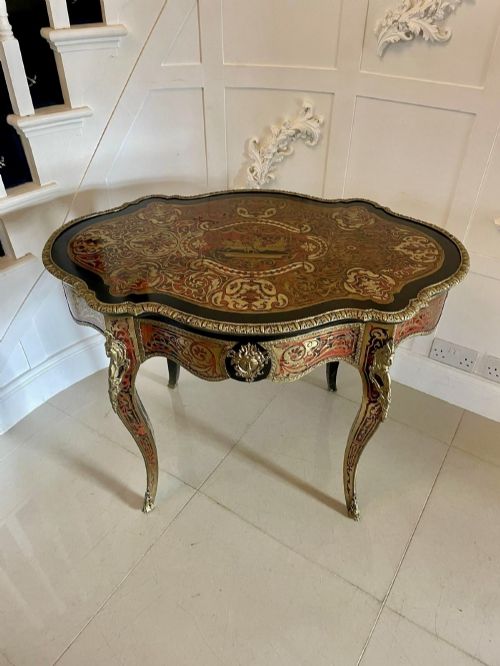
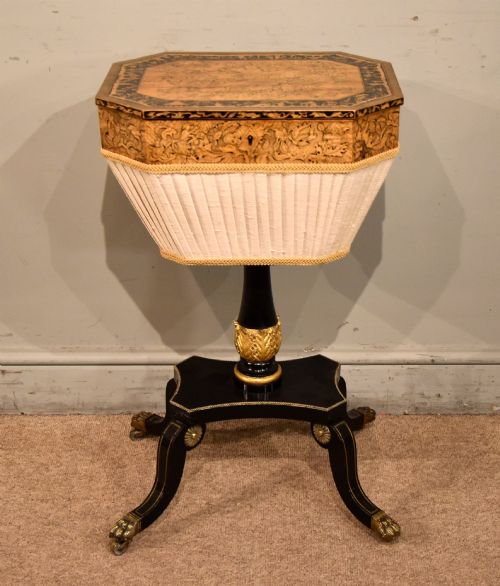
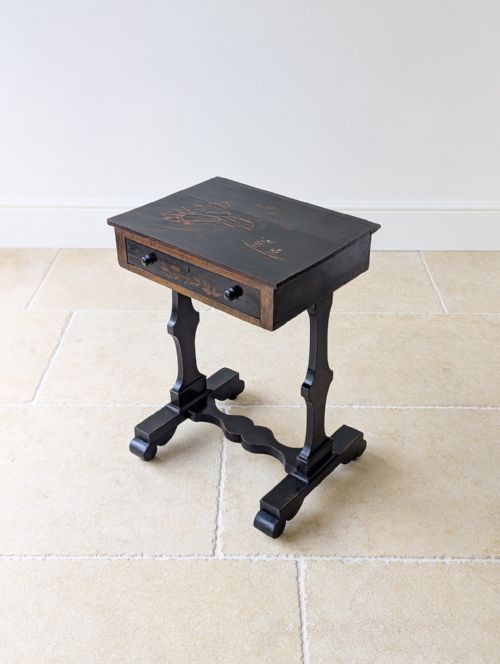
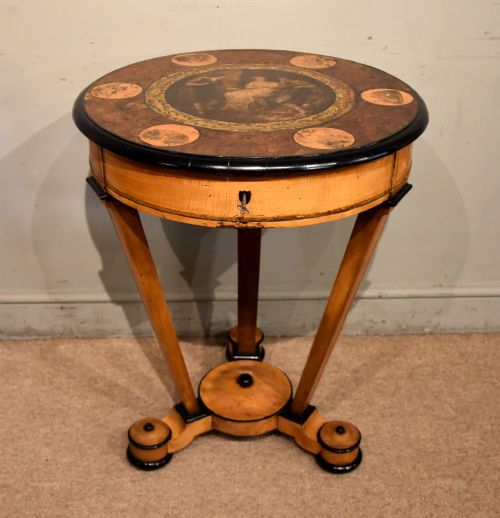
When searching for an ebonised work table, buyers encounter nineteenth-century pieces spanning Regency, Victorian, and Napoleon III periods. These items frequently combine utilitarian sewing compartments with decorative surfaces suited for display.
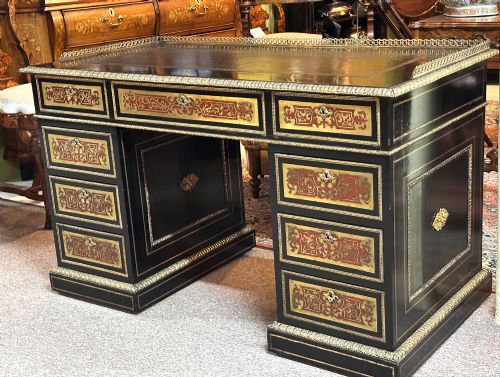
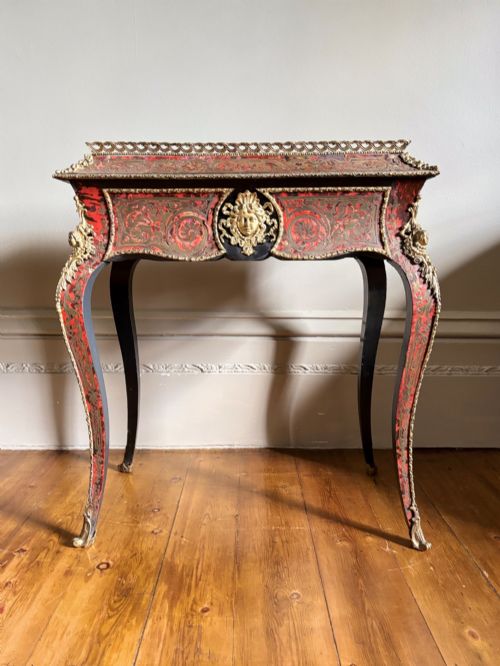
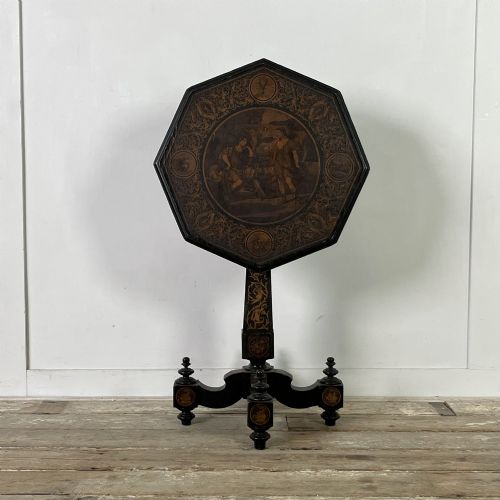
The selections range from penwork sewing tables and games tables to intricate Boulle-work examples and French or Biedermeier writing furniture. Such tables often integrate hinged lids, fitted interiors, and compartments originally intended for thread, needles, and small personal items.
Assessing Quality
Quality rests upon the precision of the ebonised finish and the intricacy of any inlaid brass, tortoiseshell, or penwork detailing. Finer examples display crisp, well-defined motifs and carefully fitted internal compartments.
Structural integrity of the joints, the condition of the decorative surface, and the retention of original mounts separate standard production from superior pieces.
Black Forest musical tables tucked away among the inventory played tunes while the sewing happened.
Maison Millet·Trussant & Cie·Quincy Showcase Works
The Ebonised Work Table Glossary
- Ebonised
- Wood treated with a dark stain or paint to resemble natural ebony. This finish was widely favored in nineteenth-century cabinetmaking for dramatic contrast.
- Boulle work
- Marquetry technique utilising brass and tortoiseshell inlaid in intricate patterns. It adorns many French Napoleon III and nineteenth-century pieces.
- Penwork
- Decorative surface technique using ink applied with a pen to create fine line drawings. This appears on several Regency period tables.
- Poudreuse
- A combination dressing and writing table featuring a folding top and compartments. Examples from the nineteenth century often double as work tables.
- Ormolu
- Gilded bronze mounts applied to furniture for decorative effect. These metal accents highlight the corners and legs of fine tables.
Ebonised Work Table: Frequently Asked Questions
What is an ebonised work table used for?
These tables served primarily for needlework, sewing, and light writing tasks in nineteenth-century drawing rooms. The hinged tops lifted to reveal fitted compartments for threads, needles, and small accessories.
Today, they function well as decorative side tables or occasional tables in living spaces, offering surface area alongside enclosed storage.
How do I identify a Regency ebonised work table?
Regency pieces often feature delicate penwork decoration, tripod bases, or restrained classical proportions. The materials commonly include ebonised wood contrasted with fine ink drawings or brass stringing.
Checking the construction methods and hardware helps confirm the early nineteenth-century origin of the piece.
What is Boulle work on these tables?
Boulle work is a precise marquetry technique involving inlaid brass and tortoiseshell, named after the French cabinetmaker André-Charles Boulle. It creates elaborate, shimmering surface patterns across the top and sides.
This technique appears frequently on French Napoleon III tables found within the nineteenth-century selections.
How should I care for an ebonised and polished table?
Keep the wood away from direct sunlight and extreme temperature fluctuations to prevent the ebonised finish and inlay from cracking. Dust gently with a dry, soft cloth and avoid chemical polishes.
Wax can be applied sparingly if the finish requires nourishment, following the specific grain of the wood.