
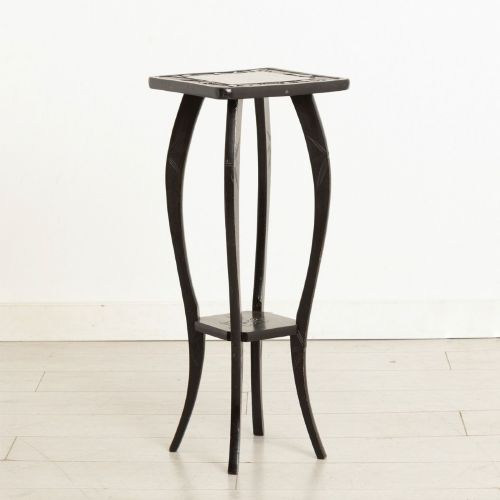
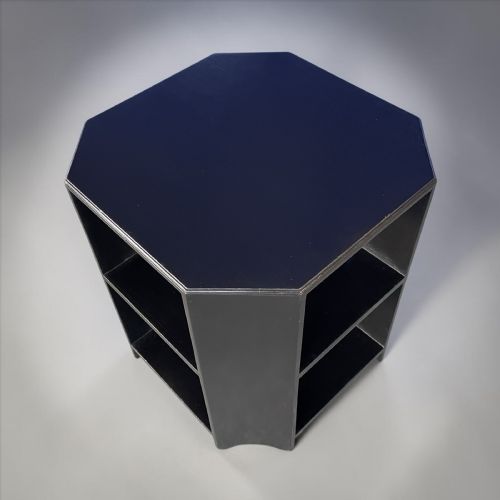


Ebonised Wooden Pedestal
An ebonised wooden pedestal brings dark, dramatic weight to a corner, elevating sculptures and plants with architectural presence.
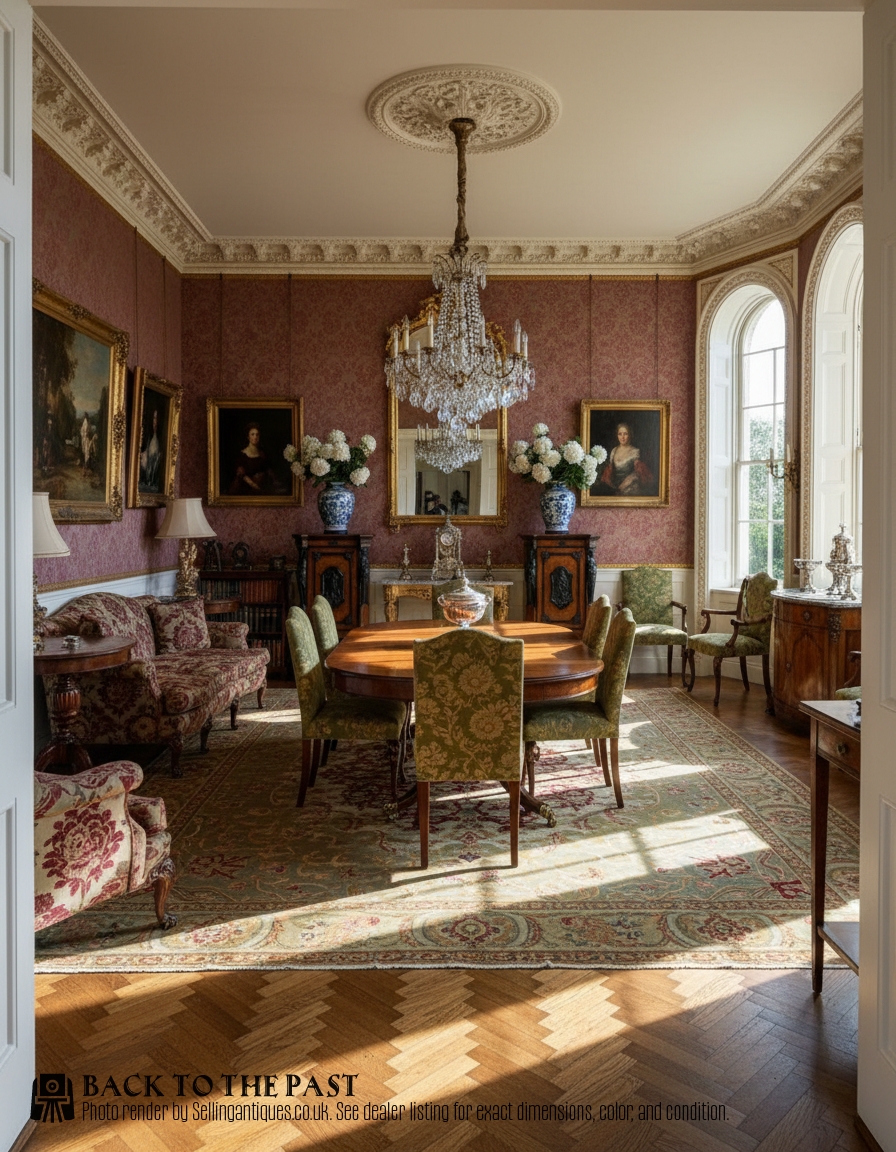
Ebonised Wooden Pedestal
An ebonised wooden pedestal is a sturdy support designed to hold lamps, vases, and figures, appearing frequently across Victorian and nineteenth-century pieces.
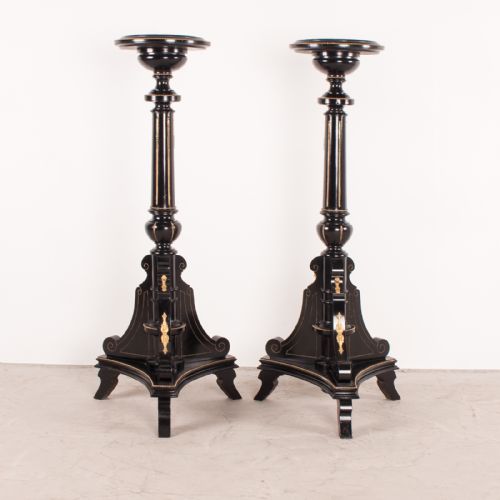
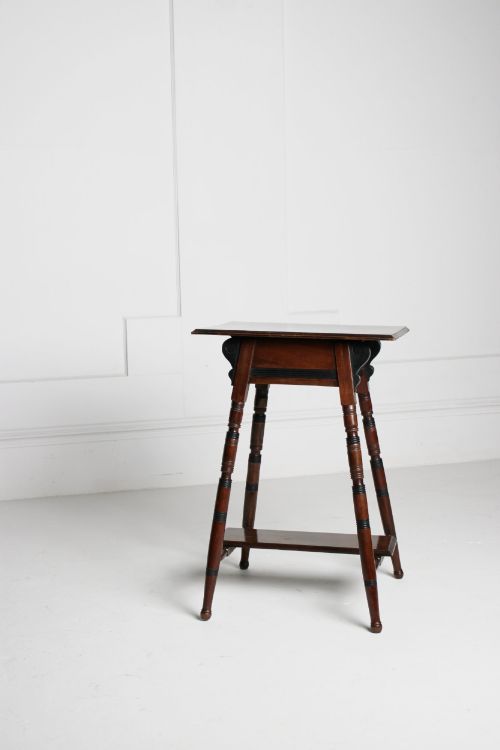
The selections on this page range from classical torcheres and plant stands to elaborate Aesthetic Movement columns and occasional display pillars.
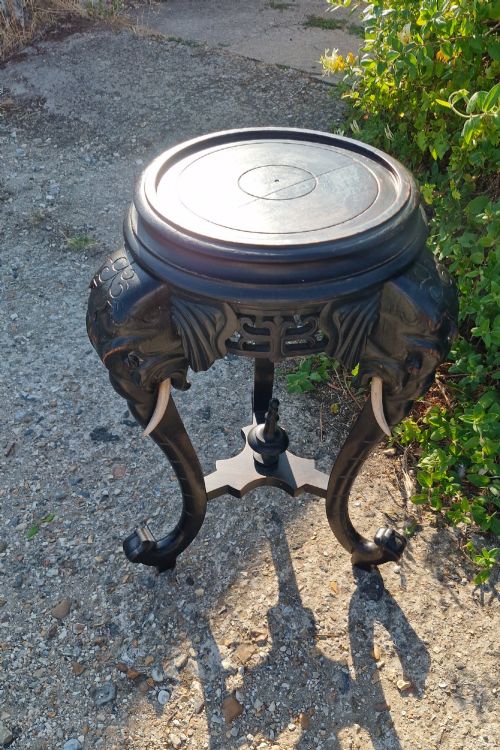
Makers often drew upon diverse global influences, resulting in forms that span from Japanese-inspired plant stands to Venetian blackamoor figures.
Materials and construction
Craftsmen utilised hardwoods, alder root, walnut, and mahogany, applying a deep black ebonised finish to mimic costly ebony.
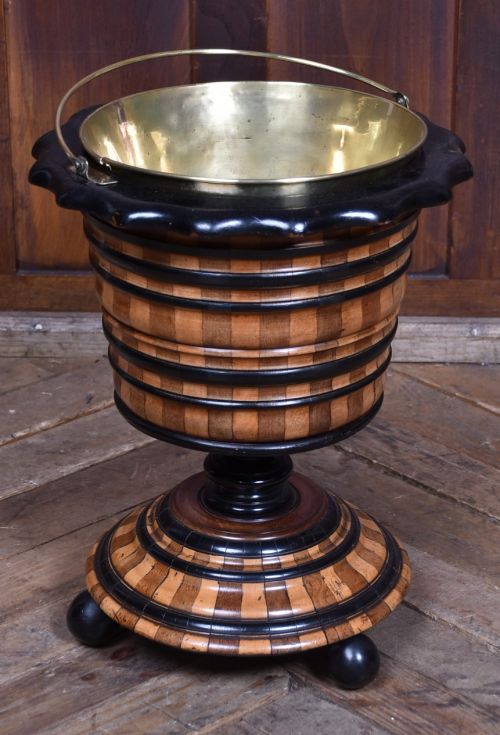
Many examples incorporate contrasting accents of burr walnut, amboyna, or polished brass liners and hand-carved decorative motifs.
Materials recorded across the inventory include ebonised wood, burr walnut, brass, mahogany, and carved hardwoods.
Evaluating craftsmanship and detail
Quality rests upon the crispness of the hand-carved ornamentation and the depth of the dark ebonised finish across the timber.
Superior examples reveal meticulous joinery and balanced proportions, whether shaped as a simple classical column or a complex figural torchere.
Druce & Co London·Liberty of London·Gillow & Co.
The Ebonised Wooden Pedestal Glossary
- Ebonisation
- The chemical or staining process used to darken light hardwoods so they resemble solid ebony.
- Torchere
- A tall, slender stand or candlestick holder originally designed to carry a light source.
- Aesthetic Movement
- A late nineteenth-century style prioritising visual beauty and artistic design over narrative content.
- Plinth
- The heavy base or lower block that supports a column, statue, or pedestal.
- Jardiniere
- An ornamental pot or stand specifically made to hold a large plant or floral arrangement.
Ebonised Wooden Pedestal: Frequently Asked Questions
What were ebonised wooden pedestals used for?
These tall supports served primarily to display decorative objects, heavy vases, and imported sculptures in nineteenth-century interiors.
They elevated lamps and plants to eye level, acting as focal points within reception rooms and hallways.
How do I style an ebonised pedestal at home?
Place a single tall torchere in an empty corner to add vertical line and contrast against lighter wall colours.
Top the stand with a simple ceramic bowl, a bronze figure, or a potted plant to balance the dark wood.
How do I distinguish Victorian pieces from earlier styles?
Victorian examples often display eclectic revival motifs, combining dark ebonised surfaces with burr walnut or carved figures.
Earlier eighteenth-century supports tend to rely on simpler architectural lines in mahogany or alder root.