


Ebonised Wood Desk
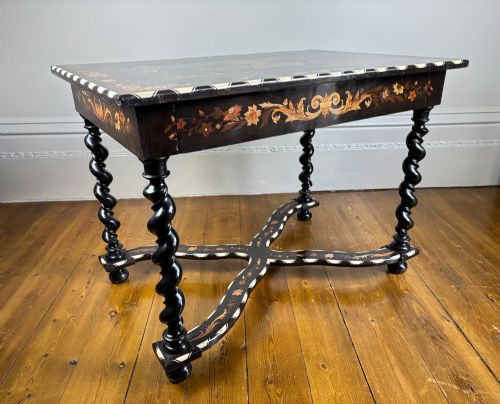
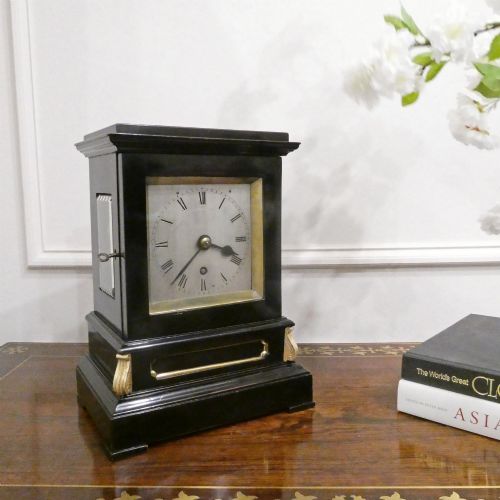
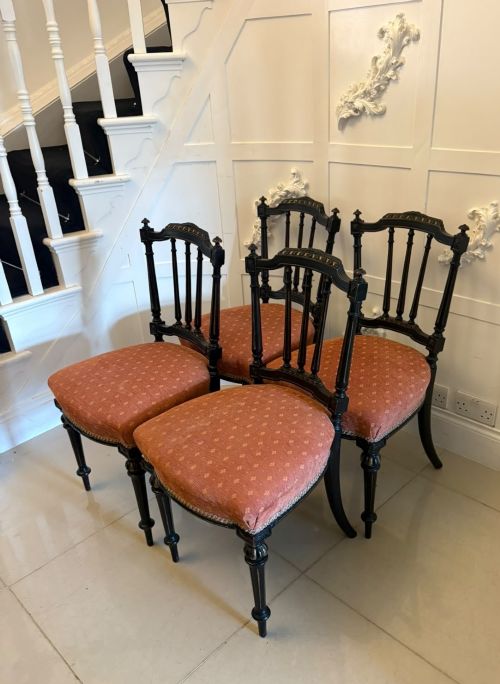
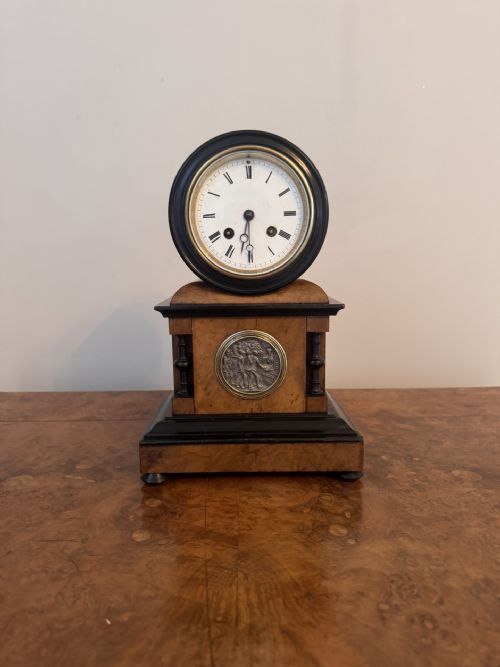
An ebonised wood desk carries the dark, polished surface and crisp lines favoured by Victorian and Regency makers.
Ebonised Wood Desk
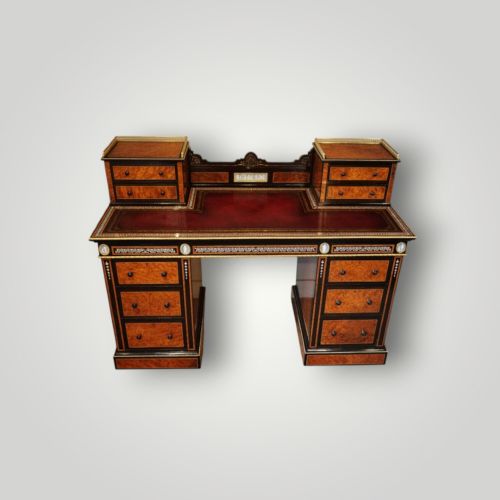
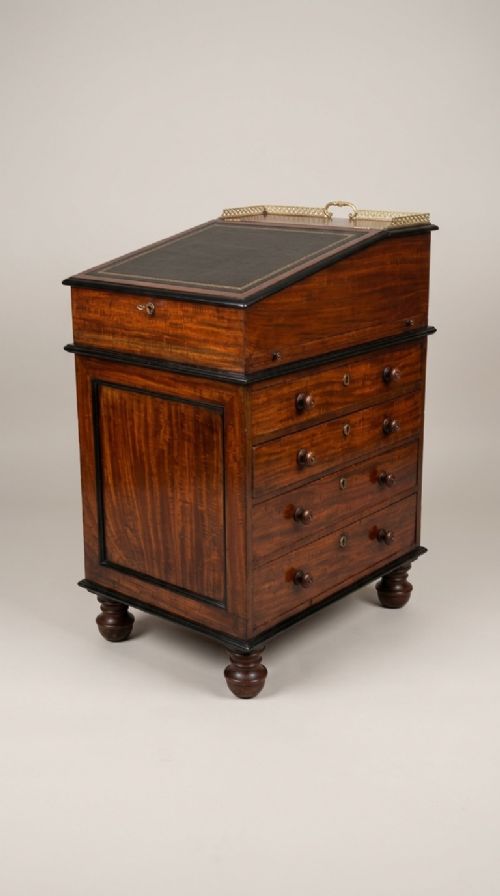
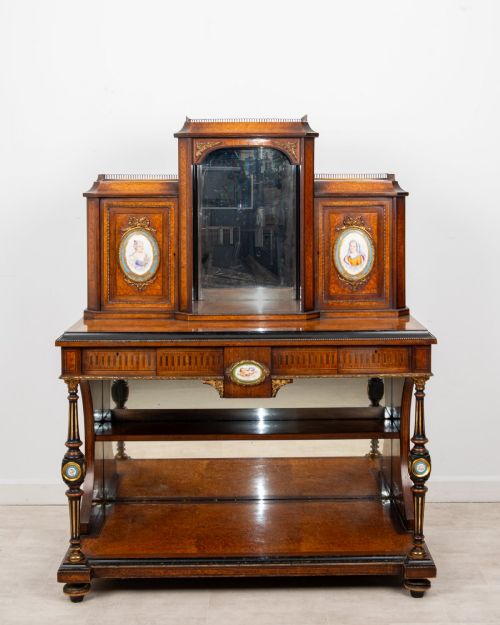
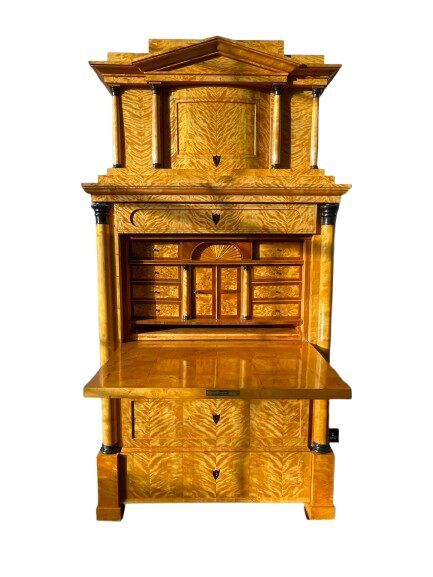
An ebonised wood desk appears primarily in nineteenth-century and Victorian iterations, bringing dark timber and formal presence to a study or library. Buyers seeking an ebonised wood desk commonly encounter pedestal forms, Davenport writing desks, and smaller bonheur du jour writing cabinets.
The materials paired with the blackened timber include amboyna, burr thuya, walnut, and contrasting brass or ivory inlay. Makers across the Victorian, Regency, and Aesthetic Movement periods utilised these dark finishes to imitate ebony and create striking contrast.
Materials and technique
Cabinet makers applied dark stains and polish to common hardwoods to achieve the appearance of solid ebony, often combining the ebonised finish with contrasting secondary woods like mahogany or birch. Marquetry, bone inlay, and porcelain plaques frequently decorate the surfaces.
Brass fittings, leather writing inserts, and parcel gilt highlights complete the construction, binding the structural timber with decorative metalwork and inset writing surfaces.
Listings feature nineteenth-century and Victorian ebonised wood desks alongside Davenport and pedestal forms paired with brass, leather, and porcelain.
Judging quality
The integrity of the internal drawers, the retention of original stencilled decoration, and the crispness of carved elements dictate the standing of individual examples within the broader range.
Jackson and Graham·Gillows·Collier and Plucknett·Morris and Co·Philip Webb·Callaghan and Co·Tiffany and Co·Malby
The Ebonised Wood Desk Glossary
- Ebonised
- Wood treated with stain or paint to imitate ebony. This process was widely adopted during the Victorian and Aesthetic Movement periods.
- Davenport
- A compact pedestal desk featuring a sloping, hinged writing surface and drawers opening to the side. It originated during the Regency period.
- Bonheur du jour
- A light lady's writing desk fitted with a small cabinet or shelves above the surface. These French-inspired pieces often incorporate porcelain plaques.
- Marquetry
- Decorative patterns formed by inserting pieces of wood, bone, or metal into a veneer. This technique creates elaborate surface ornamentation on tabletops and deskfronts.
- Parcel gilt
- Wood or metal partly decorated with gold leaf. This method highlights carved details and mouldings against an ebonised ground.
Ebonised Wood Desk: Frequently Asked Questions
How do I care for an ebonised wood desk?
Dust regularly with a dry, soft cloth and avoid placing the timber in direct sunlight or near heat sources, which can dry out the polished finish.
Condition the wood periodically with appropriate wax rather than silicone polishes to maintain the deep black lustre without building up residue.
Were these desks used for writing or display?
Most examples served practical writing functions, equipped with drawers for stationery, integrated inkwells, and inset leather writing surfaces.
Finer models with porcelain plaques and delicate parcel gilt work were equally intended to display social status in principal rooms.
How do I distinguish Victorian from Regency pieces?
Regency models tend to show restrained classical proportions with clean architectural lines, often in mahogany or amboyna with minimal ornamentation.
Victorian versions frequently embrace heavier proportions, denser ornamentation, and complex combinations of burr thuya, brass, and ebonised timber.
Is the black finish original paint or stain?
Cabinet makers typically used a chemical stain or pigmented polish applied to a close-grained hardwood rather than modern flat paint.
This technique allowed the natural grain of the underlying wood to remain faintly visible beneath the dark surface sheen.