



Ebonised Walnut Console
These ebonised walnut console pieces combine dark ebonised finishes with rich walnut grains, offering striking decorative presence for any interior.
Ebonised Walnut Console
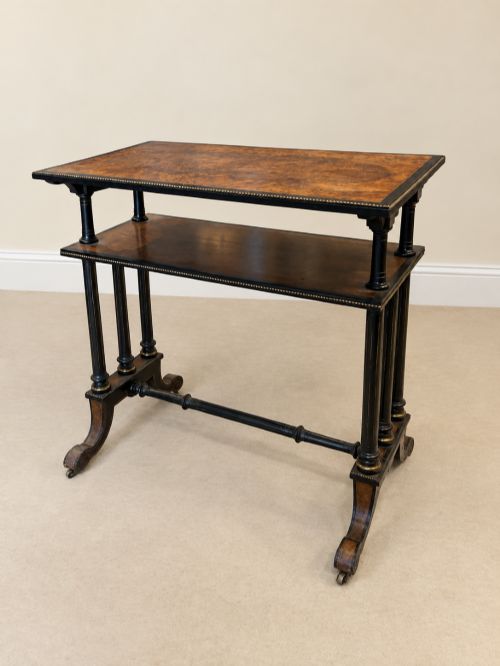
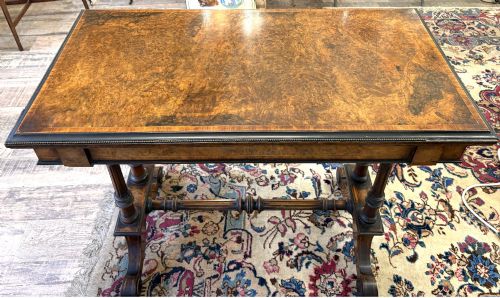
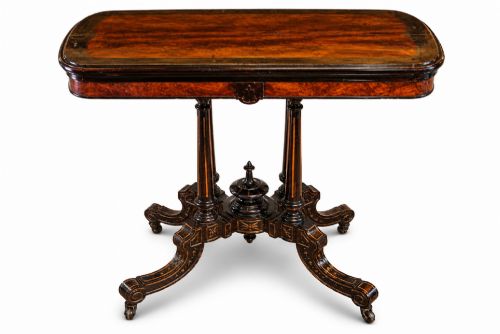
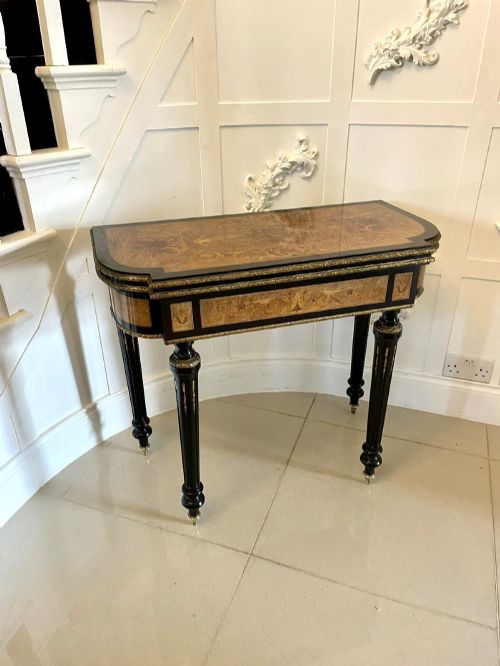
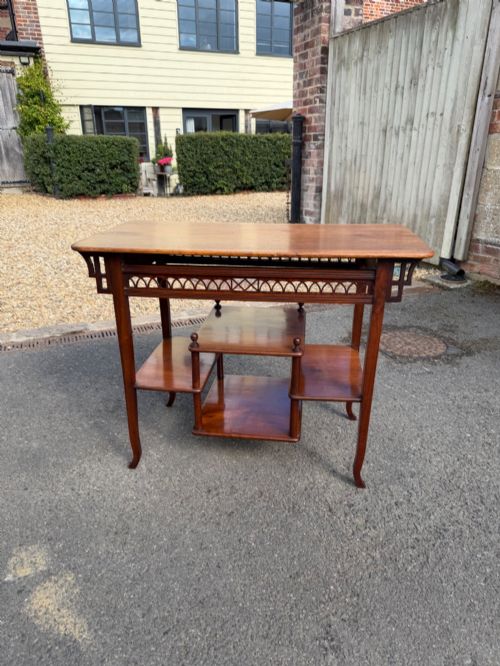
When you search for ebonised walnut console, you are looking at nineteenth-century and twentieth-century tables and mirrors that pair dark ebonised wood with walnut figures. The pieces on this page span Victorian, Aesthetic Movement, and Art Deco styles, showing how cabinetmakers contrasted deep black surfaces with warm timber grain.
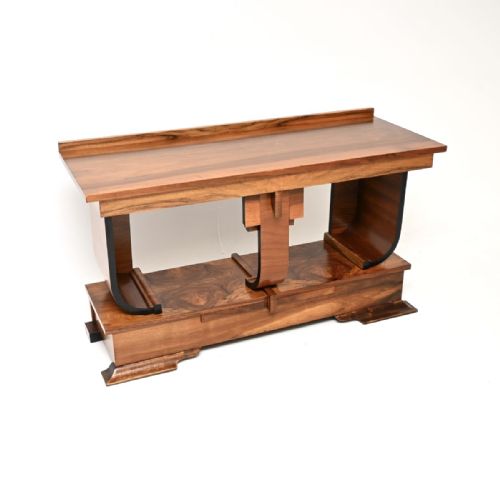
Console tables, card tables, and tall narrow cheval pier mirrors dominate the forms, originating from English and French workshops. You encounter everything from simple nineteenth-century card tables to sophisticated Art Deco console tables bearing distinct period character.
Materials and construction
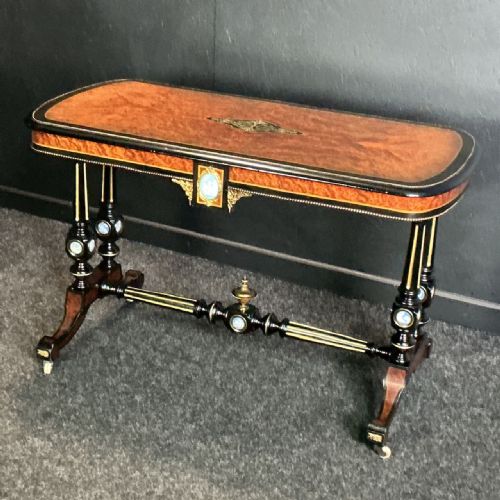
Cabinetmakers utilised solid walnut and applied veneers of burr walnut, figured walnut, and amboyna over secondary timbers, achieving deep visual texture through contrasting grains. They then ebonised selected elements to imitate costly ebony, creating the signature dark framing that defines these items.
Mounts of ormolu and brass appear alongside porcelain plaques, particularly on French revival pieces from the nineteenth century. Inlaid marquetry and intricate carving further demonstrate the high level of joinery required to build these tables and mirrors.
Ebonised Walnut Console Retail Price Guide 2026
Typical asking prices for ebonised walnut console among the pieces listed under this phrase on Sellingantiques today, from the lower quarter to the upper quarter. They describe what is for sale here now, not the wider market.
Materials recorded across the inventory include burr walnut, ebonised wood, amboyna, brass, ormolu, and porcelain.
Judging quality and execution
Quality rests upon the selection of the timber veneers and the precision of the ebonising process. Finer examples display lively burr walnut or figured walnut beneath crisp, dark finishes that retain an even sheen without obscuring the grain beneath.
The integration of decorative mounts, such as ormolu and porcelain panels, separates standard production from exhibition pieces. Superior execution shows in tight marquetry work, stable structural joints, and harmonious proportions across console and card tables.
S&H Jewell
The Ebonised Walnut Console Glossary
- Ebonised
- Wood treated with stain or paint to resemble dense, dark ebony. This finish became popular during the nineteenth century for highlighting lighter veneers.
- Burr Walnut
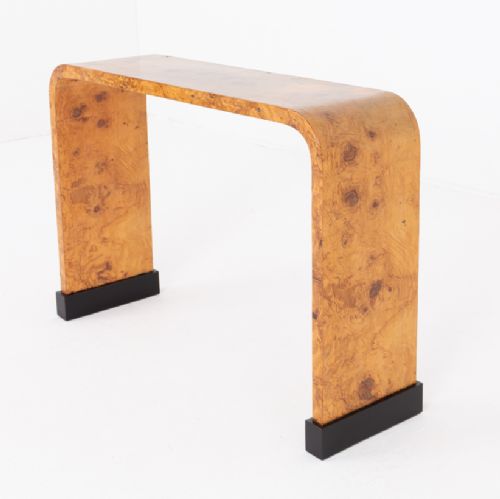
- Timber taken from the warted growths of walnut trees, yielding swirling, highly decorative grain patterns. Makers prized this material for tabletops and cabinet fronts.
- Ormolu
- Gilded bronze applied as decorative mounts and hardware on furniture. French nineteenth-century pieces frequently employ this technique.
- Marquetry
- The art of applying small pieces of veneer to form decorative pictures or geometric patterns. Makers utilised contrasting woods to achieve striking visual depth.
- Pier Mirror
- A tall mirror designed to hang on the wall between two windows, often placed above a console table. These mirrors share the walnut and ebonised construction of their companion tables.
Ebonised Walnut Console: Frequently Asked Questions
What is an ebonised walnut console?
An ebonised walnut console is a piece of furniture that combines dark ebonised wood surfaces with natural walnut framing or veneers. These tables and mirrors date primarily from the nineteenth and early twentieth centuries.
Craftsmen produced them in various stylistic revivals, including Victorian, Aesthetic Movement, and Art Deco. They served as decorative and functional statement items in period interiors.
How were these consoles used historically?
Historically, console tables stood against walls in grand hallways and reception rooms, often paired with matching wall mirrors above them. Card tables offered a dual purpose, folding out for evening entertainment.
Writing tables and serving tables provided dedicated surfaces for correspondence and dining preparation. Their decorative nature meant they were meant to be seen in principal rooms.
How do I care for ebonised wood?
Ebonised wood requires gentle dusting with a soft, dry cloth to prevent the accumulation of grit. Avoid placing these pieces in direct sunlight or near heat sources, which can dry out the timber.
Application of appropriate waxes should happen sparingly to maintain the finish without building up greasy residue. Professional conservation advice is best for older nineteenth-century surfaces.
How do I distinguish Victorian from Art Deco?
Victorian pieces display ornate carving, heavy turned legs, and elaborate marquetry inlay reflecting historical revivals. They often incorporate ormolu mounts and porcelain plaques.
Art Deco items favor streamlined geometric forms, smooth figured walnut surfaces, and minimal ornamentation. The silhouettes become cleaner and focus purely on the grain of the wood.