




Ebonised Study Table
An ebonised study table brings dark, striking presence to a room, offering a functional workspace rooted in historic cabinet-making.
Ebonised Study Table
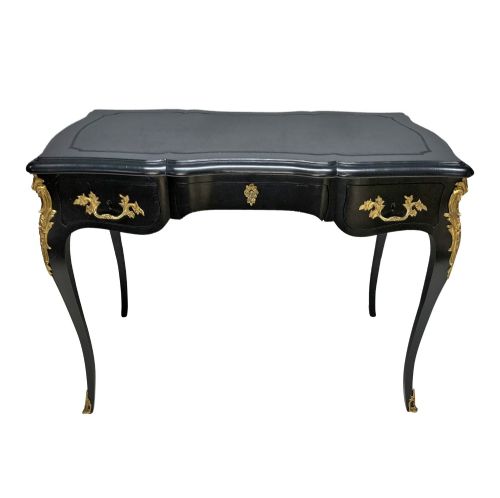
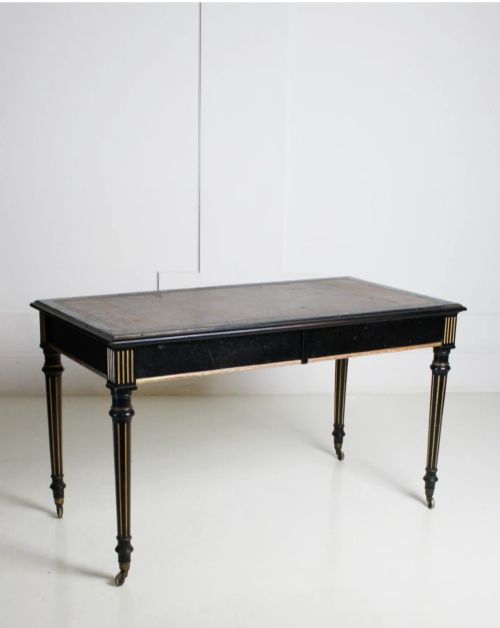
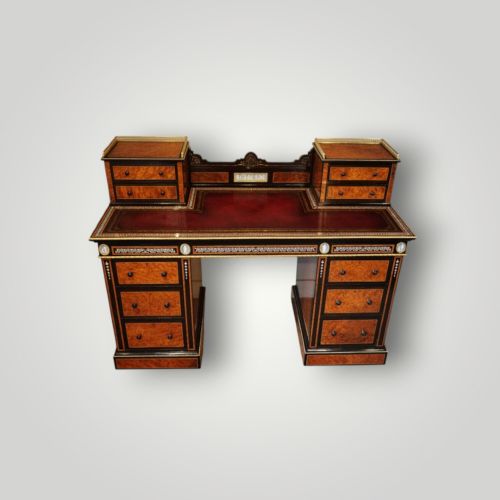
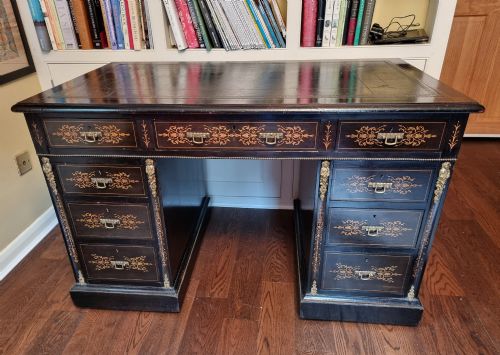
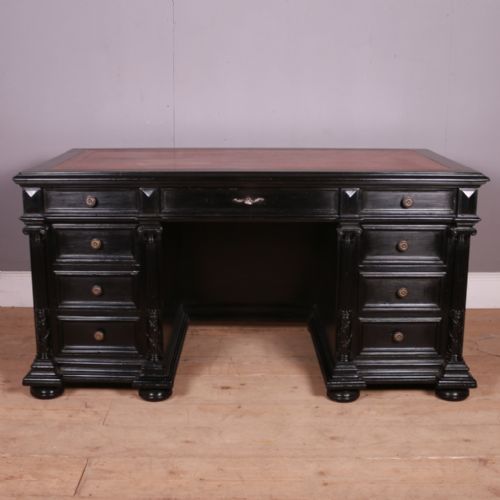
An ebonised study table is a dedicated workspace finished with a dark, polished coating that mimics precious ebony wood. These pieces emerge across the nineteenth century, including Victorian, Regency, and Aesthetic Movement eras, spanning writing desks, pedestal desks, and library tables.
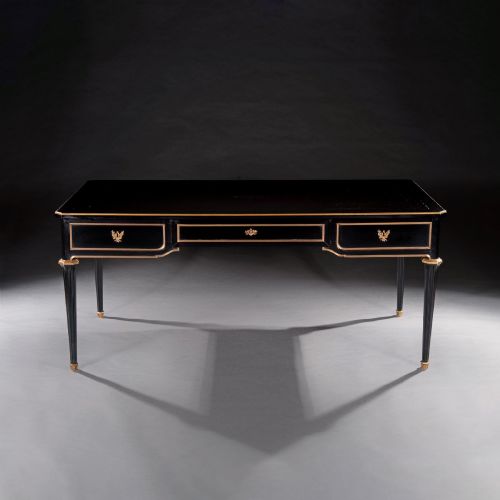
The most likely version to meet on this page is a nineteenth-century English or French writing table. They combine utilitarian drawer space with decorative dark timber surfaces, sometimes incorporating contrasting wood veneers or gilt mounts.
How they were made
Cabinet-makers achieved the signature dark finish by staining or painting dense underlying timbers, such as mahogany or walnut, to resemble solid ebony. This treatment often accompanied intricate brass inlay, ormolu mounts, and fitted leather writing surfaces.
Structural integrity relied on traditional joinery methods suited to heavy use, with pedestal and kneehole formats requiring robust internal framing. Secondary timbers supported primary drawer construction while the ebonised exterior received layers of polish to achieve a deep sheen.
Ebonised Study Table Retail Price Guide 2026
Typical asking prices for ebonised study table among the pieces listed under this phrase on Sellingantiques today, from the lower quarter to the upper quarter. They describe what is for sale here now, not the wider market.
Current listings feature pieces spanning the eighteenth to the twentieth century, with nineteenth-century Victorian and Aesthetic Movement examples predominating.
What varies in quality
The distinction between ordinary and superior pieces rests on the depth of the ebonised finish and the quality of the underlying wood. Finer examples retain crisp detailing in carved elements and precise execution of secondary materials like brass or ivory inlay.
Proportion and hardware integration also set finer writing tables apart from simpler utility desks. Superior maker attribution and balanced structural design elevate certain examples within their period.
Jackson and Graham·Edwards and Roberts
The Ebonised Study Table Glossary
- Ebonised wood
- Timber treated with stain, paint, or chemical processes to produce a dark, lustrous finish resembling ebony. This technique gained widespread popularity during the nineteenth century across various revival styles.
- Pedestal desk
- A heavy freestanding writing table supported by two piers of drawers flanking a central kneehole. This form provided substantial storage alongside a broad working surface.
- Aesthetic Movement
- A late nineteenth-century design philosophy prioritising visual beauty over narrative or moral function. Furniture from this period often featured ebonised surfaces and clean structural lines.
- Bureau plat
- A French freestanding writing table featuring a rectangular top inset with leather and one or more rows of drawers. These tables typically stood centrally in a room rather than against a wall.
- Ormolu
- Gilded bronze used for decorative mounts and fittings on fine furniture. It added metallic contrast to dark ebonised wooden surfaces.
Ebonised Study Table: Frequently Asked Questions
What is an ebonised study table?
An ebonised study table is a piece of antique furniture finished with a dark, polished coating designed to imitate ebony. These tables served as functional writing surfaces in studies, libraries, and morning rooms throughout the nineteenth century.
They appear in various formats, from pedestal desks with banks of drawers to lighter writing tables associated with the Aesthetic Movement and French cabinet-making traditions.
How do I date an ebonised desk?
Dating relies on examining the structural style, secondary timbers, and decorative hardware characteristic of specific periods like the Regency or Victorian eras. Aesthetic Movement pieces often display distinct geometric simplicity.
Matching the construction methods of the drawers and the formulation of the ebonisation finish helps confirm whether a piece originates from the nineteenth century or later.
Were these tables used for writing?
These tables functioned primarily as dedicated spaces for correspondence, bookkeeping, and reading before the widespread adoption of modern office furniture. Many incorporate inset leather writing surfaces designed to provide a smooth grip for a quill or pen.
Drawer configurations within pedestal and kneehole variants accommodated paper, inkwells, and writing instruments close to hand.
How do I care for ebonised wood?
Caring for an ebonised surface involves keeping the timber away from direct sunlight and fluctuating humidity to prevent the dark finish from fading or cracking. Gentle dusting with a dry cloth preserves the polished sheen.
Harsh chemical cleaners should be avoided, as they can strip the delicate dark stain or damage the underlying polish.