




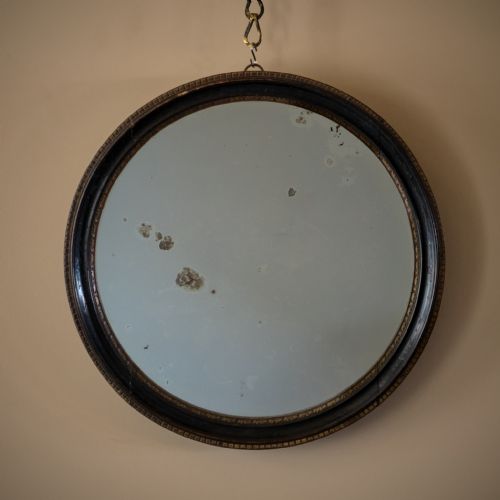

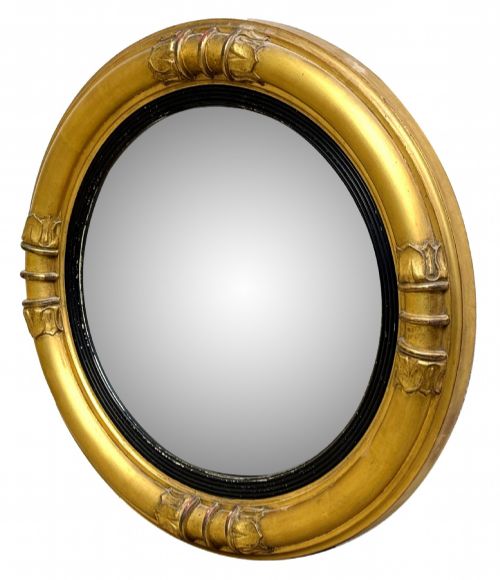


Ebonised Round Mirror
An ebonised round mirror brings depth and focus to a room, catching the light in a curved convex glass plate.
Ebonised Round Mirror
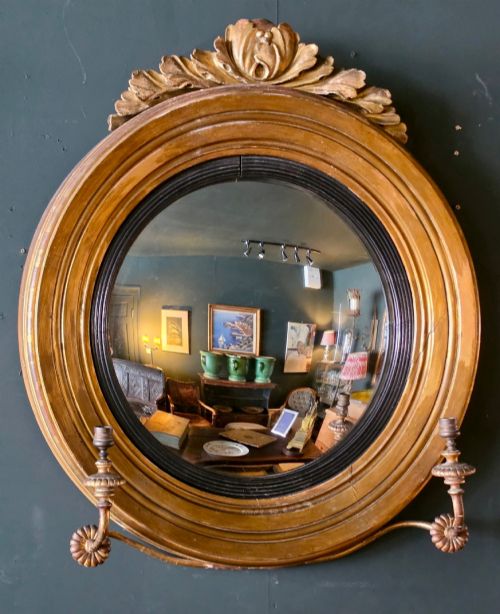
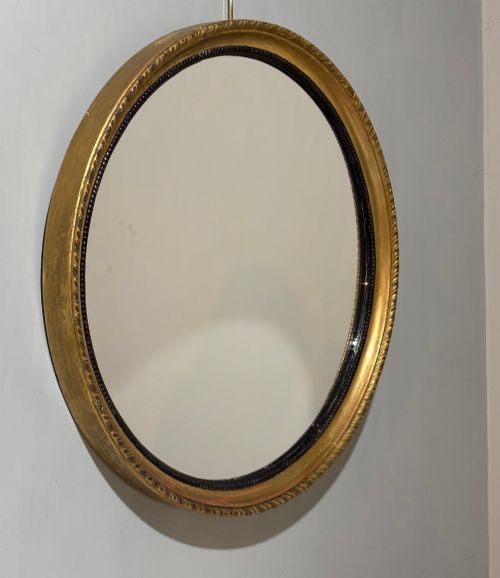
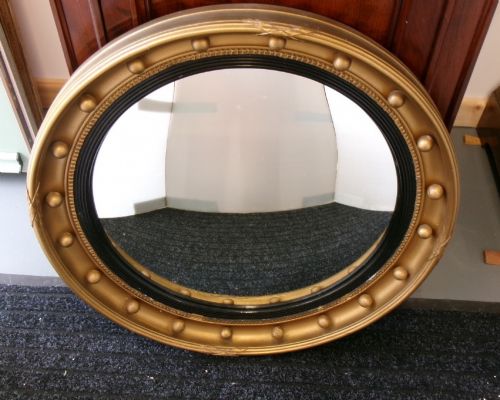
When searching for an ebonised round mirror, buyers encounter circular wall mirrors with deep convex plates that curve outwards to capture a wide reflection of the interior. These pieces frequently appear alongside giltwood and gesso frames, often originating from the Regency period or later Victorian revivals.
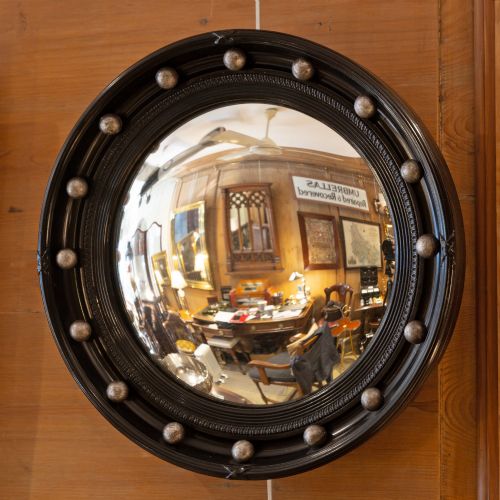
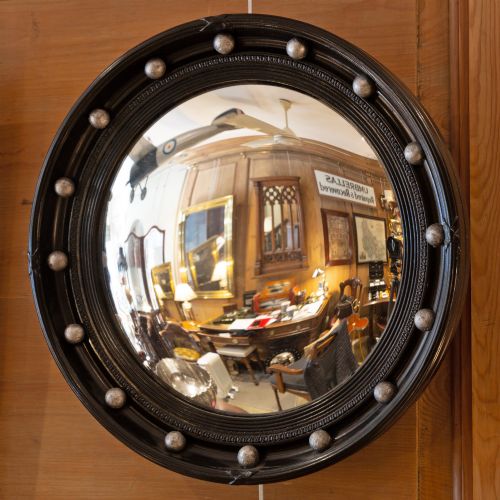
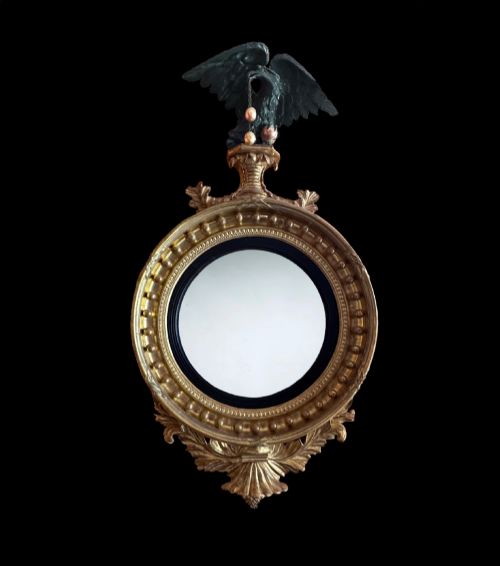
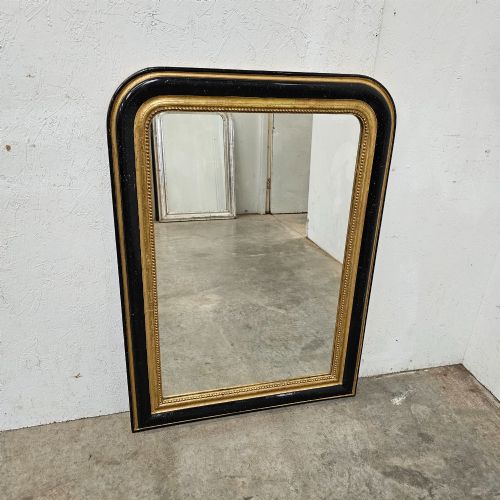
The form is dominated by convex wall mirrors, sometimes known as butler's mirrors or porthole mirrors, set within heavy round wooden frames. Many examples incorporate dark ebonised slips or details that contrast with gilt surfaces, while others draw on Louis Philippe or Regency styling.
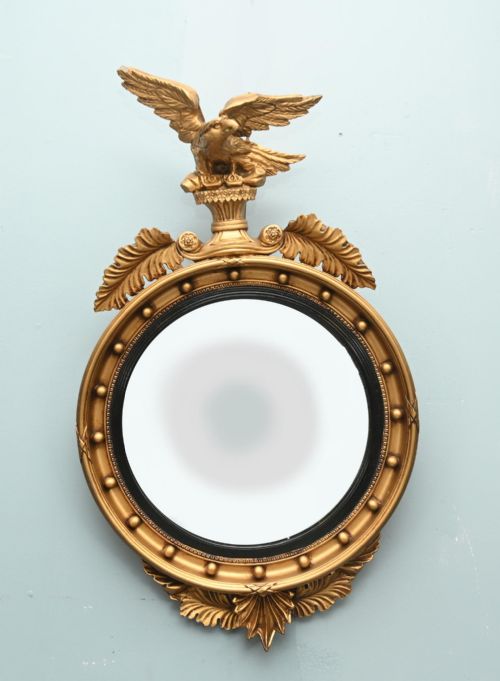
Most entries belong to the nineteenth century, spanning Regency, Victorian, and later revivals up to the mid twentieth century. Buyers find both modest domestic sizes and larger decorative wall mirrors featuring eagle crests or classical motifs.
How they were made
Frames are constructed from wood, gesso, and giltwood, applying layers of plaster and gold leaf over a carved wooden base to achieve rich reflective surfaces. Ebonised finishes are created by staining or painting wood to imitate expensive ebony, often paired with gilded slips near the inner rim.
The mirror glass is curved and convex, requiring specialised glass-blowing or slumping techniques to maintain an even distortion that reflects the entire room. Traditional pieces secure the mirror plate within a rebate behind a stepped wooden moulding or beaded sight edge.
Ebonised Round Mirror Retail Price Guide 2026
Typical asking prices for ebonised round mirror among the pieces listed under this phrase on Sellingantiques today, from the lower quarter to the upper quarter. They describe what is for sale here now, not the wider market.
Several mirrors feature large spread eagles perched on top, watching over the room with unblinking wooden dignity.
What varies in quality
The distinction between tiers rests upon the crispness of the carved details on the frame, particularly on crests, appliques, and reeded or ball-decorated mouldings. Superior examples display sharply defined ornament and deep, stable gilding paired with clear, distortion-controlled convex plates.
Surface preservation dictates much of the standing of an individual piece, noting whether original ebonisation and gilding remain intact beneath later layers of maintenance. The depth of the convex curve and the weight of the timber frame also signal the ambition of the original maker.
The Ebonised Round Mirror Glossary
- Ebonised
- Wood treated with stain or paint to resemble heavy ebony. This dark finish creates a sharp contrast against gilt gesso mouldings.
- Convex
- Curved outward like the exterior of a sphere. This glass plate gathers a panoramic view of the surrounding room.
- Gesso
- A plaster mixture applied to wood frames to provide a smooth base for gilding. It holds crisp carved details before metal leaf is laid.
- Girandole
- A branched candleholder attached to a wall mirror. These arms reflect candlelight across the interior space.
- Slip
- A narrow inner moulding placed between the frame and the glass. It frequently carries the ebonised finish on otherwise gilded pieces.
Ebonised Round Mirror: Frequently Asked Questions
Where should I hang a convex mirror?
These mirrors work best on a principal wall in a reception room or hallway where the curved glass can pull in light from multiple angles and project a miniature view of the space.
Because they concentrate light and reflect a broad field, they function effectively opposite a window or above a fireplace mantel.
How do I date a round mirror?
Dating relies upon examining the construction of the wooden frame, the composition of the gesso, and the character of the mirror glass itself. Regency and nineteenth-century examples often feature heavy timber mouldings, ball-accented frames, and specific backboard constructions.
Later Victorian and twentieth-century revivals typically display machine-prepared timbers and different backboard fixings compared to their earlier counterparts.
What is a butler's mirror?
A butler's mirror is a traditional name for a convex wall mirror used historically in large houses to allow staff to monitor activity across a room from a distance. The curved glass provides a wide-angle view without requiring the observer to turn.
These pieces share the same circular frame format and convex plate seen across nineteenth-century wall mirrors.
How do I clean an antique mirror?
Cleaning requires a soft, dry cloth to remove dust from the frame and glass without disturbing fragile gilt or ebonised surfaces. Moisture must be kept away from the edges where it can seep behind the glass.
Harsh chemical sprays should be avoided to protect the historic finishes and the silvering on the rear of the mirror plate.