


Ebonised Open Armchair
An ebonised open armchair brings dark elegance and structural grace to a room, offering the bold visual weight of black finish paired with accessible seating.
Ebonised Open Armchair
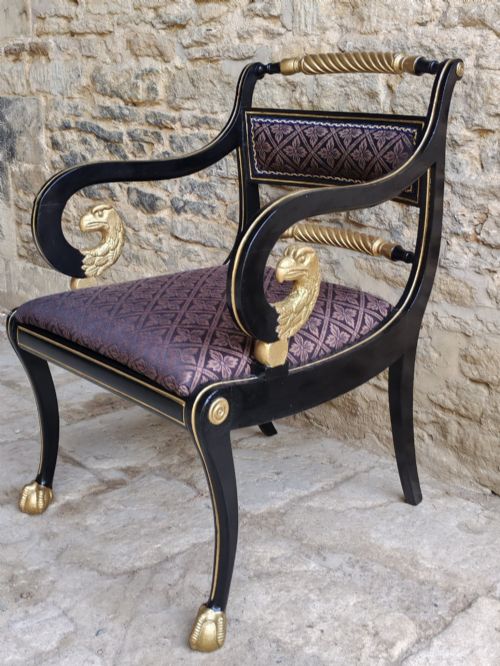
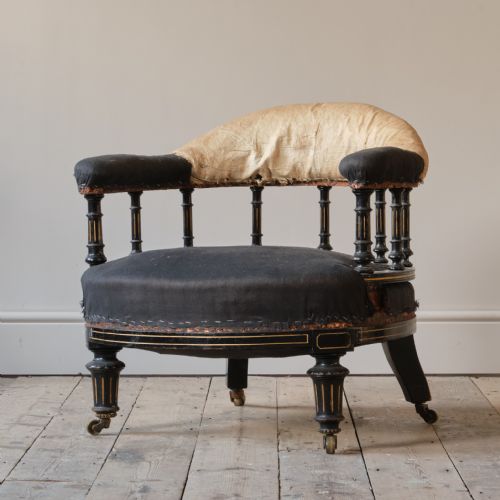
The ebonised open armchair is a seating form defined by its darkened wooden frame and unconstricted arm supports, appearing across periods from the eighteenth century to the twentieth century. These chairs emerge in styles such as Regency, Victorian, and the Aesthetic Movement, often employing beech or birch as a base timber.
Most examples encountered on this page date from the nineteenth century, reflecting the strong Victorian and Aesthetic interest in ebonisation and revival designs. Buyers frequently find pairs or single library and salon chairs rather than solitary dining seats.
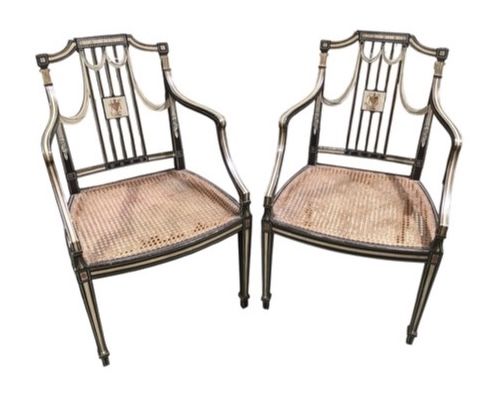
Makers and workshops utilised various decorative methods, incorporating parcel gilt, paint, brass, and woven cane into the black finish. The form serves functional seating roles while functioning as a strong visual statement in historic and modern interiors.
How they were made
Craftsmen built these frames primarily using solid hardwoods such as beech, birch, and ebony, shaping the structural components through traditional joinery techniques. The signature dark finish was achieved either by using naturally dark wood or by staining and polishing lighter timber to resemble ebony.
Surface enhancement often involved hand painting, parcel gilt detailing, and black lacquer to catch the light along the carved mouldings. Upholstery materials added comfort through fabric, velvet, and buttoned backs, while support elements occasionally featured cane seating.
An Anglo-Indian collection offers fourteen dark partners to ensure nobody ever argues over who gets the best seat.
What varies in quality
Quality rests upon the crispness of the original carving and the depth of the ebonised finish, which distinguishes refined workshop production from later commercial output. Finer pieces demonstrate superior timber selection beneath the dark surface, maintaining structural integrity across slender arms and delicate legs.
The sophistication of decorative additions, such as the precision of parcel gilding or the complexity of turned and carved details, separates standard examples from exceptional ones. Original surface patination accumulated over decades also plays a central role in the character of better specimens.
Gillows·Collier and Plucknett
The Ebonised Open Armchair Glossary
- Ebonised wood
- Timber that has been stained, painted, or polished to imitate the dark, dense appearance of ebony. This technique was especially popular during the nineteenth century for formal furniture.
- Parcel gilt
- A decorative method where specific carved details or highlights on a furniture frame are partially covered in gold leaf. It contrasts sharply against the dark ebonised background.
- Aesthetic Movement
- A late nineteenth-century design style that emphasised artistic visual values and Japanese-inspired motifs over heavy Victorian ornamentation. Chairs from this movement often feature slender ebonised frames with subtle gilding.
- Cane
- Woven rattan material used for seat panels and backs, providing a lightweight and breathable surface. It appears frequently on lighter chair designs from the Regency and later periods.
- Library chair
- A sturdy, comfortable armchair designed for reading rooms, typically featuring supportive upholstered arms and backrests. These pieces prioritise prolonged comfort alongside formal appearance.
Ebonised Open Armchair: Frequently Asked Questions
What is an ebonised open armchair?
An ebonised open armchair is a wooden seat finished with a black stain or lacquer to resemble ebony, featuring unclosed arm supports. These pieces range from formal Regency library chairs to decorative Victorian salon seating.
The style highlights the silhouette of the frame through dark tones, making the carved details and upholstery stand out within a room.
How do I date an ebonised armchair?
Dating relies on observing the stylistic markers of the frame, such as Regency curves, Victorian buttoning, or Aesthetic Movement motifs. The choice of underlying timber and decorative techniques also points to specific manufacturing eras.
Comparing structural joinery and regional stylistic traits helps narrow down the period of production between the eighteenth and early twentieth centuries.
Where should I place these chairs?
These chairs function well as standalone reading seats in studies, paired accents in drawing rooms, or around a salon table. Their dark finish allows them to anchor lighter colour schemes or complement existing antique decor.
Positioning them away from direct heat sources helps preserve the stability of the ebonised surface and the integrity of the upholstered fabric.
How do I care for the black finish?
Maintenance involves dusting regularly with a soft, dry cloth to prevent the accumulation of particles on the polished or lacquered surface. Avoid harsh chemical cleaners that can strip or dull the historic dark finish.
Applying a suitable microcrystalline wax periodically helps protect the ebonised wood and maintains a gentle, natural sheen over time.