
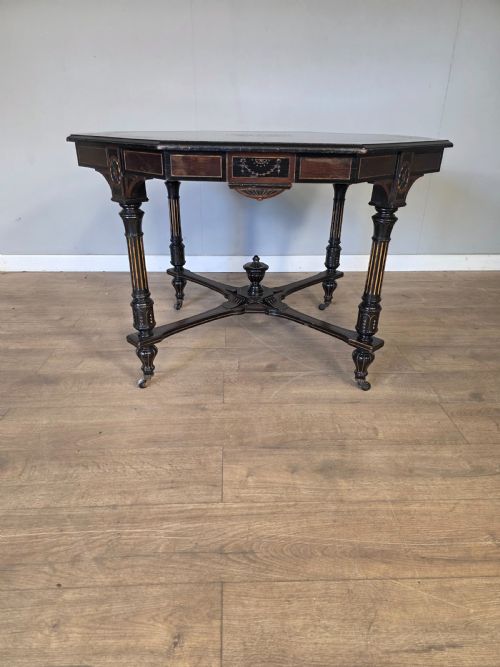
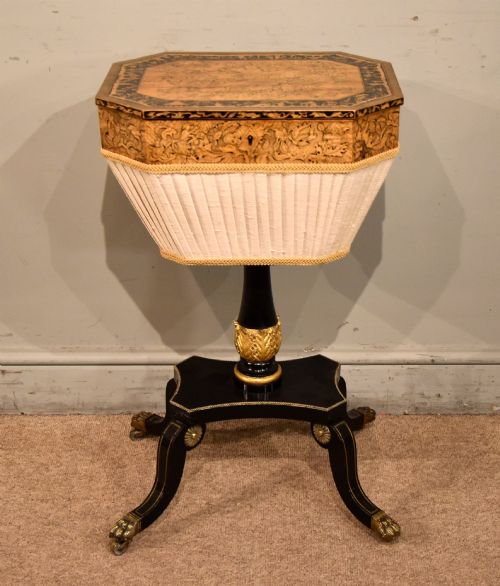
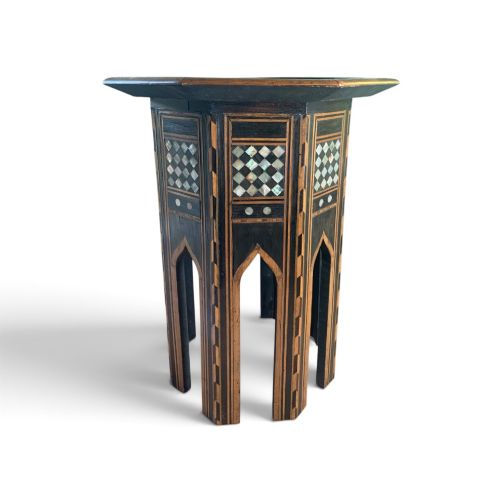
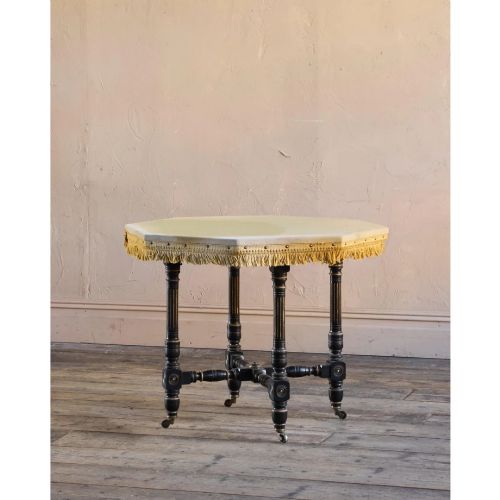

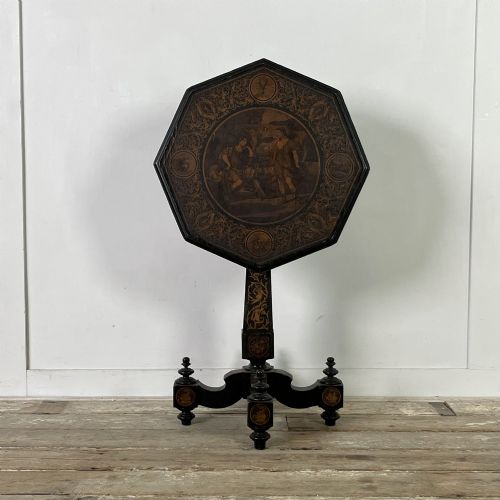

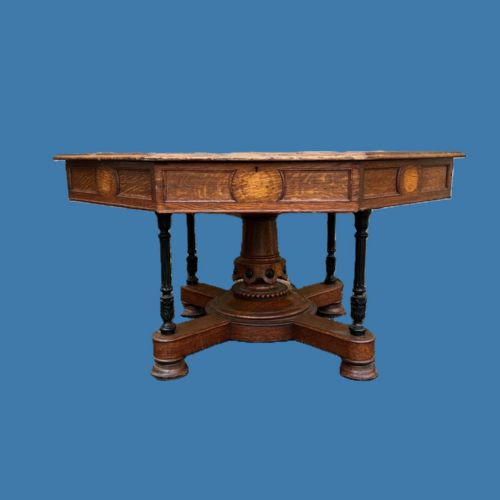


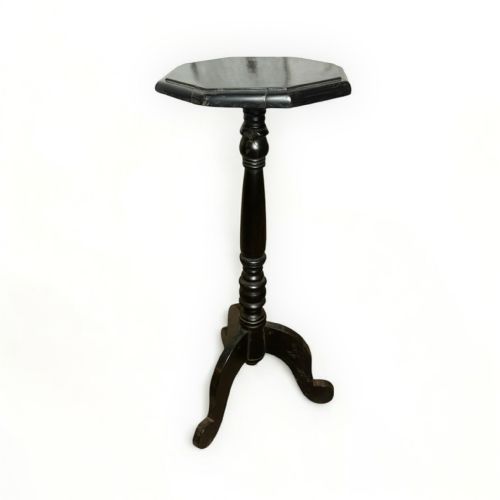
Ebonised Octagonal Table
An ebonised octagonal table brings sharp geometric form and deep dark polish to a room, offering a versatile surface for lamps or books.
Ebonised Octagonal Table
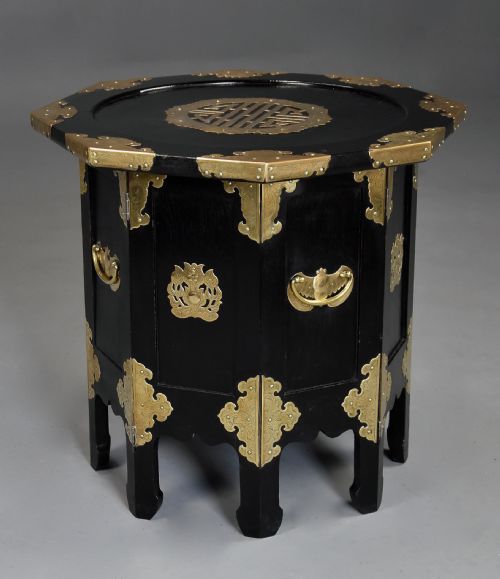
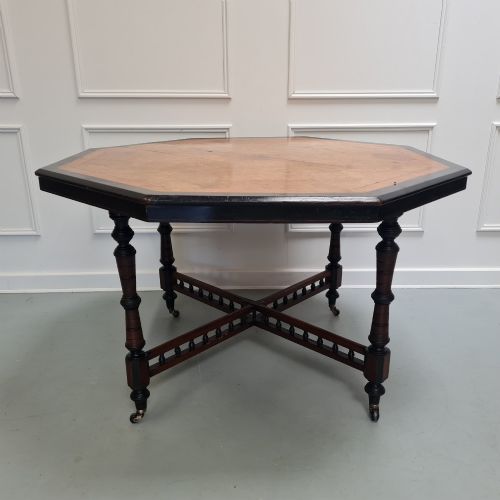
An ebonised octagonal table presents a multi-sided top supported by a central pillar or multiple legs, designed to catch the light on its dark surfaces. These pieces emerge predominantly from the Victorian and Aesthetic Movement periods, alongside later twentieth-century expressions.
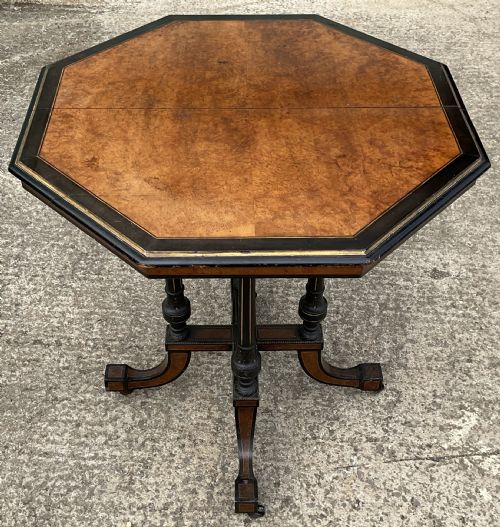
The version most commonly met on this page is the occasional or centre table from the late nineteenth century, often pairing ebonised timber with contrasting wood veneers or intricate inlays. Makers of this era favoured the eight-sided format to break away from traditional rectangular furniture.
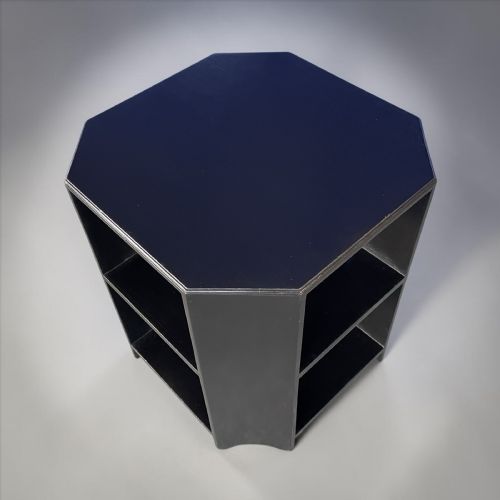
Examples span diverse aesthetic influences, from Moorish revival patterns to Anglo-Indian brass work and stark Art Deco geometry. Each piece uses its dark finish to anchor a room while providing a functional display surface.
Materials and Construction
The foundational wood is typically stained, painted, or polished to achieve the dense black ebonised finish that mimics costly ebony. Craftsmen frequently combined this treated timber with contrasting elements such as burr walnut tops, boxwood stringing, or applied gilt.
Intricate surface decoration defines many pieces, incorporating brass inlay, penwork, and ivory details set directly into the timber. Joinery methods of the nineteenth and early twentieth centuries ensure robust construction beneath the decorative facades.
Materials recorded on this page include solid ebony, burr walnut, amboyna, brass, and boxwood.
Assessing Craftsmanship and Materials
The distinction between standard production and exceptional work lies in the depth of the ebonisation and the choice of secondary woods. Superior examples utilise rich timbers like solid ebony, amboyna, or figured walnut beneath or alongside the black finish, rather than simple stained pine.
The precision of the inlay work and the integrity of the surface polish separate fine studio pieces from mass-produced items. Hand-executed brass details, intricate penwork, and substantial pedestal bases indicate a higher tier of original manufacture.
Hindley & Sons·Liberty & Co.
The Ebonised Octagonal Table Glossary
- Ebonised
- Wood treated with stain, dye, or paint to simulate the appearance of dense, black ebony. This finish became especially popular during the Victorian period for accentuating geometric forms.
- Octagonal
- Having eight sides and eight angles. This specific geometric plan was favoured in nineteenth-century occasional tables to soften corners while offering generous surface area.
- Penwork
- A surface decoration technique using ink applied with a pen to create fine linear designs on wood. It often imitates more costly marquetry or inlay work.
Ebonised Octagonal Table: Frequently Asked Questions
Where should I place an ebonised octagonal table?
These tables suit corners or central spaces where their geometric shape can be appreciated from multiple angles. They function well as lamp stands, display surfaces, or side tables beside seating.
Because the dark finish absorbs light, placing them near a lamp or window highlights the grain and any contrasting inlay work.
How do I care for ebonised wood?
Dust regularly with a soft, dry cloth to prevent particulate buildup on the dark polished surface. Avoid harsh chemical cleaners and excessive moisture.
Applying a quality wax sparingly can help maintain the lustre of the finish without creating a greasy film.
How can I tell a Victorian table from a later one?
Victorian and nineteenth-century examples often display hand-applied finishes, traditional joinery, and specific decorative idioms like Aesthetic Movement or Moorish revival motifs. Closer inspection of the underside and interior timbers reveals the age of the wood.
Twentieth-century pieces, such as those from the Art Deco period, typically present cleaner, more streamlined silhouettes with different underlying construction methods.
Are these tables sturdy enough for daily use?
Most surviving examples are structurally robust, having already endured a century or more of domestic life. Pedestal bases and multi-legged frames distribute weight effectively.
Care should be taken with delicate inlay or gilt details, but the core construction of these tables remains entirely functional for holding lamps, books, and decorative objects.