


Black Wooden Accent Table
A black wooden accent table brings dark timber, ebonised surfaces and striking painted finishes into a room to anchor a corner with quiet utility.
Black Wooden Accent Table
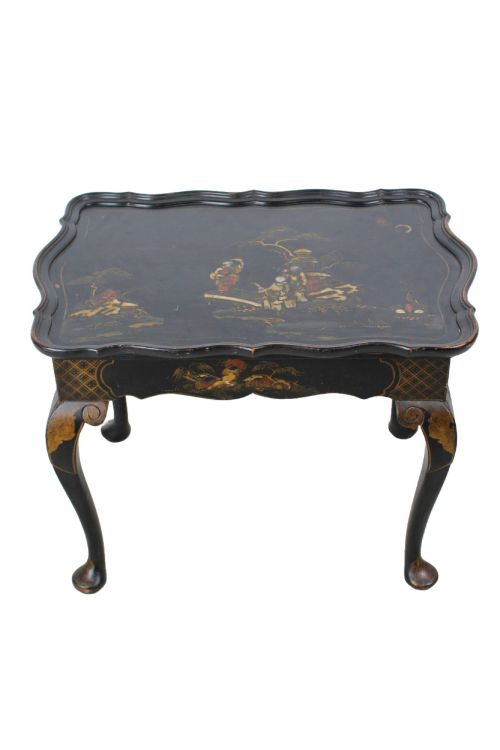
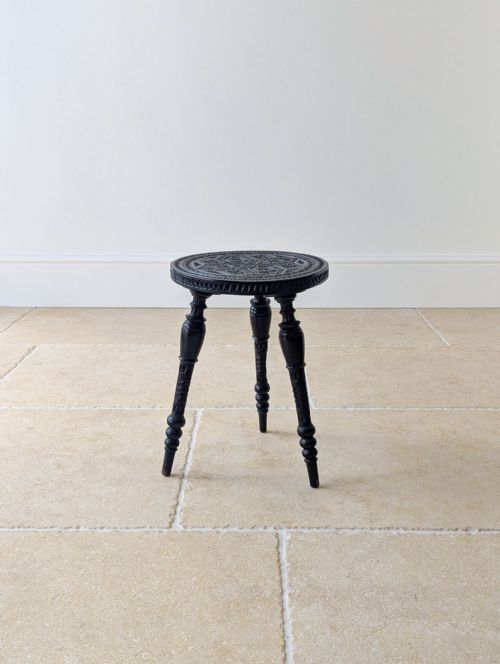
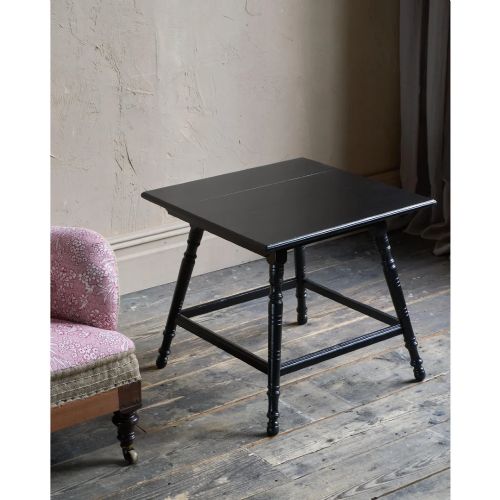
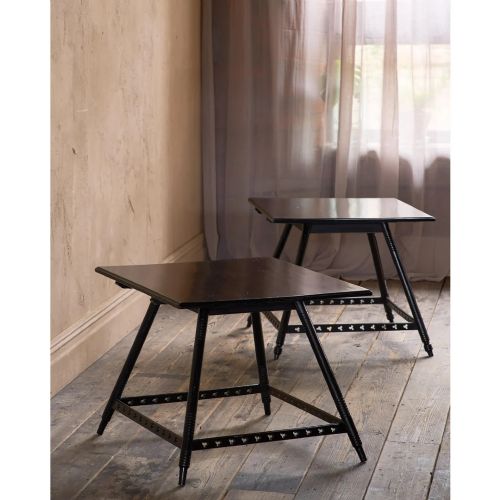
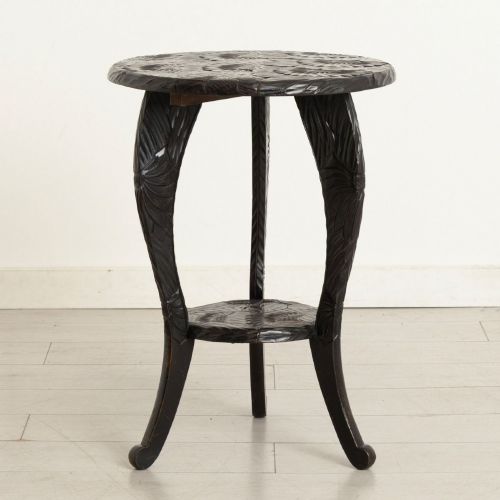
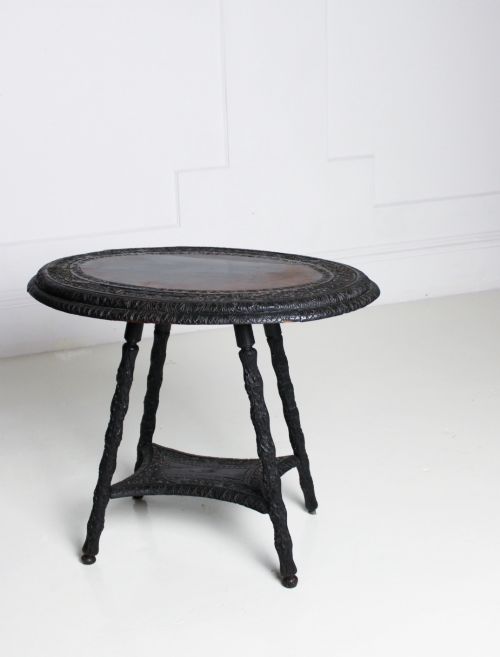
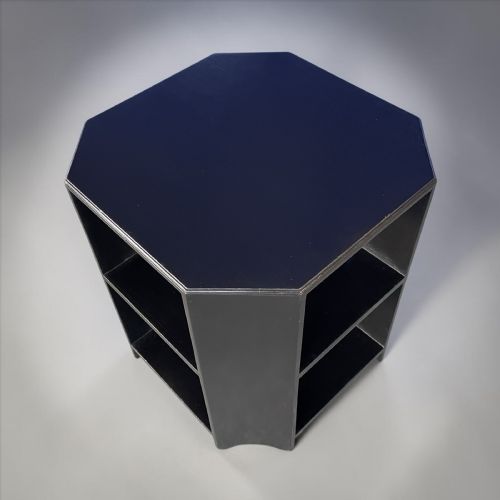
A black wooden accent table appears in various guises across this selection, from Victorian ebonised occasional pieces to Edwardian Chinoiserie tray top coffee tables and Anglo-Indian designs. Buyers search for these pieces to introduce a dark, contrasting tone into a scheme while retaining the practical surface area needed beside a chair or sofa.
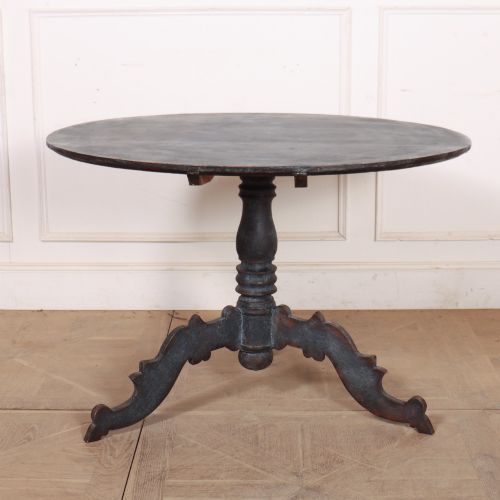
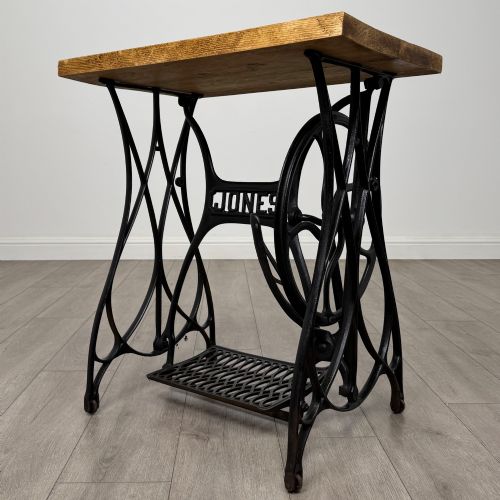
The forms span side tables, coffee tables, plant stands and centre tables, drawing on influences ranging from Aesthetic Movement ebonisation to Japanese lacquerwork and Scandinavian painted country styles. Most examples date from the nineteenth and early twentieth centuries, offering compact proportions suited to modern interiors.
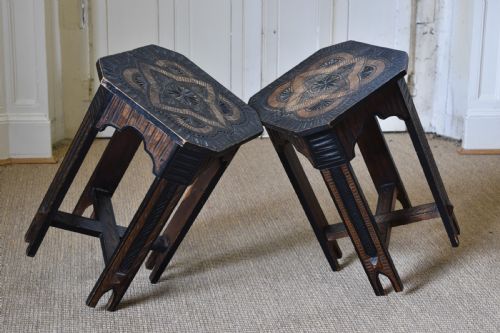
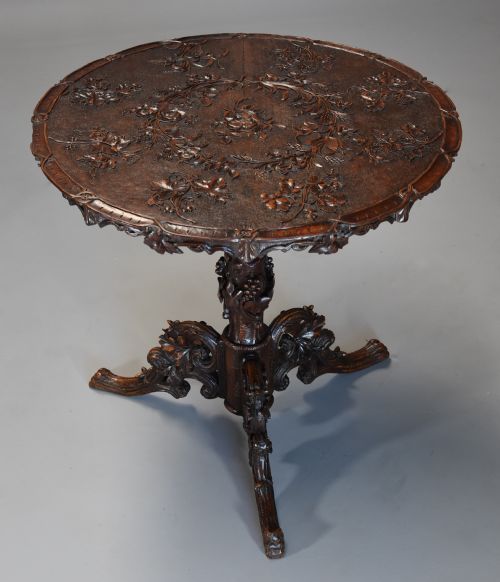
Surfaces range from plain ebonised hardwood and elm to intricate chip-carving, parcel gilt details and oriental motifs. This variety means a buyer can select an item with understated geometric lines or a piece featuring profuse hand-carved decoration.
Materials and construction
Construction relies on timbers such as oak, elm, linden wood and general hardwood, often treated with an ebonising process to mimic costly ebony or coated in black lacquer and paint. Workshops utilised traditional joinery methods suited to the specific style, whether producing folding occasional tables or heavy two-tier rectangular forms.
Decorative techniques include intricate chip-carving, hand-carved oriental motifs, parcel gilt accents, and painted Chinoiserie or ragwork finishes. Metal elements like brass frequently appear as structural mounts, hinges or decorative highlights.
Listings feature woods like oak, elm, linden and hardwood, finished with ebonising, paint or lacquer.
Judging quality
Quality reveals itself in the crispness of the hand-carving and the depth of the ebonised or lacquered finish rather than mere age. Pieces featuring refined details like parcel gilding or well-executed chip-carving stand apart from simpler utility items.
Structural integrity and the retention of original surface patination distinguish finer examples. The harmony between the timber substrate, the joinery and the decorative scheme dictates the overall standing of an individual table.
Hindley and Sons·Liberty of London·EW Godwin
The Black Wooden Accent Table Glossary
- Ebonised
- Wood treated with stain or paint to imitate the dark, dense appearance of ebony. This finish gained immense popularity during the Victorian and Aesthetic periods.
- Aesthetic Movement
- A late nineteenth-century design style that emphasised art for art's sake. Pieces from this movement often utilise clean ebonised lines and Japanese-inspired motifs.
- Chip-carving
- A style of relief carving where small chips are removed from a flat wooden surface with gouges and knives. It creates geometric patterns on tables and stands.
- Parcel gilt
- Wood or other materials partially decorated with gold leaf or gilt paint. This technique highlights carved details against a dark black background.
Black Wooden Accent Table: Frequently Asked Questions
Where should I place a black wooden accent table?
These pieces suit positions beside a sofa, in an empty hallway corner, or serving as a lamp stand in a study. Their dark tones naturally draw the eye and ground lighter decorative schemes.
Because many examples offer compact footprints, they slip easily into tight spaces where larger furniture would overwhelm the room.
How do I care for ebonised wood?
Dust regularly with a soft, dry cloth to prevent dirt accumulation on the dark finish. Avoid placing these tables in direct sunlight or near heat sources to protect the wood and lacquer.
Apply a gentle furniture wax occasionally if the piece has a traditional polished surface, but check whether the finish is modern lacquer or antique polish first.
What is the difference between ebonised and lacquered tables?
Ebonising involves staining or painting timber to achieve a dense black wood effect, often retaining the natural grain texture beneath. Lacquering builds up smooth, glossy resin layers that produce a hard, reflective surface.
Lacquered pieces often draw on Asian traditions, whereas ebonised tables frequently align with European Victorian or Aesthetic Movement designs.
Can I use an antique plant stand as a side table?
Plant stands and jardiniere stands provide a convenient raised surface for a small lamp, drink or decorative object. Their stable pedestal or multi-tier designs make them versatile alternatives to traditional side tables.
Check the top diameter to ensure it safely accommodates whatever items you plan to place upon it.