



Ebonised Ladies Desk
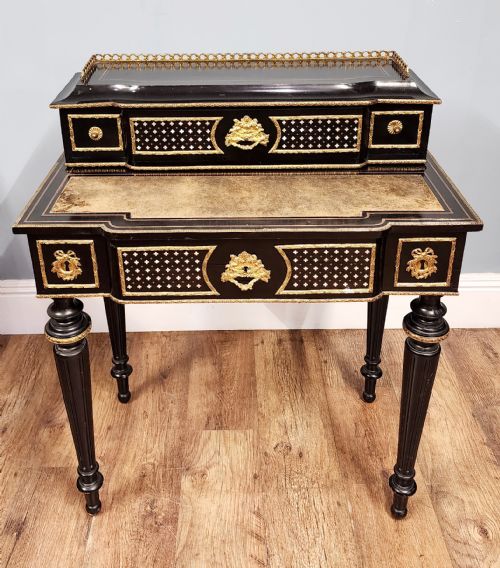
An ebonised ladies desk is a refined writing piece designed for intimate correspondence, combining dark surfaces with elegant decorative mounts.
Ebonised Ladies Desk
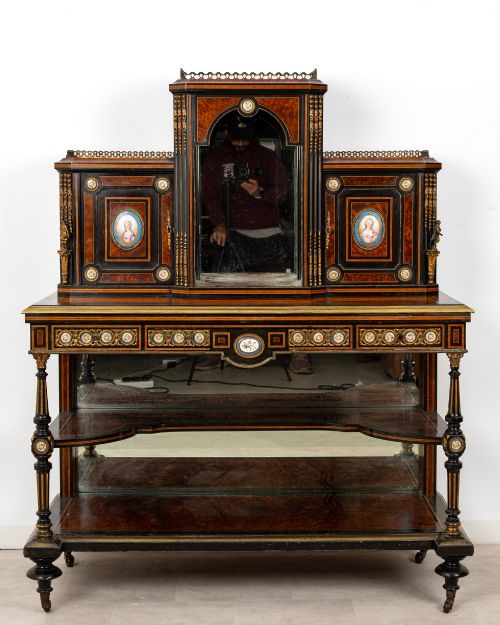
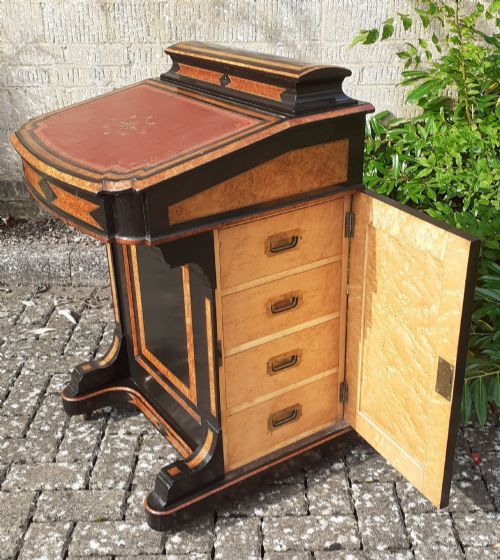
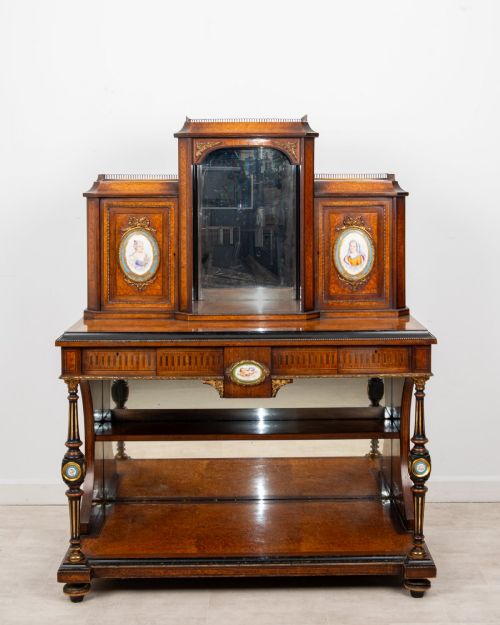
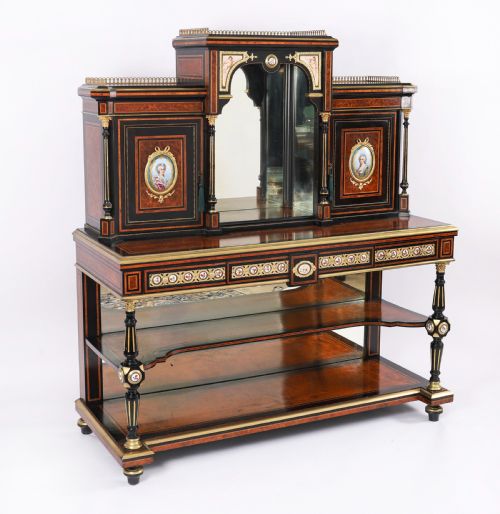
When you search for an ebonised ladies desk, you encounter sophisticated writing furniture produced during the Victorian and Edwardian periods, frequently taking the form of a bonheur du jour or a compact writing table. These pieces span the mid to late nineteenth century, reflecting the tastes of the 1860s, 1870s, and 1880s.
The version you are most likely to meet on this page is the French or English bonheur du jour, often displaying the influence of the Napoleon III, Aesthetic, or Louis Revival styles. They serve as ornamental and practical additions to morning rooms and private boudoirs.
Materials and construction
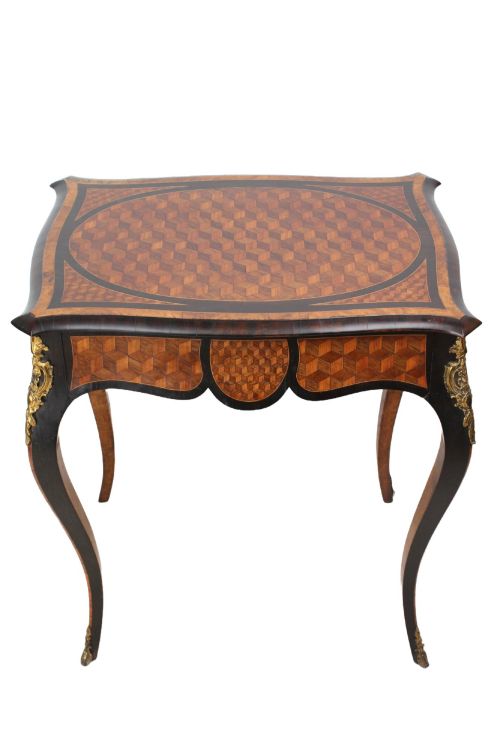
Cabinet makers utilised ebonised wood as a striking dark base, frequently combining it with contrasting timbers such as walnut, amboyna, and burr walnut. Surfaces often incorporate intricate marquetry, parquetry, and boulle work.
Decoration relies heavily on cast ormolu, brass mounts, and porcelain plaques, particularly Sevres style inserts. Writing surfaces are traditionally inset with panels of leather.
Materials appearing across the inventory include ebonised wood, ormolu, brass, porcelain, walnut, leather, glass, and amboyna.
Markers of distinction
The standard of an ebonised ladies desk rests upon the crispness of its gilt bronze and ormolu mounts, alongside the precision of any inlay work. Finer examples display meticulous attention to detail in the secondary timbers and the quality of the porcelain plaques.
Pieces bearing the signature of notable makers or workshops demonstrate superior cabinet making techniques that elevate them above standard commercial production of the period.
JAS Shoolbred·Paul Sormani·Befort Jeune·Gillows And Co·Marsh Jones Of Leeds
The Ebonised Ladies Desk Glossary
- Ebonised
- Wood treated to imitate ebony, producing a dense, dark black finish that became popular during the nineteenth century.
- Bonheur du jour
- A small, light ladies writing desk featuring a tiered superstructure with shelves, drawers, or a cabinet above the writing surface.
- Ormolu
- Gilt bronze mounts applied to furniture for decorative effect, adding metallic contrast to wooden surfaces.
- Parquetry
- Geometric wood inlay patterns arranged to form decorative motifs on tabletops and drawer fronts.
- Boulle
- A form of marquetry utilising brass and tortoiseshell, named after the famous French cabinet maker Andre Charles Boulle.
Ebonised Ladies Desk: Frequently Asked Questions
What is a bonheur du jour?
A bonheur du jour is a small ladies desk featuring an upper section with small drawers or a cabinet. It translates to day's happiness in French.
These pieces were intended for light correspondence and display in private sitting rooms rather than formal studies.
How do I date an ebonised desk?
Dating relies on stylistic clues such as the presence of Aesthetic Movement motifs or Napoleon III revival details. Construction methods and secondary woods also help narrow down the decade.
Most examples date from the Victorian era between eighteen sixty and eighteen eighty.
Where were these desks used?
They were designed for private spaces like morning rooms, drawing rooms, and boudoirs. Ladies used them for writing letters and managing social correspondence.
Their compact scale allowed them to fit comfortably into residential interiors without dominating the room.
What styles influence these pieces?
Makers drew inspiration from French periods including Louis XV and Louis XVI revivals, alongside the Second Empire and Napoleon III aesthetics. English iterations often reflect the Aesthetic Movement.
This blending of historicism and contemporary design defines nineteenth century decorative arts.