

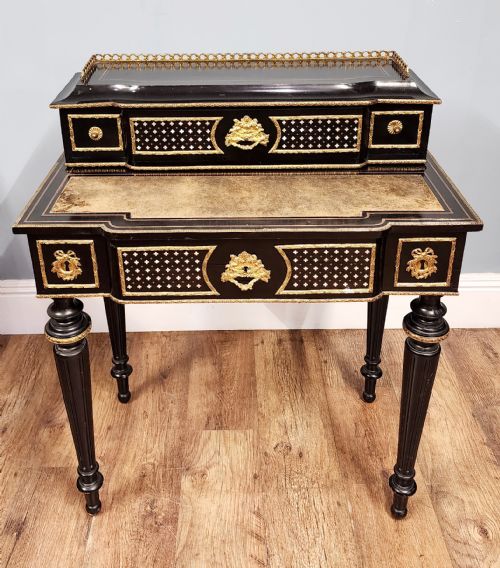
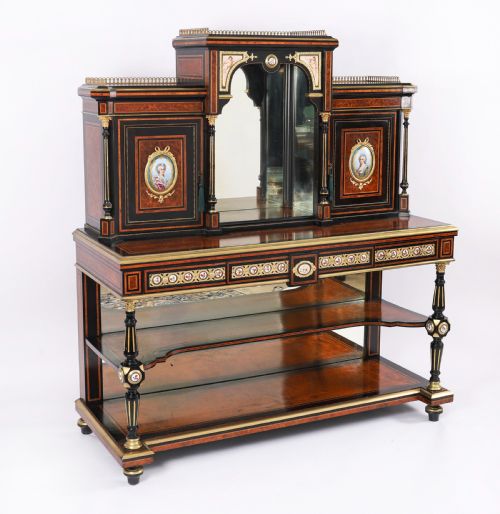


Ebonised Bureau Desk
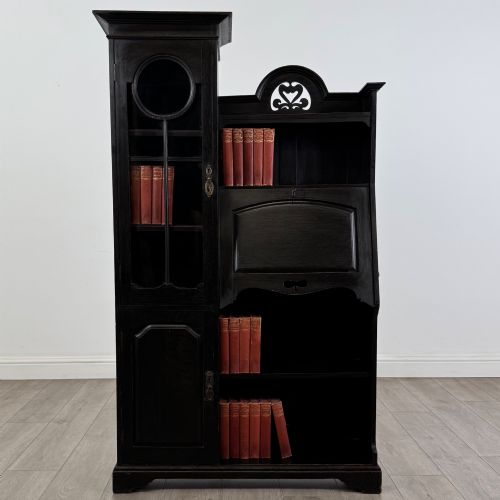
An ebonised bureau desk brings dark, polished drama to a study, offering concealed compartments and a drop-front writing surface.
Ebonised Bureau Desk
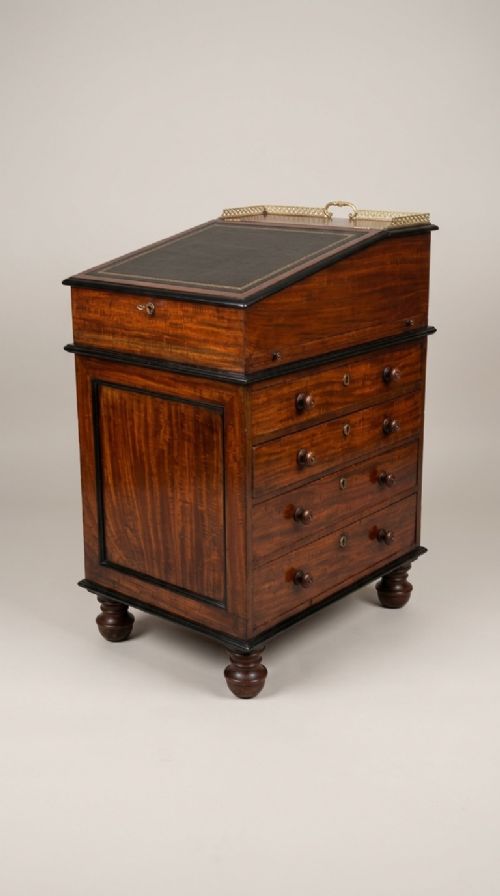
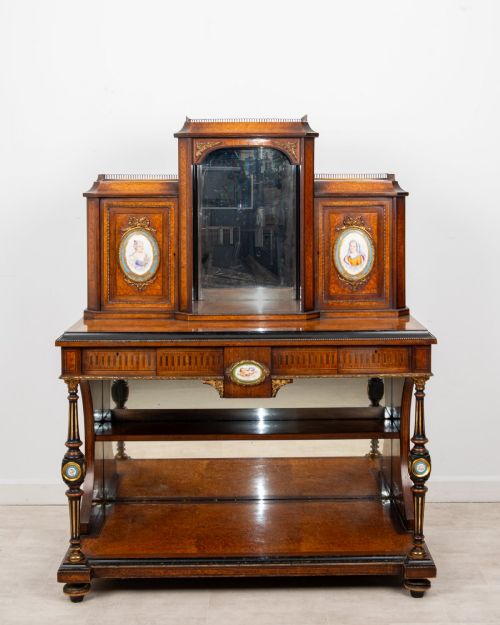
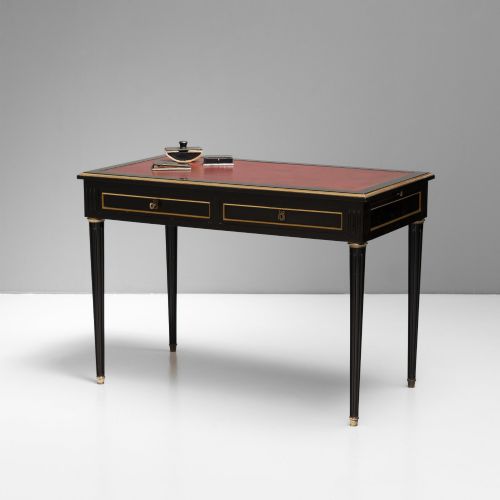
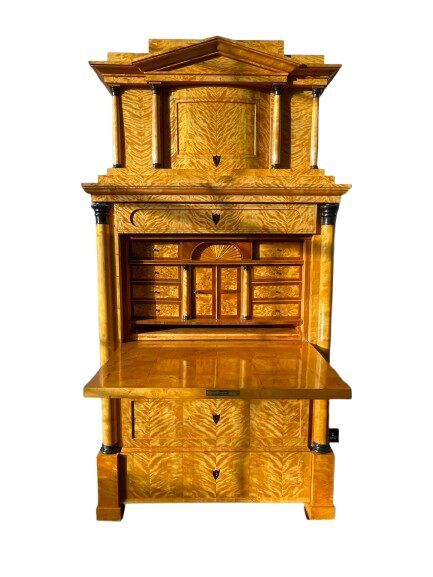
When you search for an ebonised bureau desk, you encounter writing furniture finished in dark, simulated ebony alongside pieces incorporating burr walnut, amboyna, and mahogany. These forms range from compact Victorian bonheur du jour desks to French Napoleon III writing tables and Biedermeier secretaires.
How they were made
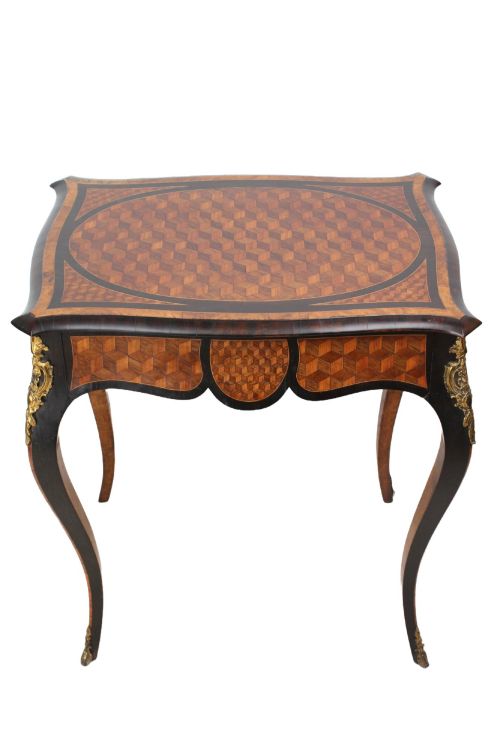
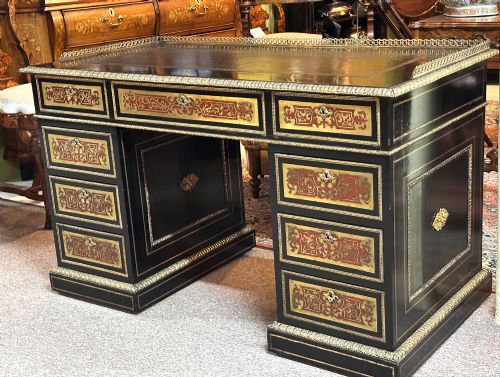
Craftsmen built these pieces using structural timbers such as pine, birch, and oak, applying dark ebonised finishes to mimic costly exotic hardwoods. Surface decoration often involved intricate boulle work, marquetry, parquetry, and inlaid panels of contrasting woods.
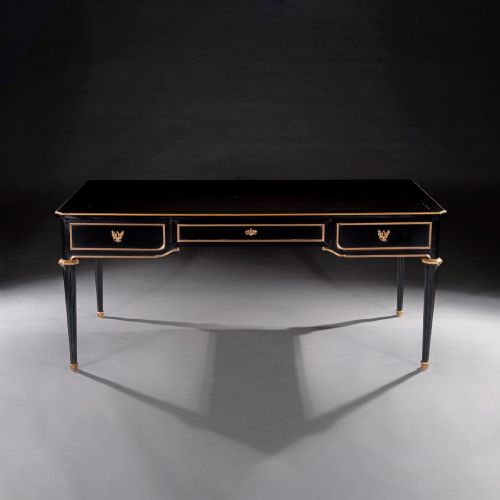
Metal ornamentation played a major role in construction, with ormolu, gilt bronze, and brass mounts fixed to drawers, corners, and legs. Writing surfaces were frequently inset with tooled leather, whilst finer examples incorporated hand-painted porcelain plaques and pietra dura work.
Listings span the nineteenth century up to 1940, incorporating woods like ebonised pine, birch, walnut, and amboyna alongside ormolu and leather.
What varies in quality
Quality rests heavily on the crispness of the ebonised finish and the precision of the underlying timber preparation. Superior examples display meticulous attention to detail in their marquetry and the secure seating of their metal mounts.
The integration of specialised elements, such as Sevres porcelain plaques or signed maker bronzes, elevates a piece significantly. Construction integrity in the drop-front mechanism and internal pigeonholes separates standard workshop production from master cabinet work.
JAS Shoolbred·Paul Sormani·Diehl Paris·Befort Jeune
The Ebonised Bureau Desk Glossary
- Ebonised
- Wood treated with stain or paint to imitate true ebony. This finish gained immense popularity during the Victorian and Aesthetic periods.
- Bonheur du jour
- A light lady's writing desk featuring a small cabinet or tiers of shelves on top. The form originated in mid-eighteenth-century France.
- Ormolu
- Gilt brass applied to furniture as decorative mounts. It requires careful cleaning to preserve the rich metallic lustre.
- Boulle work
- Elaborate marquetry consisting of tortoiseshell and brass inlaid in scrolling patterns. It takes its name from the master royal cabinetmaker André-Charles Boulle.
- Parquetry
- Geometric wood mosaic work used for floors and furniture surfaces. Artisans arrange small blocks to create striking patterns.
Ebonised Bureau Desk: Frequently Asked Questions
What is an ebonised bureau desk?
An ebonised bureau desk is a writing piece finished in dark, blackened wood, often featuring a fall-front flap or a dedicated writing surface with internal compartments.
These pieces draw on styles ranging from French Napoleon III and Biedermeier to the Aesthetic Movement, incorporating decorative elements like ormolu mounts and marquetry.
How do I style an ebonised desk?
An ebonised desk works well as a focal point in a study or living room, contrasting sharply against lighter walls or complementing traditional interiors.
Keep the surface uncluttered to highlight the dark polished wood and any applied metal mounts, porcelain plaques, or inlaid panels.
What is a bonheur du jour?
A bonheur du jour is a small, elegant writing desk topped with a raised cabinet, drawers, or pigeonholes for stationery.
Originating in France, these desks were designed for light correspondence and often showcase fine wood veneers, parquetry, or boulle work.
How do I identify nineteenth-century pieces?
Nineteenth-century examples frequently display revival styles such as Louis XV or Louis XVI, utilising woods like amboyna, walnut, and ebonised pine.
Look for construction methods typical of the period, including hand-cut dovetails in the drawers and traditional brass hardware.