



Ebonised Inlaid Centre Table
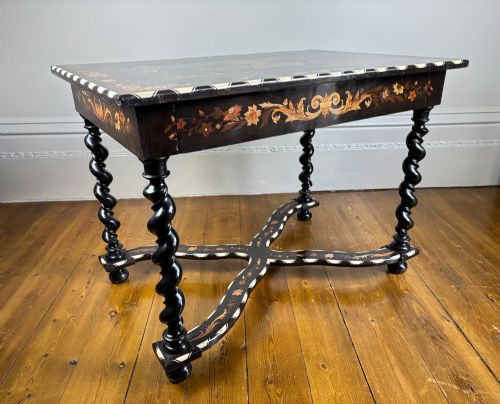
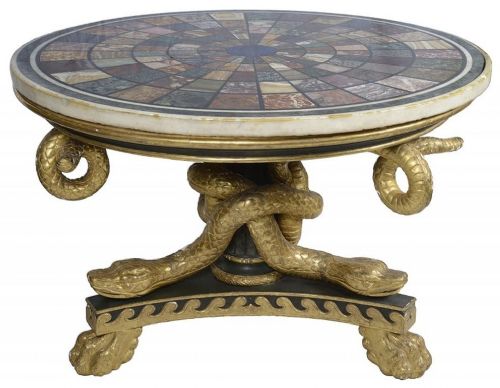
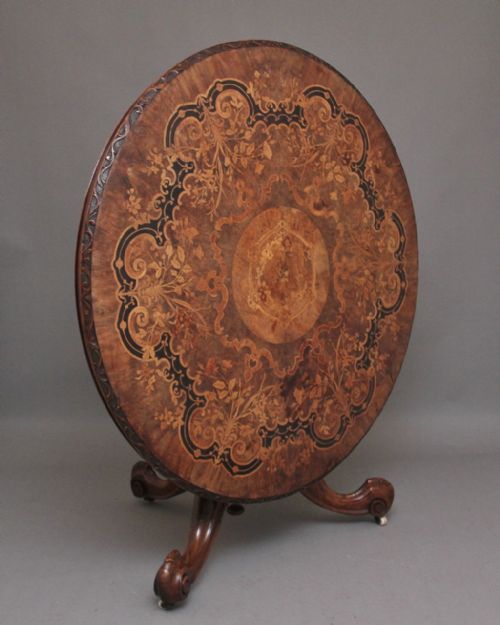
An ebonised inlaid centre table brings deep contrast and intricate surface detail to a room, standing freely as a focal point.
Ebonised Inlaid Centre Table
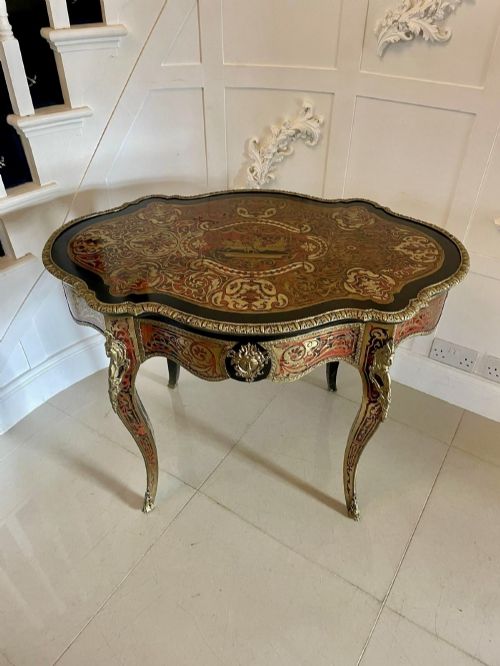
An ebonised inlaid centre table stands apart from wall-fixed furniture by demanding space in the middle of a room, finished with detail on all sides. You will frequently encounter Victorian and nineteenth-century examples alongside French Napoleon III designs.
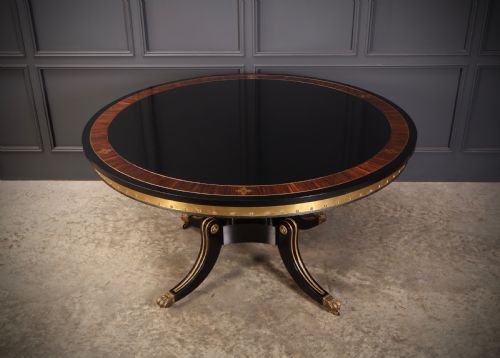
The surface serves varied purposes across the selection, shifting from formal occasional tables and breakfast tables to writing desks and games tables. Pedestal bases and four-legged supports both appear regularly among the forms.
Materials and Method
The dark, dense finish is achieved using ebonised wood or ebony, creating a stark ground that highlights lighter decorative elements. Craftsmen applied brass, bone, and marquetry inlays directly into the timber surface to form elaborate geometric and floral patterns.
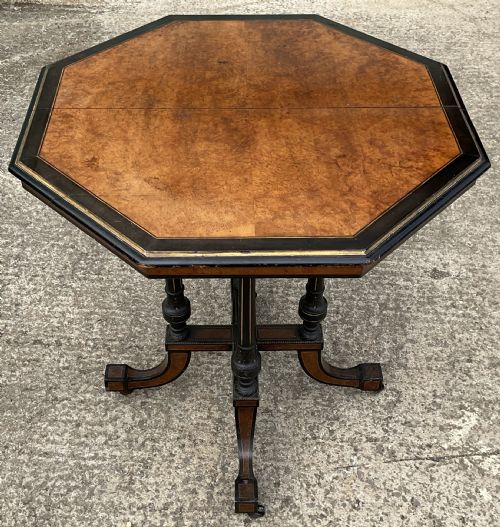
Ormolu mounts and amboyna or burr walnut veneers frequently supplement the dark body, particularly on nineteenth-century French and English pieces. The construction relies on traditional joinery methods suited to freestanding furniture.
The selection includes nineteenth-century pieces alongside Regency and twentieth-century examples, constructed in ebonised wood, burr walnut, and satin birch.
Quality and Execution
The refinement of the inlay work marks the primary division between standard pieces and exceptional ones, with hand-cut brass and delicate bone showing greater precision than simpler motifs. The choice of secondary timbers and the crispness of any cast or chased ormolu mounts further distinguish the execution.
Proportion and structural integrity dictate the standing of a table, ensuring the pedestal or leg configuration supports the weight of the top harmoniously. Tables retaining their original surface patination without heavy modern intervention hold greater integrity.
Maison Millet·Gillows
The Ebonised Inlaid Centre Table Glossary
- Ebonised
- Timber treated to imitate ebony, producing a dense black finish that forms the dark ground of these tables.
- Marquetry
- Decorative veneer patterns applied to the surface of furniture, often using contrasting woods to form pictorial or floral designs.
- Ormolu
- Gilt bronze mounts applied to furniture for decorative effect, common on nineteenth-century French pieces.
- Boulle
- A form of marquetry utilising tortoiseshell and brass, named after the French cabinetmaker Andre-Charles Boulle.
Ebonised Inlaid Centre Table: Frequently Asked Questions
Where do I place a centre table?
These tables are designed to stand freely in the middle of a room rather than against a wall, allowing them to be viewed from all sides.
They function effectively as a central display surface in a large hallway, a library, or a principal reception room.
How do I care for ebonised wood?
Keep the wood away from direct sunlight and heat sources to prevent the dark finish and underlying timber from drying out.
Dust gently with a soft, dry cloth and avoid harsh chemical polishes that can damage the delicate surface sheen.
What is the difference between a centre table and a side table?
A centre table is finished on all four sides because it is intended to sit in the open space of a room, visible from every angle.
A side table or console is typically designed to sit flush against a wall, often lacking finished detail on the rear.
How do I identify a Napoleon III table?
Napoleon III pieces often feature intense ebonisation combined with elaborate brass inlays, Boulle work, or gilt bronze mounts.
This nineteenth-century French style draws heavily on earlier Louis XIV and Renaissance revivals for its ornate aesthetic.