


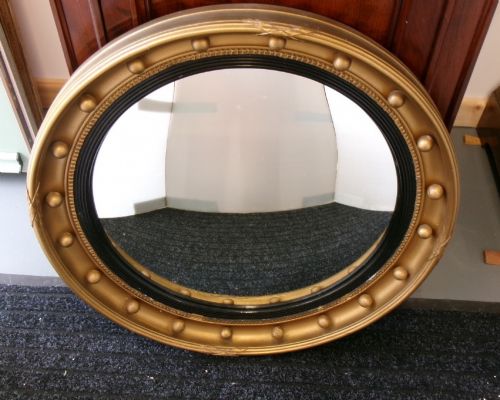


Ebonised Giltwood Frame Mirror
An ebonised giltwood frame mirror brings dark timber and bright metal together to catch the light and anchor a room.
Ebonised Giltwood Frame Mirror
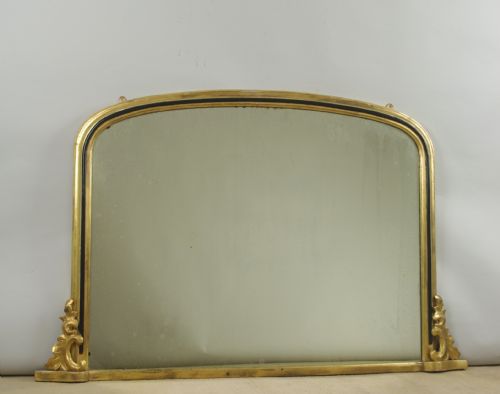
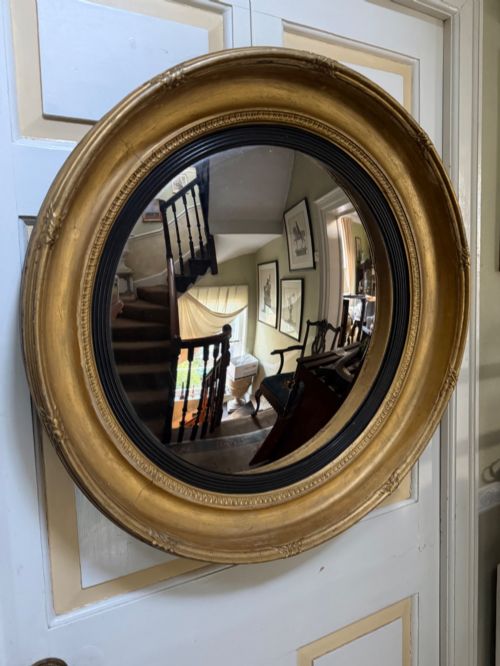
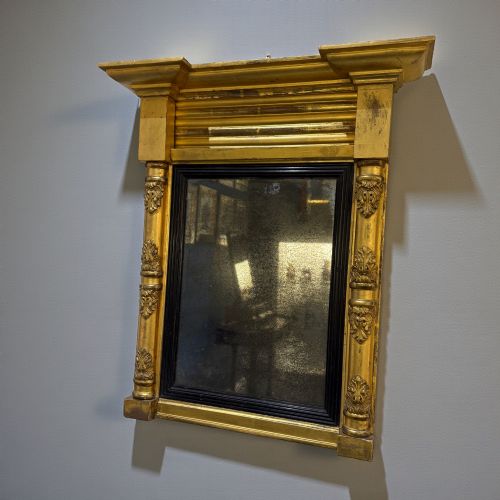
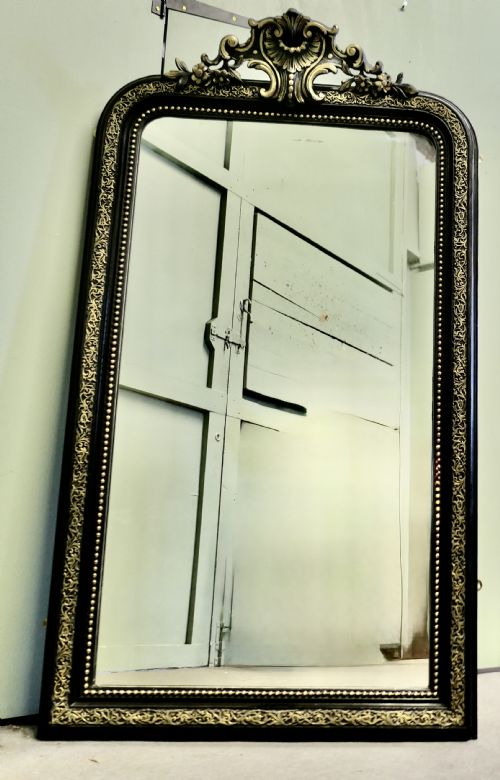
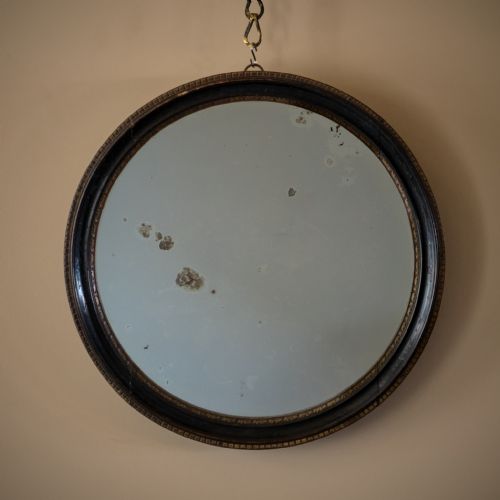
An ebonised giltwood frame mirror combines blackened wood with gilded ornament to create a striking contrast that defines the piece. These mirrors appear in circular, oval, arch top and rectangular wall forms across the selection.
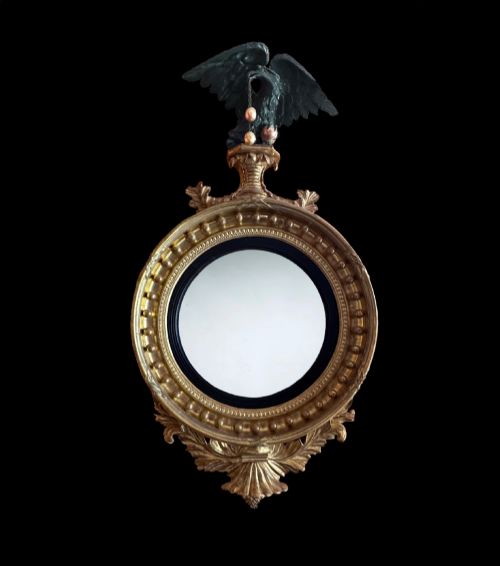
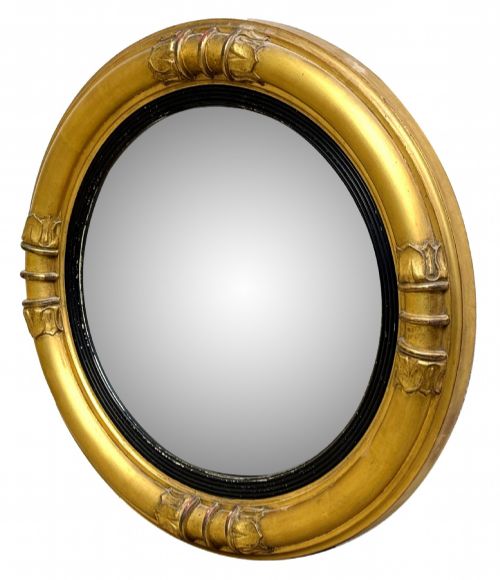
Most examples originate from the Regency and Victorian periods, alongside specific revivals and Napoleon III pieces. The circular convex mirror stands out as a frequent form, often displaying bold scale and proportions.
Makers produced these works for halls, overmantles and principal reception rooms where the interplay of black surfaces and gold leaf caught the domestic light. Buyers encounter wall mirrors and overmantle mirrors spanning the nineteenth and early twentieth centuries.
How they were made
Artisans built these frames using timber treated to achieve an ebonised finish alongside carved or moulded sections finished in gold leaf. Gesso and composition material provided the base for intricate decorative details applied to the wood.
Glass plates were silvered and fitted into circular or arched rebates behind deep mouldings. Parcel-gilt highlights were applied selectively to raised carvings to catch the illumination from candles and lamps.
Ebonised Giltwood Frame Mirror Retail Price Guide 2026
Typical asking prices for ebonised giltwood frame mirror among the pieces listed under this phrase on Sellingantiques today, from the lower quarter to the upper quarter. They describe what is for sale here now, not the wider market.
Convex mirrors are sometimes called banker's mirrors because their wide view supposedly allowed shopkeepers to watch customers from a single desk.
What varies in quality
The depth and crispness of the carved ornament distinguish finer examples from simpler production. Superior pieces show precise application of gold leaf and smooth ebonising that retains its depth across complex mouldings.
Proportion and scale dictate the visual impact of a convex or overmantle mirror. The quality of the original glass plate and the integrity of the underlying timber structure complete the assessment.
The Ebonised Giltwood Frame Mirror Glossary
- Ebonised
- Wood treated to imitate ebony, usually through staining or painting dark black. This finish provides a dark ground that highlights adjacent gilding.
- Giltwood
- Timber carved and coated with gold leaf or metal leaf. It reflects interior light and adds brightness to a room.
- Convex mirror
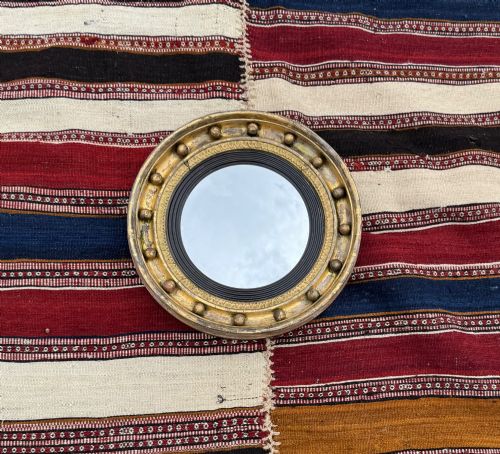
- A round mirror with a curved outward glass plate that reflects a wide panoramic view of the interior. These pieces often feature spherical balls set into the frame moulding.
- Gesso
- A plaster mixture applied to wood frames to create a smooth surface for gilding. It allows for intricate relief ornamentation.
- Overmantle mirror
- A large horizontal mirror designed to hang above a fireplace mantel. These pieces frequently incorporate arch tops and classical architectural motifs.
Ebonised Giltwood Frame Mirror: Frequently Asked Questions
Where should I hang a convex mirror?
Convex mirrors suit hallways, dining rooms and sitting rooms where their wide-angle reflection can capture natural light from windows.
Position them at eye level to draw the eye and create a focal point on a plain wall.
How do I care for ebonised and gilt surfaces?
Dust these frames gently with a dry, soft cloth to prevent accumulation in the carved details. Avoid liquid cleaners and harsh chemicals that can damage the delicate gold leaf and ebonised finish.
Keep the mirrors away from direct sunlight and damp conditions to preserve the timber and silvered glass.
What is the difference between Regency and Victorian pieces?
Regency mirrors often display classical revival motifs, such as ball-studded convex frames and Egyptian or Grecian styling. Victorian examples tend to be heavier in scale, encompassing large arch top overmantles and parcel-gilt oval wall mirrors.
Both periods utilise ebonised wood and giltwood, but the proportion and decorative vocabulary shift across the decades.
What is a Napoleon III mirror?
Napoleon III mirrors date from the French Second Empire period and often feature cushion frames and rich black and gold finishes. These pieces bring a distinct continental elegance to interior spaces.
They pair well with both period and contemporary room schemes due to their strong linear presence.