




Ebonised Column Pedestals
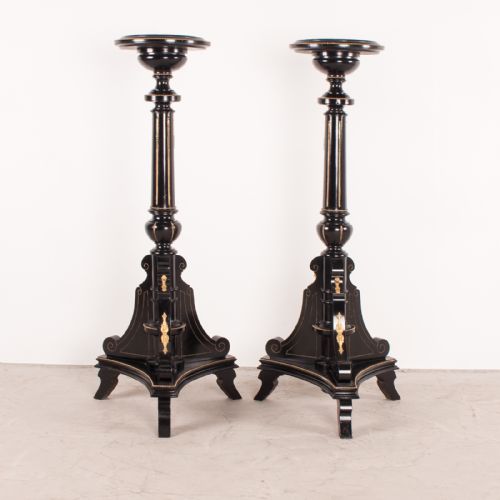
These ebonised column pedestals bring architectural strength and dark polished drama to any room.
Ebonised Column Pedestals
Ebonised column pedestals are vertical display supports designed to elevate sculptures, vases or lamps, drawing the eye upward with classical proportion. When you search for ebonised column pedestals, you encounter forms ranging from strict Victorian classical columns to decorative Aesthetic movement stands with contrasting details.
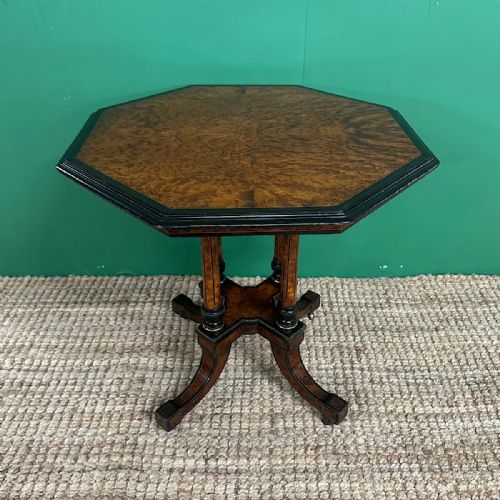
The pieces on this page span several centuries, including Georgian, Victorian and early twentieth century examples. Alongside traditional fluted columns, you find varied interpretations such as torcheres, tiered plinths and occasional tables sharing the same dark finish.
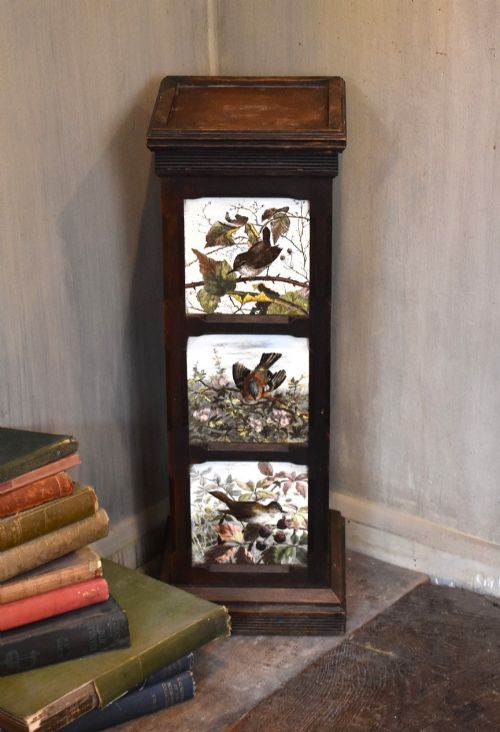
Stylistic influences vary widely across the selection, taking in French Napoleon III, Swedish Empire Revival, Jacobean Revival and Arts and Crafts design. This diversity means a pedestal might feature simple turned wood or incorporate ceramic tiles and gilded accents.
Materials and construction
Makers achieved the characteristic dark finish of ebonised wood by staining timber to imitate costly ebony, frequently combining it with amboyna, mahogany or birch beneath the surface. Gilding, ormolu mounts and brass details provide sharp metallic contrast against the dense black ground.
Surface decoration extends beyond simple staining to include intricate lacquer work and inset ceramic tiles, particularly within Aesthetic movement and Victorian examples. Carved ebony elements and gilt accents demonstrate the high level of detail applied by cabinet makers.
Some nineteenth century stands incorporate crouching figures supporting the column, adding a theatrical touch to classical display.
Evaluating craftsmanship and condition
Superior examples demonstrate crisp joinery and precise turning, particularly where fluted columns meet stepped plinths and capitals. The depth and finish of the ebonisation dictate the visual weight of the piece, separating standard workshop output from exhibition quality work.
The integration of secondary materials such as ormolu mounts, ceramic tiles or contrasting timbers marks the distinction between utilitarian stands and decorative statement pieces. Maker attribution, as seen in pieces originating from established workshops, further elevates the standing of an individual column.
Gillow & Co.
The Ebonised Column Pedestals Glossary
- Ebonised
- Wood treated with stain, dye or polish to resemble genuine ebony. This dark finish gained immense popularity during the nineteenth century for furniture and decorative objects.
- Torchere
- A tall stand or pedestal originally designed to hold a torch or candle, later adapted for lamps and urns. These pieces often feature slender shafts and decorative tops.
- Ormolu
- Gilded bronze or brass applied as decorative mounts to furniture and pedestals. The technique creates bright metallic highlights against dark timber surfaces.
- Plinth
- The heavy base or lower block of a pedestal or column. It provides structural stability and grounds the vertical architectural form.
Ebonised Column Pedestals: Frequently Asked Questions
What were ebonised column pedestals used for?
These tall stands served primarily to elevate decorative arts, including marble busts, bronze sculptures, large urns and heavy ceramic vases. By raising objects to eye level, they allowed viewers to appreciate fine details without bending down.
In period interiors, they also functioned as torchieres to hold candles or oil lamps, illuminating dark corners of large reception rooms. Today, they remain practical furniture for displaying plants, lamps and contemporary sculpture in domestic settings.
How do I date an ebonised pedestal?
Dating relies on examining the underlying wood types, construction methods and stylistic motifs present in the carving or mounts. Georgian pieces often display heavy mahogany under ebonising, while Victorian and Aesthetic examples introduce elements like ceramic tiles and gilt accents.
Revival styles from the late nineteenth and early twentieth centuries frequently borrow classical proportions from earlier periods. Examining the wear on the base and the finish inside joints helps confirm the age of the timber.
Where should I place a column pedestal?
Column pedestals work best in corners, hallways or flanking larger pieces of furniture where their vertical form can create architectural balance. Placing them against plain walls allows the dark ebonised silhouette and any displayed object to stand out clearly.
Ensure the location protects the piece from heavy foot traffic, as tall stands can be top-heavy depending on the weight of the base and the object placed on top.
How do I care for ebonised wood?
Maintenance requires regular dusting with a soft, dry cloth to prevent particles from settling into carved details or crevices. Avoid using harsh chemical cleaners, silicone sprays or excessive water, which can damage the dark surface finish.
Keep pedestals away from direct sunlight and heat sources to prevent the timber from drying out, warping or developing cracks in the ebonised coating over time.