
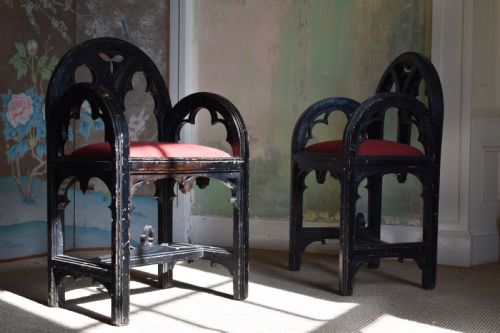


Ebonised Carved Seat
An ebonised carved seat brings dark, dramatic wood and crisp detail into a room, offering both sculptural presence and historical charm.
Ebonised Carved Seat
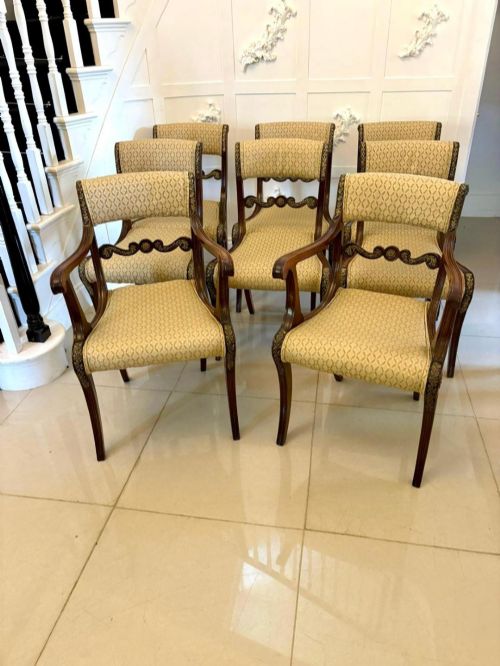
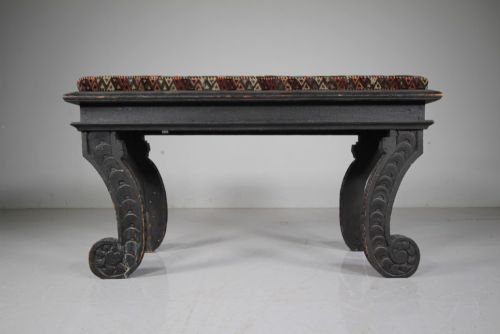
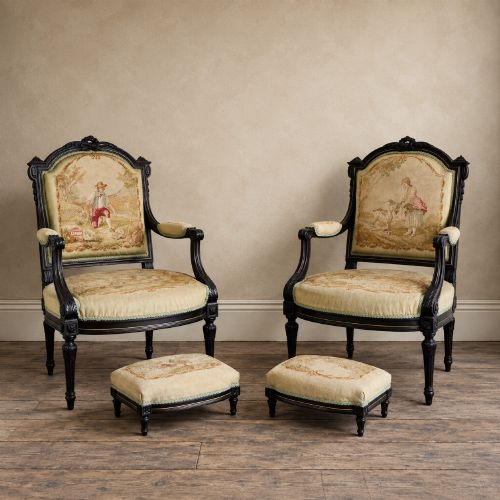
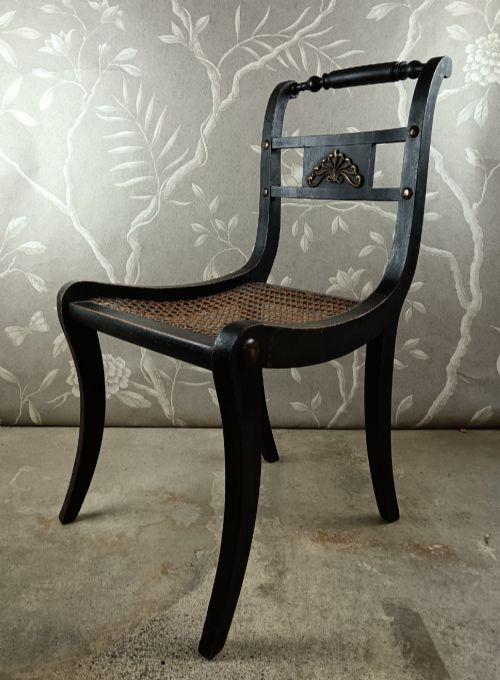
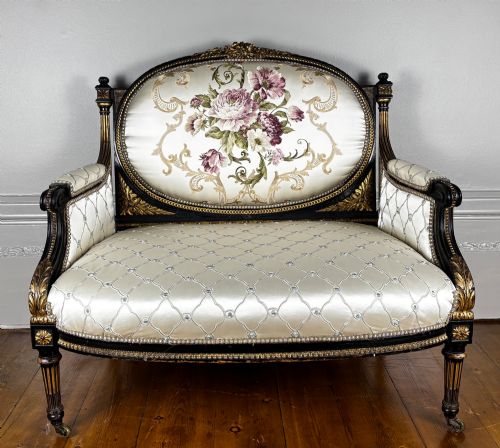
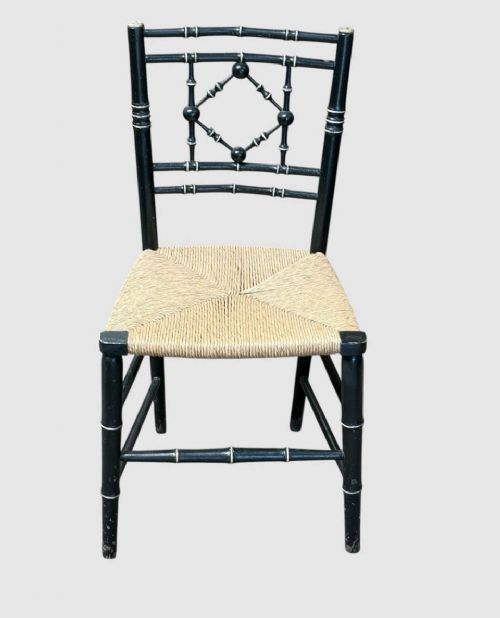
An ebonised carved seat encompasses various forms designed for sitting or reclining, ranging from salon chairs and dining chairs to benches and stools. These pieces emerge predominantly from the nineteenth century, covering Victorian, Regency, and Aesthetic Movement eras.
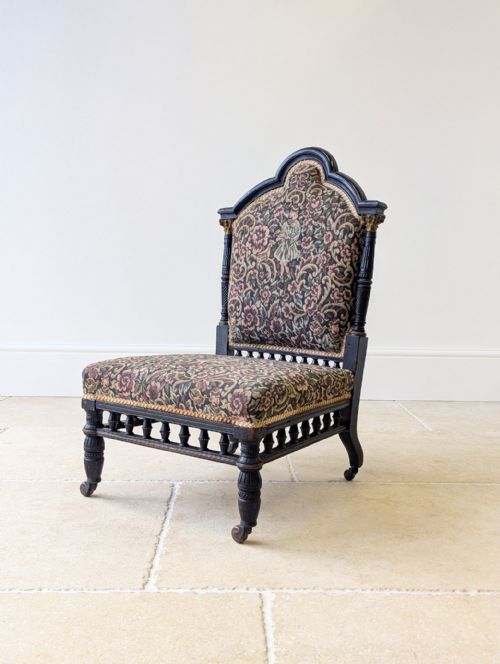
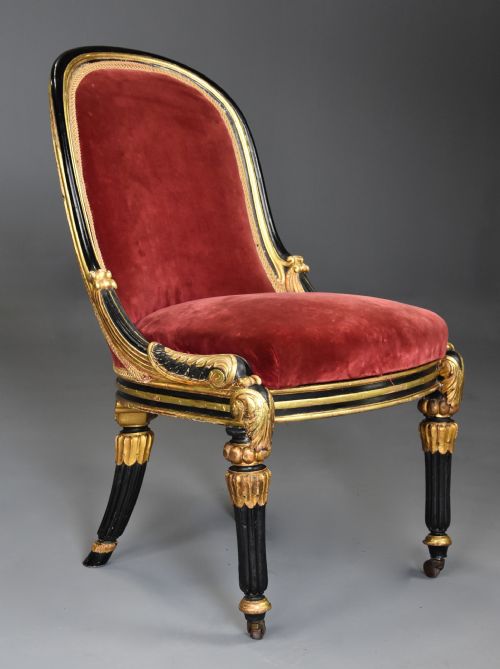
The version most commonly encountered on this page is the nineteenth-century Victorian or Aesthetic Movement side chair or salon chair, featuring blackened wood surfaces and intricate carved details. Buyers also meet window seats, armchairs, and stools created during the Regency and later Victorian periods.
Makers and designers from these historic periods drew on classical, Gothic, and French revival styles to shape the wood, resulting in dark, striking silhouettes that anchor a room's decor.
Materials and construction methods
The construction relies heavily on hardwoods such as beech, mahogany, and pine, which are painted, stained, or chemically treated to achieve a dense ebonised finish that mimics ebony. Gilding, parcel gilt accents, and brass details often highlight the carved wooden elements.
Seating surfaces utilise traditional materials including woven cane, textile, green velvet, tapestry, and fabric upholstery. Joinery techniques from the nineteenth century ensure structural integrity across dining chairs, armchairs, and benches.
The listings span the nineteenth century, featuring Victorian, Regency, and Aesthetic Movement pieces made from ebonised wood, mahogany, and beech.
Defining quality in ebonised carved seating
Quality reveals itself in the crispness of the carved ornamentation and the depth of the ebonised finish across the wooden frame. Pieces designated as exhibition quality or fine quality display superior joinery and more refined proportions.
The integrity of the original materials, such as intact cane seating or well-preserved parcel gilding, elevates a piece above standard workshop productions. The sophistication of the design, whether reflecting Aesthetic Movement ideals or Regency proportions, dictates the upper tier of the range.
Lamb of Manchester·Bruce J. Talbert·Maple & Co
The Ebonised Carved Seat Glossary
- Ebonised wood
- Timber treated with stain, paint, or chemical processes to imitate the dark, dense appearance of natural ebony. This finish became particularly popular during the nineteenth century for formal and artistic interiors.
- Aesthetic Movement
- A nineteenth-century design style that emphasised art for art's sake, often featuring simplified forms, Japanese-inspired motifs, and ebonised finishes. Pieces from this movement prioritize visual harmony over heavy historical revivals.
- Regency
- A style period spanning the early nineteenth century characterised by classical restraint, elegant curves, and influences from ancient Greece and Rome. Sabre legs and gilt highlights frequently appear on seating from this era.
- Parcel gilt
- A decorative technique where specific carved details or raised portions of a wooden object are covered in thin gold leaf. This creates a striking contrast against the dark ebonised background.
- Prie Dieu
- A devotional prayer chair featuring a low seat and an upper rest designed for kneeling and leaning during prayer. These nineteenth-century examples often combine ebonised wood with rich velvet upholstery.
Ebonised Carved Seat: Frequently Asked Questions
How do I identify an ebonised finish?
An ebonised finish is achieved by treating timber so that it resembles natural ebony, presenting a deep black appearance. On nineteenth-century pieces, this surface is typically part of the original design rather than a later addition.
Close inspection often reveals the underlying grain of beech, mahogany, or pine beneath the dark coating. Over time, genuine antique ebonisation shows honest wear patterns rather than uniform modern paint.
Where should I place a salon chair?
A salon chair works well in a drawing room, bedroom, or hallway as an occasional seat. Its compact form allows it to occupy corners or empty spaces without dominating the floor plan.
Because these pieces feature decorative carving and ebonised frames, they function as sculptural objects as much as functional furniture. Pairing them with complementary historic textiles enhances their visual impact.
How do I care for cane seats?
Cane seating requires gentle cleaning with a damp cloth to remove dust from the woven strands. Avoiding excessive moisture prevents the natural material from becoming brittle.
Keeping the room at a stable humidity level protects the cane from drying out and snapping. Weight should be distributed evenly to avoid stressing historical woven surfaces.
What defines the Aesthetic Movement style?
The Aesthetic Movement emerged in the late nineteenth century to champion visual beauty and artistic design over strict historical revival. Furniture from this era often utilises ebonised wood surfaces, simple geometric lines, and stylized carving.
These pieces frequently incorporate influences from Japanese art and architecture. They provide a refined, understated alternative to heavier Victorian furnishings.