


Ebonised Cane Seat Chair
An ebonised cane seat chair brings dark, crisp lines and woven texture to a room, offering both elegance and lightness.
Ebonised Cane Seat Chair
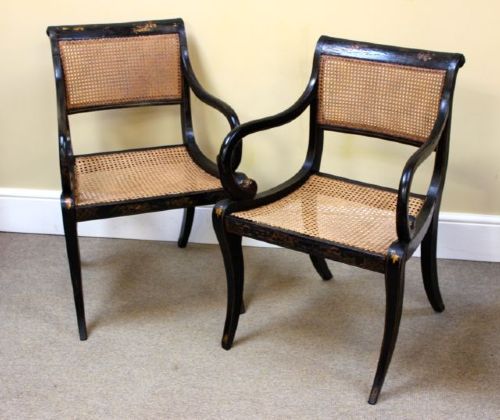
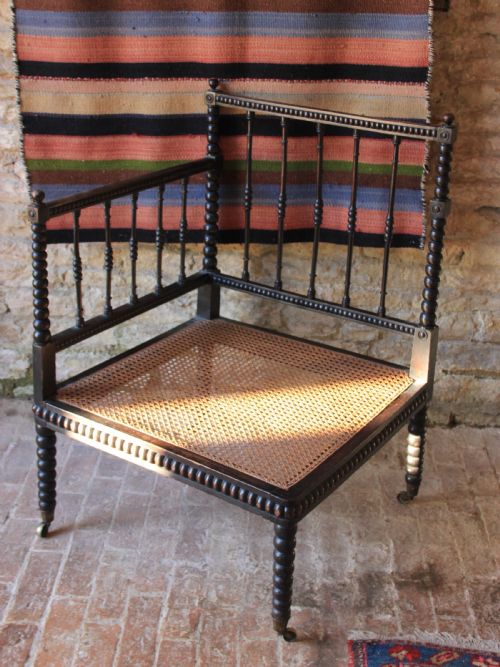
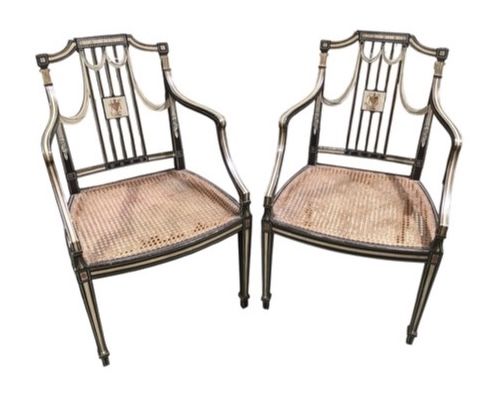
An ebonised cane seat chair is a seating piece finished in a dark, blackened surface and fitted with a woven canework seat. These chairs span several eras, from the Regency period and the nineteenth century through to later revivals and twentieth-century bentwood examples.
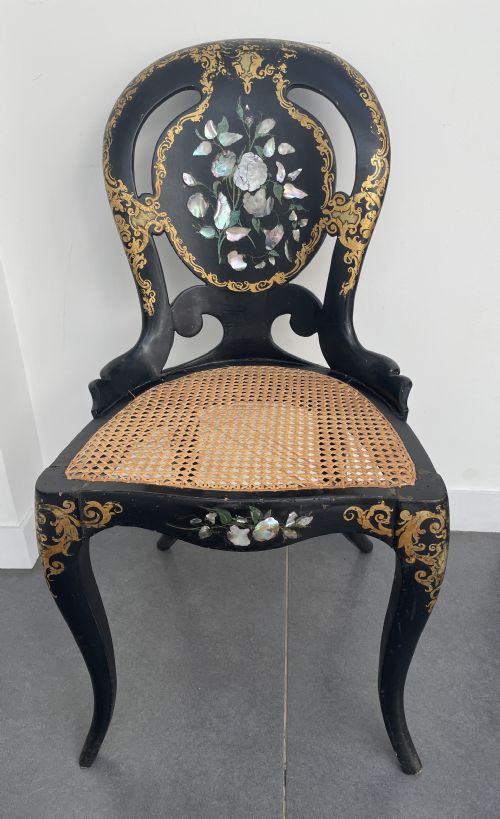
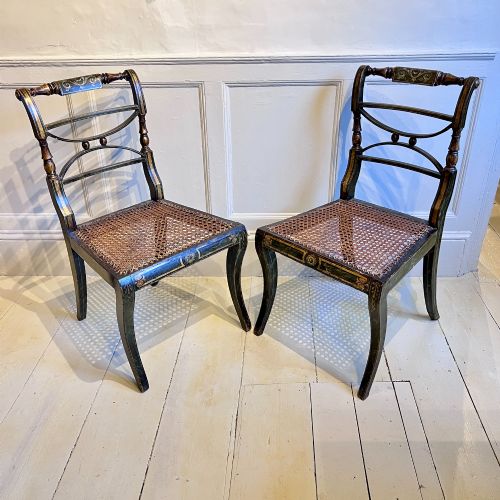
The selection here includes side chairs, armchairs, dining chairs, and hall chairs alongside smaller children's chairs and rockers. You will frequently encounter Regency and Victorian forms, often featuring painted details, parcel gilt, or inlaid mother-of-pearl.
Makers and designers worked within distinct idioms, ranging from strict classical proportions to Aesthetic Movement designs and Anglo-Indian colonial pieces. The woven seat provides a resilient, permeable surface that contrasts sharply with the dense, dark wood of the frame.
What varies in quality
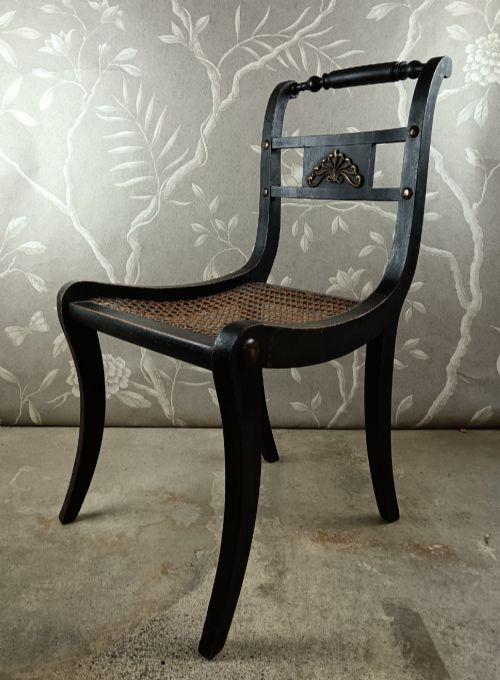
The refinement of the turning and carving distinguishes finer examples from simpler vernacular pieces, particularly in the precision of sabre legs or bobbin details. The treatment of the ebonised finish and the crispness of any parcel gilt or painted decoration also mark out superior workshops.
The integrity and tightness of the original cane work affect the character of the piece, as does the choice of primary timber beneath the blackened surface. Well-balanced proportions and harmonious decorative schemes elevate certain chairs far above standard utility seating.
Among the full-sized seating, tiny bentwood rocking chairs wait patiently for dolls.
E W Godwin·Thonet·John Gee
The Ebonised Cane Seat Chair Glossary
- Ebonised
- Wood treated with stain, paint, or chemical processes to resemble solid ebony. This dark finish became particularly fashionable during the Regency and Victorian periods.
- Cane
- Strips of rattan peel woven into a mesh pattern for seats and backs. It provides a lightweight, flexible surface.
- Parcel Gilt
- Partial application of gold leaf to specific raised details or carved highlights on a painted or dark-finished surface. It creates a subtle contrast against the ebonised wood.
- Sabre Leg
- A concave-curved rear or side leg that tapers toward the foot, characteristic of Regency furniture design. It derives its name from the sweeping curve of a cavalry sword.
Ebonised Cane Seat Chair: Frequently Asked Questions
How do I care for a cane seat?
Keep the woven cane hydrated by wiping it occasionally with a damp cloth to prevent the natural fibres from becoming brittle.
Avoid placing the chair near direct heat sources or in overly dry rooms, which can cause the cane strands to snap.
Are these chairs comfortable to sit on?
The woven cane offers a surprising amount of spring and flex, providing a supportive seat without heavy upholstery.
For extended sitting, a tailored squab cushion can be added to soften the firm wooden frame.
How do I distinguish Regency from Victorian examples?
Regency chairs typically display restrained classical lines, such as sabre legs, faux bamboo turnings, or subtle brass mounts. They lean toward architectural clarity and lighter proportions.
Victorian pieces often introduce bolder ornamentation, including mother-of-pearl inlay, bobbin turning, or heavier proportions associated with later revivals.
Can I use an ebonised chair in a modern interior?
The dark, neutral tone of the blackened wood allows these chairs to anchor contemporary spaces with a strong graphic silhouette. Their slender frames prevent them from overwhelming smaller rooms.
They work effectively as single accent pieces at a desk or paired alongside clean-lined modern dining tables.