

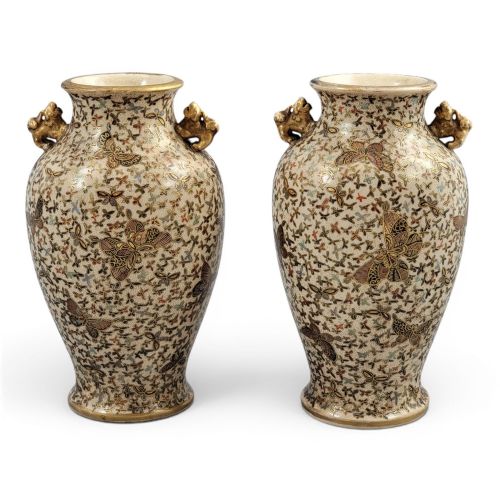


Earthenware Satsuma Urns
When you search for earthenware satsuma urns, you enter a world of finely painted ceramics carrying rich stories from late nineteenth and early twentieth century Japan.
Earthenware Satsuma Urns
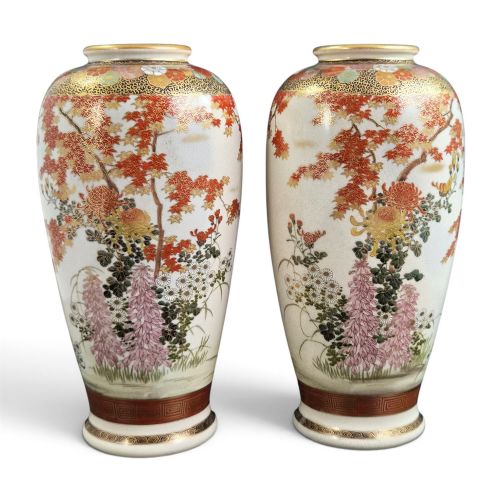
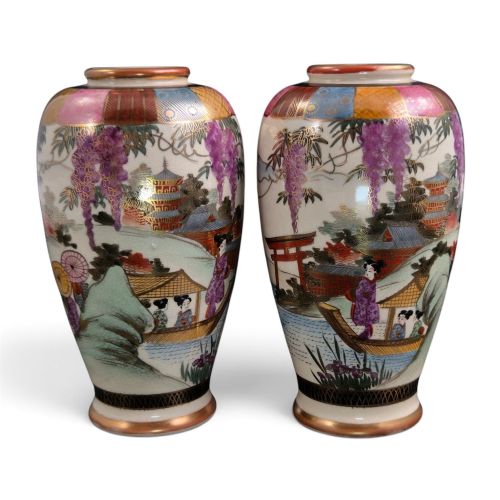
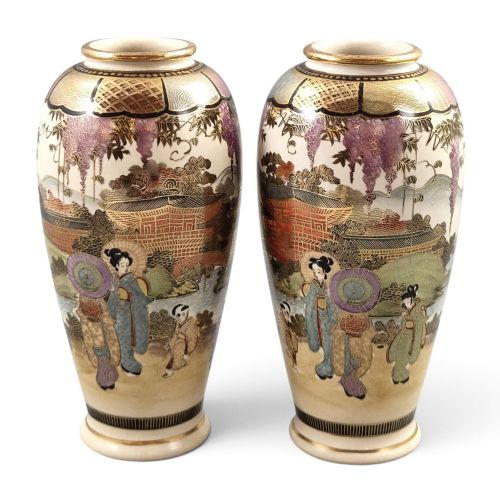
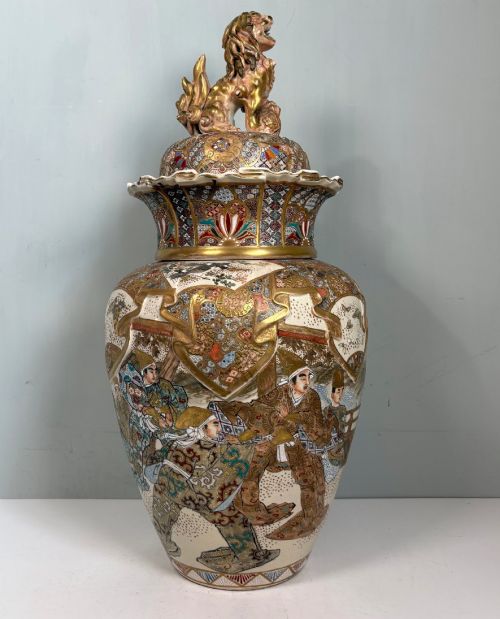
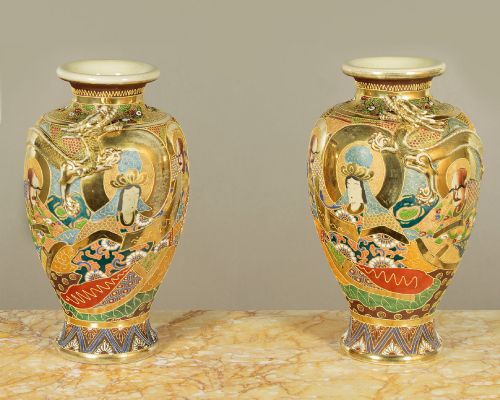
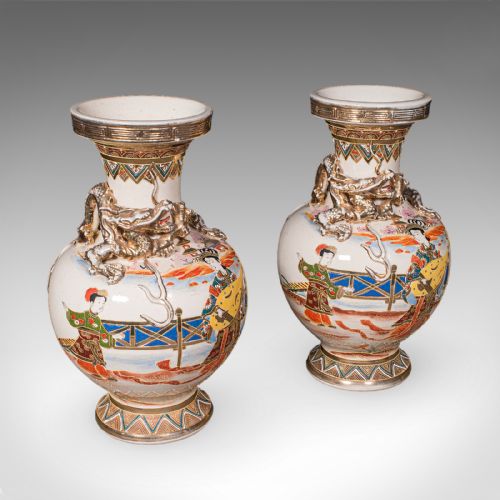
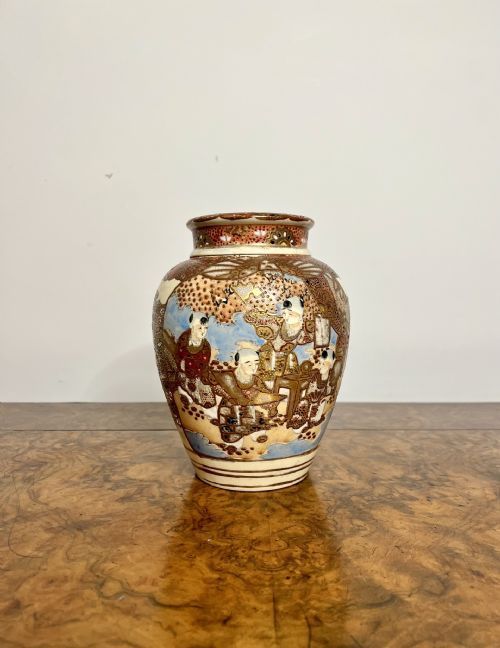
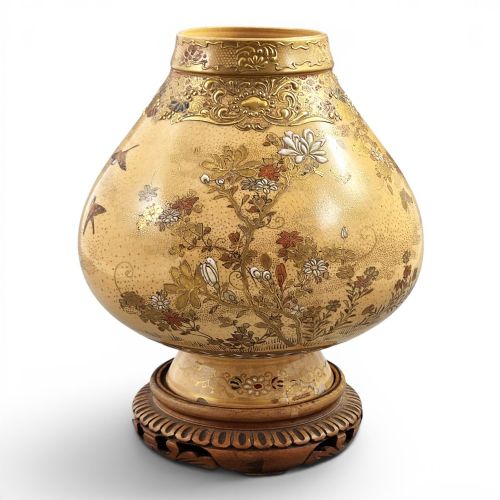
Earthenware satsuma urns comprise decorative vessels, lidded jars, and koro incense burners originating largely from the Meiji, Taisho, and Showa periods. Buyers searching this phrase commonly encounter baluster vases, ginger jars, and twin-handled forms decorated with detailed figural and landscape scenes. Most examples span the late nineteenth century into the Edwardian era, reflecting traditional Kyoto and regional Japanese craftsmanship.
The decorative schemes on these pieces frequently depict arhats, court figures, wisteria gardens, and intricate thousand butterfly patterns. Many vessels carry specific signatures from notable workshops or individual artists such as Kinkozan, Hotoda, and Chosei. Scale varies from miniature cabinet pieces up to monumental exhibition vases designed for prominent display.
Materials and Technique
These pieces are built from a porous earthenware body that is subsequently covered in a finely crackled glaze. Artisans then apply detailed enamel paints and intricate gold leaf details, known as gilt, across the surface.
Many of the finer decorative motifs utilise moriage, a technique where enamel is built up in relief to create a textured, three-dimensional effect. Bronze mounts and wooden components occasionally appear on specific lidded jars and incense burners.
Listings feature works spanning the nineteenth century through the early twentieth century, including the Victorian and Edwardian eras.
The Spectrum of Quality
Quality rests primarily on the precision and density of the hand-painted enamel work and the complexity of the figural composition. Finely rendered facial expressions, meticulous gilding, and the presence of artist signatures elevate certain works above standard production pieces.
The refinement of the underlying earthenware body and the clarity of the crackled glaze also distinguish standard export ware from exhibition-grade creations. Workshops known for superior output demonstrate tighter control over their palette and greater depth within landscape and religious panels.
Maruni Kobe·Shozan·Kinkozan·Hotoda·Chosei·Nanzan·Seiko en Chokei·Yamashu·Kizan·Hakusan·Tagawa
The Earthenware Satsuma Urns Glossary
- Moriage
- A technique of applying slip or enamel in raised dots or lines to create textured, tactile surface decoration. This method gives certain floral and figural elements a distinct three-dimensional feel.
- Koro
- A traditional Japanese incense burner, typically featuring a lidded body raised on feet or resting on a matching base. These vessels often include decorative handles.
- Shimazu Mon
- The heraldic family crest of the Shimazu clan, featuring a cross within a circle. This mark frequently appears on high-grade Satsuma wares associated with the Satsuma domain.
- Meiji Period
- The era in Japanese history spanning from 1868 to 1912, marked by increased international trade and the production of highly detailed export ceramics. Many of the finest Satsuma pieces date from this timeframe.
- Baluster
- A vase form characterised by a rounded body that tapers toward the base and flares slightly at the neck. This shape provides a stable canvas for expansive landscape and figural scenes.
Earthenware Satsuma Urns: Frequently Asked Questions
How do I identify a Meiji period piece?
Meiji period pieces generally display dense, highly detailed hand-painted scenes combined with fine gilt work over a crackled glaze. Many carry signatures from established Kyoto workshops or prominent individual artists.
Examining the weight, the style of the figural clothing, and the complexity of the background patterns often helps confirm this nineteenth-century provenance.
What is the Shimazu crest?
The Shimazu mon is a heraldic crest depicting a cross inside a circle, representing the ruling clan of the Satsuma domain. Its presence on a vessel usually signifies a connection to higher-tier production.
This mark appears frequently on exhibition-quality pieces intended for international export during the late nineteenth century.
Where should I display these urns?
These ceramic pieces suit prominent surfaces such as sideboards, mantelpieces, or dedicated display cabinets where their detailed enamel and gold leaf work catches ambient light. Because the underlying earthenware is porous and the surface glazes feature delicate crackle patterns, placement should avoid areas prone to heavy moisture or direct physical impact.
Pairing vases on matching wooden stands allows their intricate panels and signatures to be viewed from multiple angles safely.
What does moriage mean?
Moriage refers to a decorative technique where enamel or clay slip is built up in relief on the ceramic surface. This creates raised borders, textured robes, and tactile floral details that stand proud of the glaze.
Pieces featuring heavy moriage often indicate a higher grade of craftsmanship and greater time spent by the decorator.
Are these pieces fragile?
Like most antique earthenware, these items require careful handling due to the porous nature of the ceramic body and the delicate nature of surface gilding and enamel. Gentle dusting with a dry, soft brush is generally sufficient for maintenance.
Avoiding abrasive cleaning agents ensures the intricate gold leaf and raised enamel details remain intact over time.