

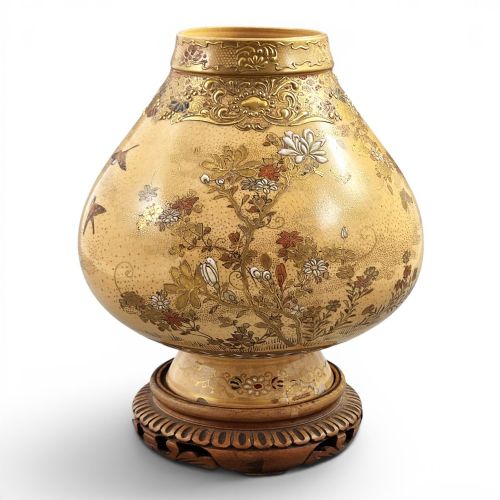


Gold Gilt Pottery Vases
These gold gilt pottery vases combine historic ceramic forms with rich metallic embellishment, offering interiors a focal point of substance and detail.
Gold Gilt Pottery Vases
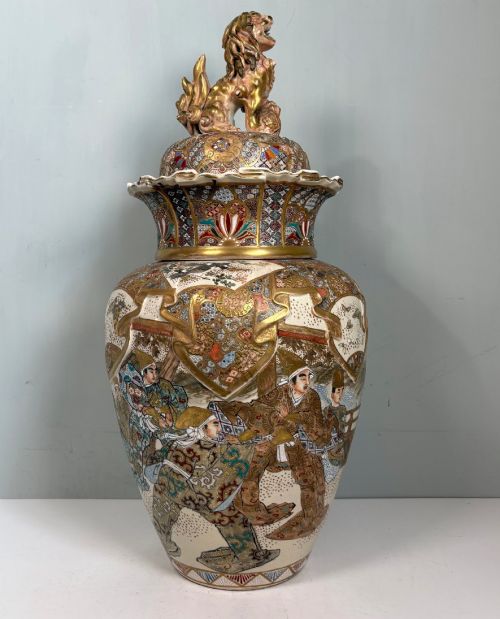
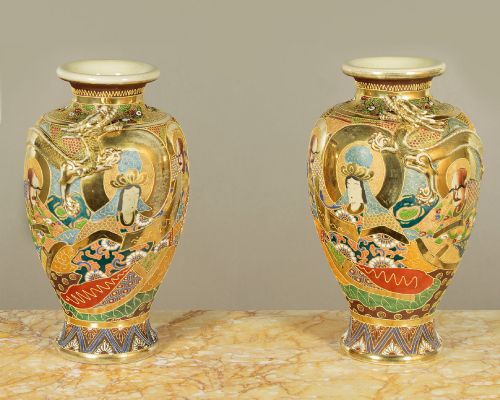
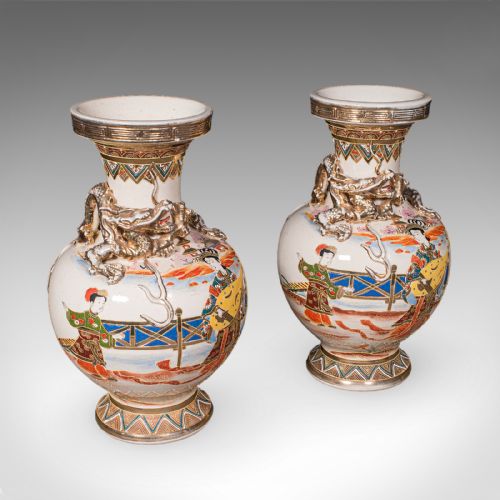
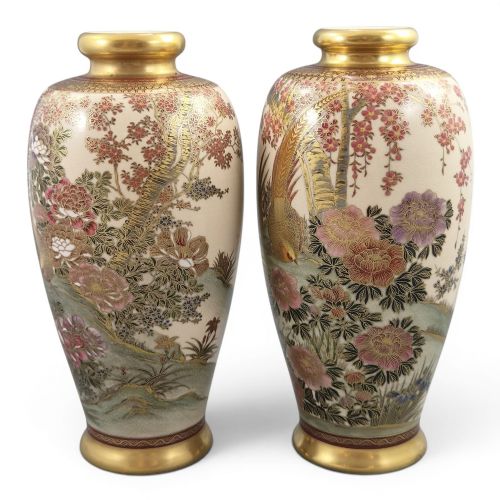
When you search for gold gilt pottery vases, you encounter a selection spanning the nineteenth century into the twentieth, with a strong representation of Japanese Satsuma ware alongside British ceramic traditions. These pieces include baluster forms, hexagonal shapes, bottle vases, and jardinieres originating from periods such as the Victorian era, the Edwardian period, and the Meiji era. Japanese Satsuma production dominates the selection, featuring hand-painted figural scenes, cobalt accents, and intricate raised decoration.
British works from makers such as Minton, Royal Doulton, and Wedgwood also appear, bringing European aesthetic movements and Persian influences into the ceramic medium. Forms range from miniature cabinet pieces to monumental exhibition items, sometimes adapted for table lamps or paired as matching decorative ornaments. The unifying characteristic across these disparate origins is the application of gold leaf or gilt detailing upon earthenware, porcelain, or ceramic bodies.
Materials and Techniques
The underlying vessels are formed from ceramic, earthenware, or porcelain bodies, shaped into vessels, ewers, and urns. Artisans then applied enamel paints, cobalt blue pigments, and gold leaf or gilt highlights to decorate the surfaces.
Techniques such as moriage involved applying raised slip to create textured, three-dimensional decorative elements before the final application of gold leaf. Hand-painting required skilled brushwork to execute detailed figural processions, landscapes, and floral motifs within panel reserves.
Listings feature nineteenth and early twentieth century items, encompassing Victorian, Edwardian, and Meiji period aesthetics.
Distinctions in Quality
Quality rests upon the precision of the hand-painted detail and the density of the gold gilt application. Pieces produced for major exhibitions or distinguished workshops display finer brushwork in figural scenes and more complex relief ornament.
The execution of specialised forms, such as intricate bamboo-handle shapes or substantial baluster silhouettes, demonstrates the maker's technical capability. Furthermore, legible signatures from recognised artists or workshops indicate a higher standard of production than unmarked commercial pieces.
Manpei·Kinkōzan·Tunnicliffe·Christopher Dresser·John H Plant·Chosei·Nanzan·Seiko en Chokei·Hakusan·Hododa·Ernst Wahliss
The Gold Gilt Pottery Vases Glossary
- Satsuma
- A type of Japanese earthenware originating from Satsuma Province, characterised by a fine crackle glaze and decorated with polychrome enamels and rich gold gilt.
- Moriage
- A ceramic technique using piped clay slip to build up raised decorative patterns before glazing and gilding.
- Baluster
- A vertical architectural form featuring a rounded, bulging lower body tapering to a narrower neck, commonly found in vase profiles.
- Rakan
- Arhats or spiritual figures from Buddhist traditions frequently depicted in the detailed figural panels of Japanese ceramics.
- Mon
- A traditional Japanese emblem or badge used to identify families, clans, or governmental organizations, often seen on Satsuma pottery.
Gold Gilt Pottery Vases: Frequently Asked Questions
How do I care for antique gilt vases?
Dust these ceramic surfaces gently with a soft, dry cloth to protect the delicate gold leaf and enamel decorations. Avoid liquid cleaners, moisture, and abrasive materials, which can permanently damage the historic painted finish.
Keep the vases away from direct sunlight to prevent the fading of hand-painted pigments over time. Place them on stable, level surfaces where they remain secure from accidental knocks.
What is Satsuma ware?
Satsuma ware is a distinct category of Japanese pottery featuring an ivory-coloured earthenware body covered in a fine, network crackle glaze. Artisans decorated these surfaces with elaborate enamel scenes and heavy gold gilt.
Originally produced in the Satsuma Province, output expanded to Kyoto and Tokyo during the Meiji period to supply international demand. These pieces often depict traditional landscapes, historical figures, and floral arrangements.
How do I identify the maker?
Turn the vessel over to examine the base for painted, impressed, or stamped artist signatures and workshop marks. Japanese pieces frequently bear the artist name alongside a kiln or distributor mark, while British ceramics display factory ciphers.
Researching these specific characters and crests against historical records reveals the origin and production period. Unmarked examples are attributed through stylistic similarities, decorative motifs, and manufacturing techniques.
Where should I display these vases?
Position these decorative objects in prominent interior locations such as mantelpieces, sideboards, or dedicated display cabinets where their detailed gilding catches the ambient light. Ensure the chosen spot offers adequate physical support, particularly for larger baluster or monumental forms.
Consider pairing matching items symmetrically to create a traditional focal point within a room. Alternatively, allow a single large vase to stand alone as an architectural accent.