


Earthenware Jardiniere Pot
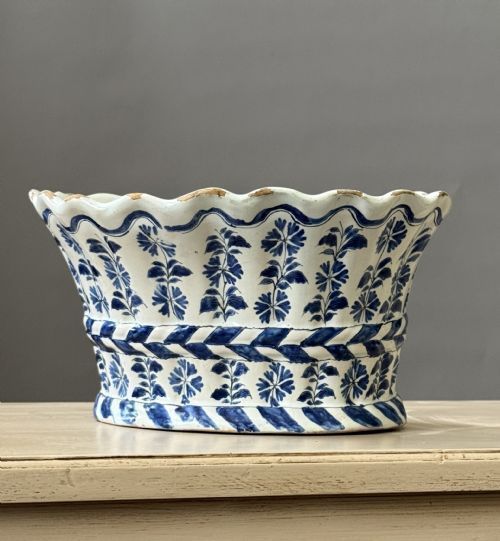
An earthenware jardiniere pot brings interior greenery to life, offering a sturdy, decorative vessel designed to hold potted plants.
Earthenware Jardiniere Pot
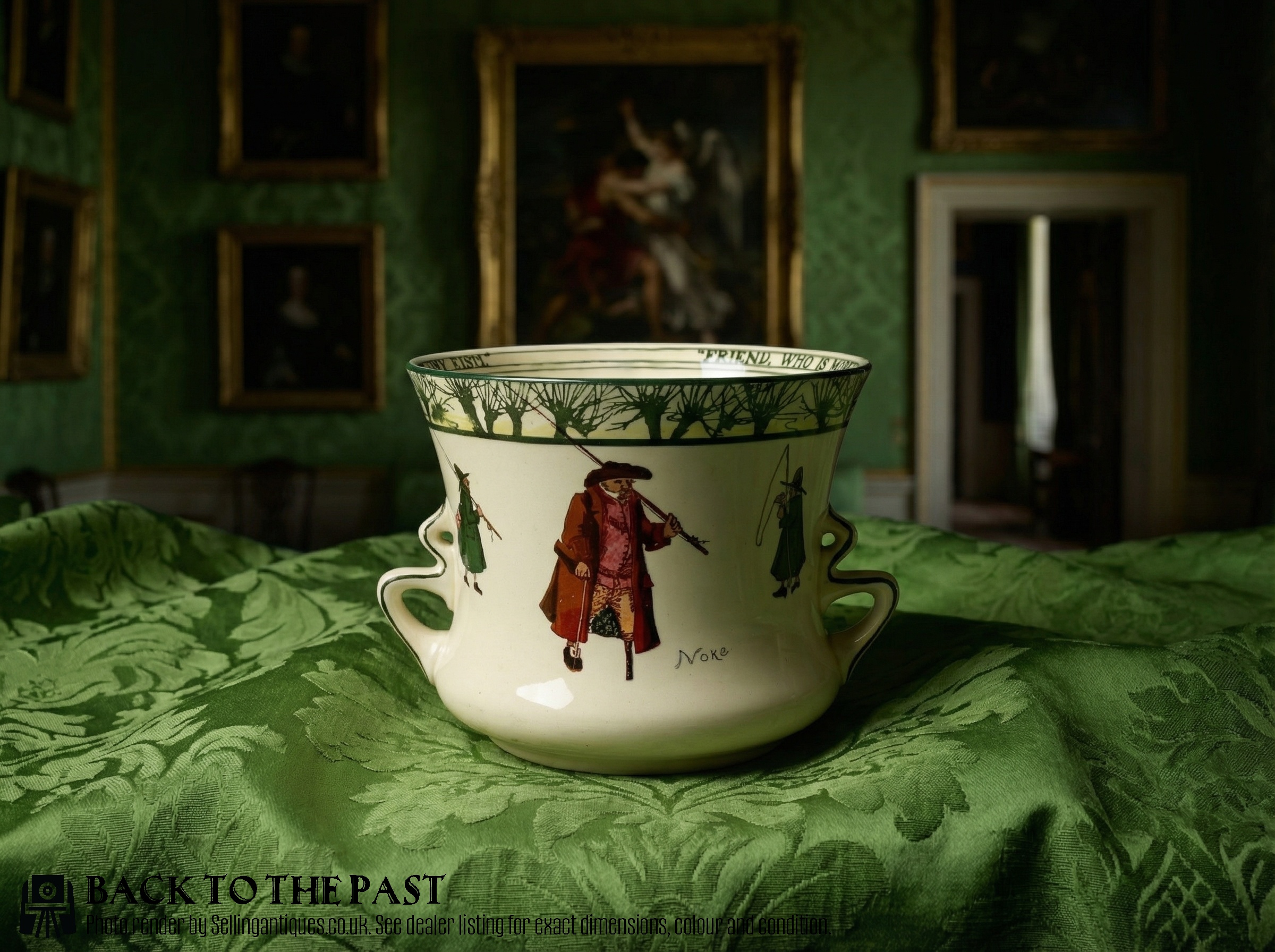
An earthenware jardiniere pot is a vessel designed specifically for displaying growing plants indoors. Buyers searching for an earthenware jardiniere pot will find pieces spanning from the early eighteenth century through the Edwardian era, with Victorian examples appearing most frequently.
The forms vary from simple cache pots and planters to large jardinieres with matching pedestal stands. English potteries feature prominently alongside Japanese stoneware and earthenware items, reflecting diverse decorative traditions.
These pots serve both functional and ornamental roles within domestic interiors. They accommodate indoor foliage while providing a distinct visual accent through coloured glazes and modelled surfaces.
What varies in quality
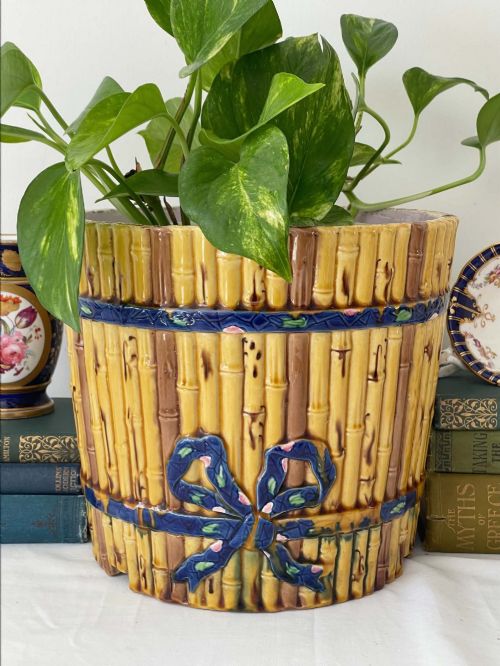
The refinement of the modelling dictates the distinction between standard production wares and exceptional pieces. Details such as naturalistic plant forms, bamboo motifs, or relief decoration require skilled execution during the shaping process.
Glaze application and firing success determine the depth of surface finish. Rich majolica colours and crisp underglaze painting separate superior examples from simpler utilitarian containers.
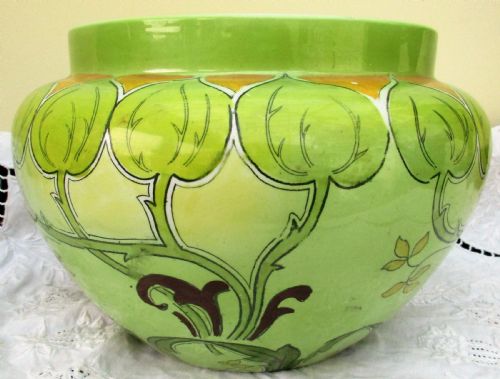
The inventory spans Victorian naturalism and Art Nouveau styles, alongside Japanese Meiji period ceramics.
W.A. Adderley·Makuzu Kozan II·Doulton Burslem·Doulton Lambeth·Royal Doulton·Enoch Wood & Sons·Royal Worcester·George Jones·William Adams & Sons·Linthorpe Pottery·Christopher Dresser·Charles Noke
The Earthenware Jardiniere Pot Glossary
- Earthenware
- Porous pottery fired at relatively low temperatures. It requires a glaze to become waterproof for holding plants.
- Jardiniere
- An ornamental pot or stand designed to hold flowers or plants indoors. It typically sits directly on furniture or upon a dedicated pedestal.
- Cache pot
- A decorative flowerpot used to conceal a plain inner plant pot. It usually lacks a drainage hole in the base.
- Terracotta
- Unglazed brownish-red earthenware fired at moderate temperatures. It is commonly associated with garden ornaments and classical urns.
Earthenware Jardiniere Pot: Frequently Asked Questions
What is a jardiniere used for?
A jardiniere functions primarily as an ornamental container for housing potted plants indoors. It allows interior spaces to display greenery without exposing furniture to damp soil and water.
Historically, these pots held ferns, palms, and floral arrangements in principal reception rooms. Today, they serve the same decorative purpose while accommodating modern house plants.
How do I care for an antique earthenware jardiniere?
Protect the ceramic body by using a plastic liner inside the pot rather than planting directly into the historic earthenware. This prevents moisture from seeping through porous clay and damaging interior surfaces.
Clean the exterior gently using a soft, dry cloth. Avoid harsh chemical cleaners that might harm nineteenth-century glazes and enamel decorations.
Are these pots waterproof?
Most glazed earthenware and stoneware pots hold water effectively, but older porous clay bodies can sweat moisture over time. Glazing inside the vessel helps prevent water from reaching the raw ceramic.
Using a sauciser or inner plastic liner remains the safest method for protecting both the antique pot and wooden surfaces underneath.
How do I distinguish Victorian majolica from other pottery?
Victorian majolica is characterised by moulded relief decoration covered in brilliant, translucent coloured glazes. Common motifs include naturalistic plant forms, bamboo, and animal figures.
The pottery body beneath the glaze is typically heavy earthenware, often bearing nineteenth-century registry marks or maker stamps on the base.