

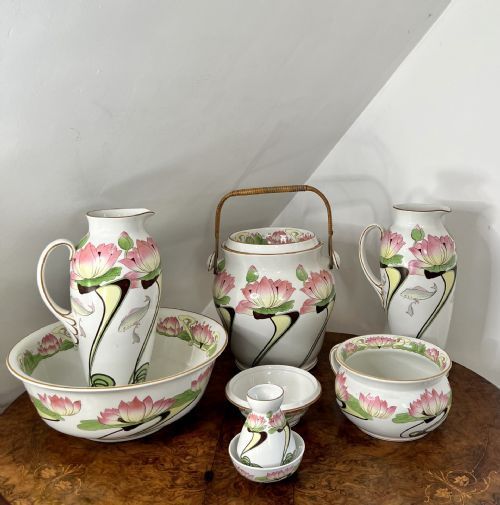


Earthenware Floral Dish
These earthenware floral dish examples bring together centuries of painted ceramic tradition, offering both decorative presence and historic utility for the table.
Earthenware Floral Dish
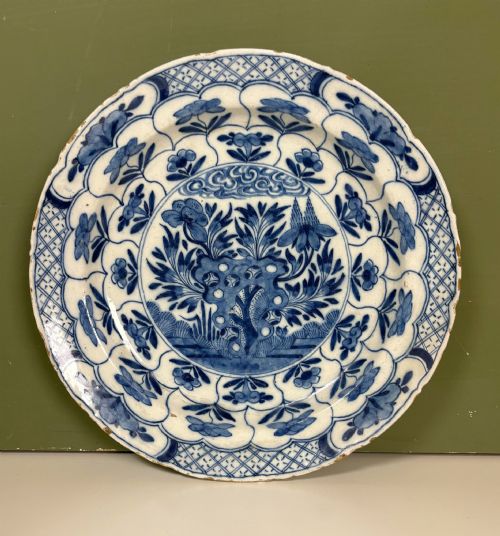
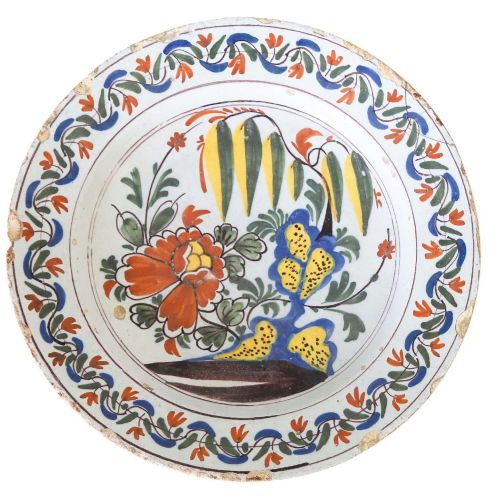
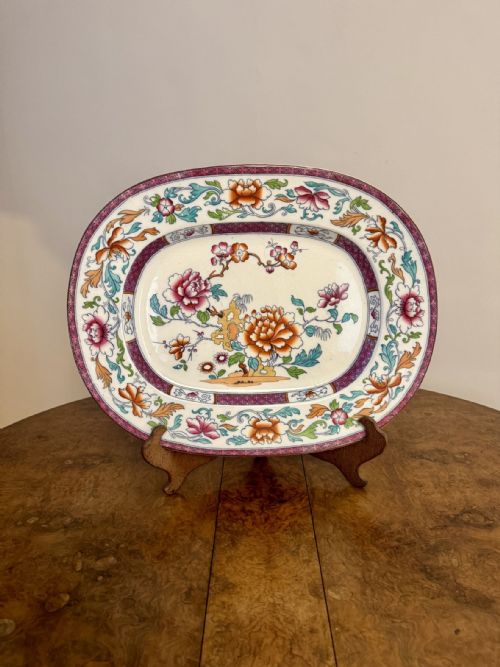
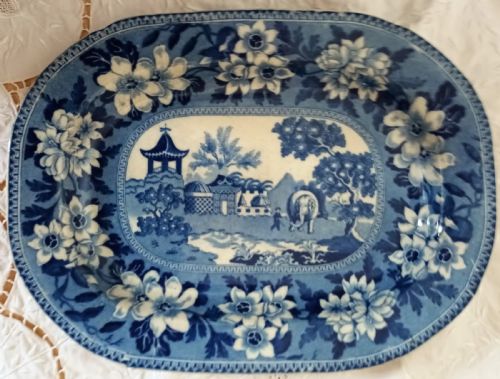
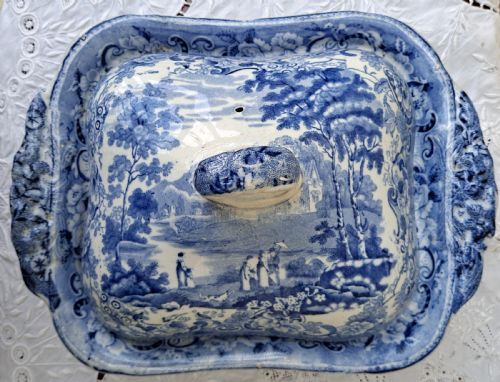
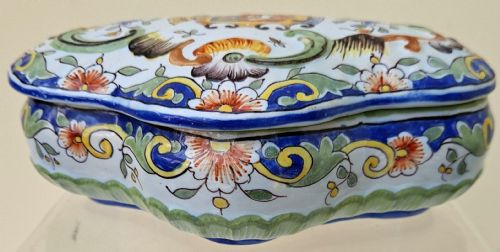
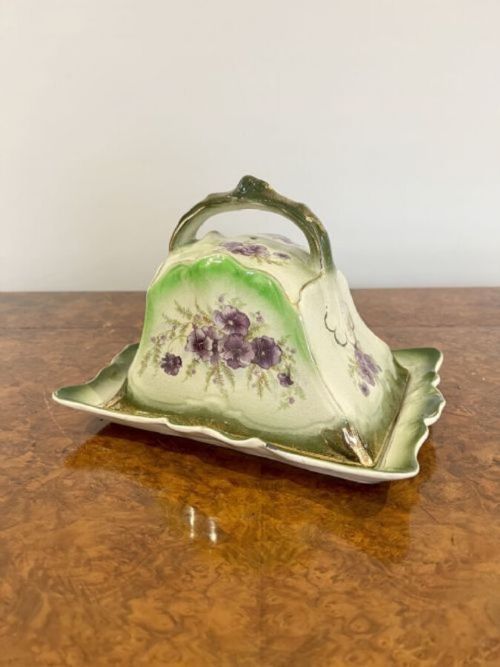
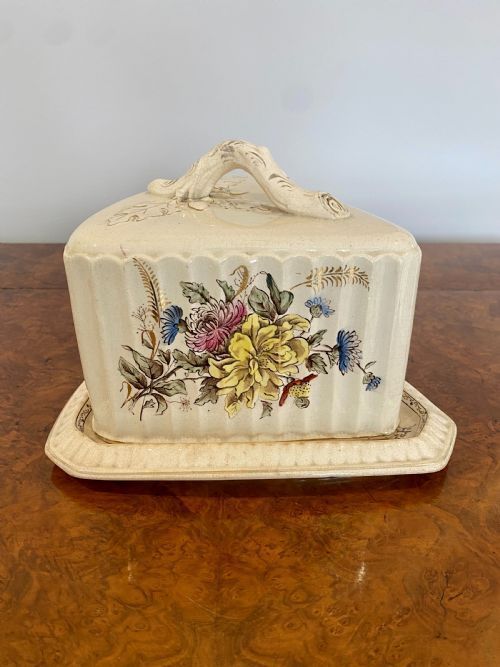
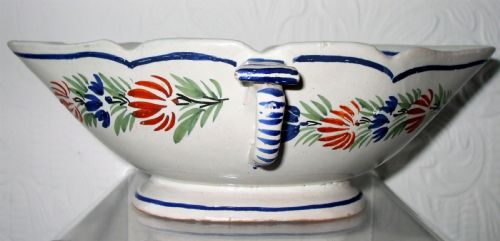
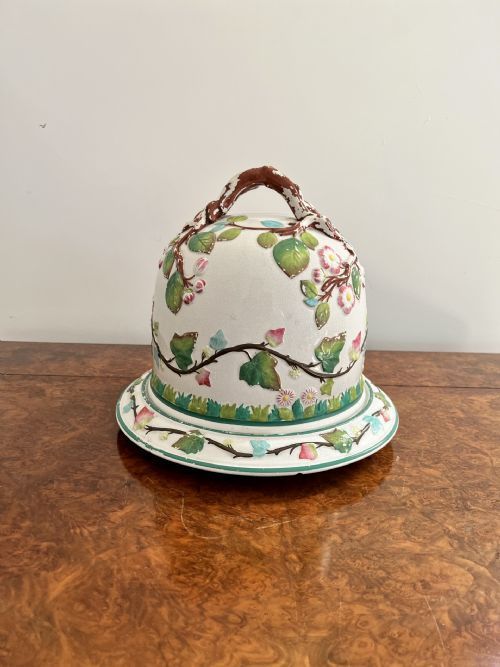
When searching for an earthenware floral dish, collectors encounter a diverse group of items spanning the eighteenth, nineteenth, and early twentieth centuries. The selection encompasses chargers, serving platters, plates, bowls, and tureens originating from English, Dutch, French, Austrian, and Japanese kilns. Eighteenth-century examples frequently take the form of tin-glazed chargers with hand-painted botanical motifs, while later nineteenth-century pieces include transfer-printed serving platters and majolica tablewares.
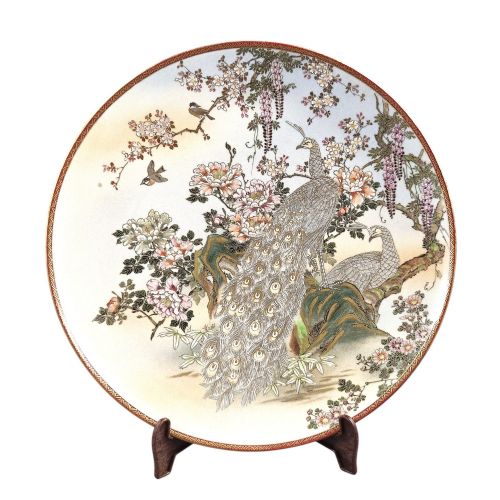
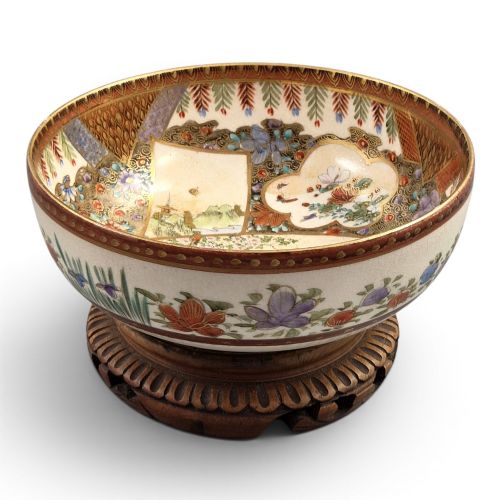
The aesthetic vocabulary shifts across regions and periods, moving from early Dutch and English Delftware floral compositions to Japanese Satsuma ware painted with peonies, wisteria, and thousand-flower patterns. Victorian and Edwardian iterations range from blue and white transfer-printed meat platters to brightly coloured majolica and spongeware bowls. Buyers regularly encounter both utilitarian serveware and purely decorative plates designed for display.
Materials and Technique
Potters constructed these pieces using earthenware clay bodies finished with various surface treatments such as tin glaze, transparent lead glazes, and opaque enamel pigments. Cobalt pigment served as the primary colourant for traditional blue and white transfer-printed and hand-painted wares, whilst polychrome pieces incorporated broader enamel palettes and occasional gold leaf accents.
Firing techniques varied from early earthenware biscuit firings finished with tin oxide opacifiers to later industrial transfer-printing methods developed in English potteries. Japanese Satsuma production utilised fine-grained earthenware bodies finished with crackle glazes and detailed overglaze enamels, often complemented by gilt detailing.
Peacocks strut across Japanese chargers while humble cabbage leaves inspire Victorian majolica tureens.
Gradations in Execution
The calibre of a piece rests heavily on the dexterity of the brushwork and the precision of the underlying ceramic form. Hand-painted botanical details executed with fluid control and varied line weight represent a higher tier of craftsmanship than repetitive or mechanically stiff applications.
Glaze stability and colour saturation further distinguish the grade of an object. Tin-glazed surfaces displaying minimal crawling or pooling, alongside sharply registered transfer prints or densely packed, finely rendered enamel and gilt work, indicate superior studio or factory output.
John Rogers and Son·James Wallace and Co·Mann and Co·Nikko·Minton
The Earthenware Floral Dish Glossary
- Charger
- A large decorative plate or dish, typically measuring over twelve inches in diameter, designed primarily for display on a wall or sideboard rather than daily dining.
- Delftware
- Tin-glazed earthenware produced in the Netherlands and England, characterised by a white opaque glaze painted with cobalt blue or polychrome motifs.
- Majolica
- A type of earthenware coated with an opaque tin glaze and painted with brightly coloured metal oxide enamels, popular during the Victorian era for figurative and botanical designs.
- Satsuma
- Japanese earthenware originating from the Satsuma Domain, featuring a cream-coloured crackle glaze decorated with detailed overglaze enamels and gold leaf.
- Transfer-printing
- A Staffordshire industrial technique where a design is engraved on a copper plate, inked, transferred to tissue paper, and then applied to the ceramic surface before glazing.
Earthenware Floral Dish: Frequently Asked Questions
How do I date an old earthenware dish?
Dating relies on examining the characteristics of the ceramic body, glaze type, and decorative style alongside any stamped factory marks or painted signatures on the underside. Earlier eighteenth-century pieces often exhibit heavier tin glazes and hand-painted pigments, whereas nineteenth-century items frequently utilise transfer-printing or distinct regional majolica and Satsuma styles.
Analysing the foot ring, potting weight, and wear patterns on the base provides further contextual clues regarding the period of manufacture. Cross-referencing recorded pottery marks helps narrow down the specific decade of production.
Are these ceramic dishes safe for food?
Many historic earthenware and tin-glazed pieces were manufactured with lead-bearing glazes that can leach when exposed to acidic foods or liquids. Consequently, older chargers and decorative plates are generally recommended for display or dry utility rather than active dining.
Later nineteenth-century ironstone and commercial earthenware are more robust, but older decorative items are best preserved by avoiding dishwashers, microwaves, and direct contact with moisture over extended periods.
What is the difference between delft and majolica?
Delftware primarily refers to tin-glazed earthenware developed in the Netherlands and England, traditionally featuring blue and white or polychrome motifs painted on an opaque white background. Majolica, popular during the Victorian period, utilises lead or tin glazes combined with brightly coloured relief-moulded botanical or animal designs.
While both employ absorbent earthenware bodies and opaque surface glazes, majolica pieces are typically heavier, more sculptural, and rely on a broader, more vibrant palette of metallic oxide colours.
How should I display a heavy wall charger?
Displaying heavy ceramic chargers requires specialist wall-mounting brackets that distribute the weight evenly across the base and rim without exerting pressure on vulnerable edges. Ensuring the fixture is anchored securely into wall studs prevents accidental slips.
Positioning pieces away from direct sunlight and areas of high temperature fluctuation protects fragile overglaze enamels and delicate gold leaf details from gradual degradation.