



Traditional Country Earthenware
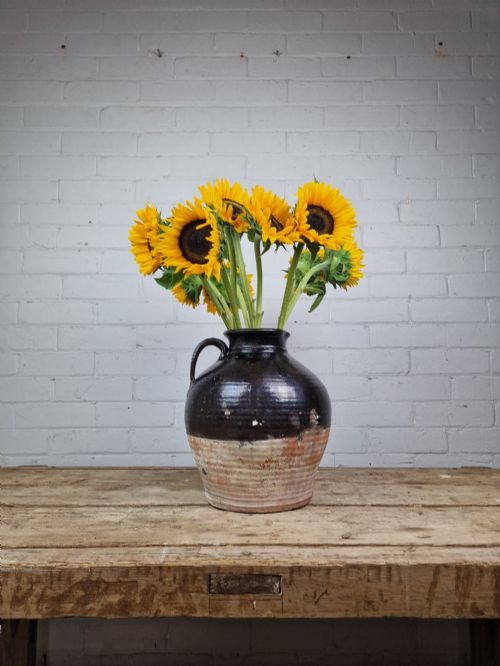
Traditional country earthenware brings humble utility and honest craft to a room, offering robust vessels shaped for the dairy, kitchen, and farm.
Traditional Country Earthenware
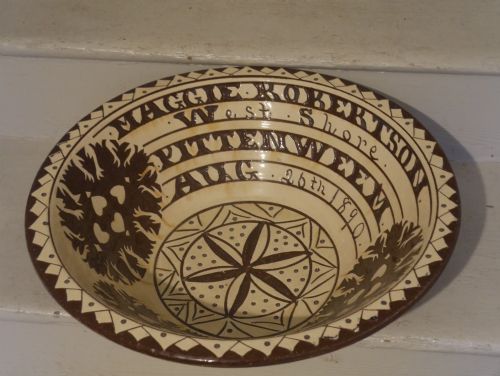
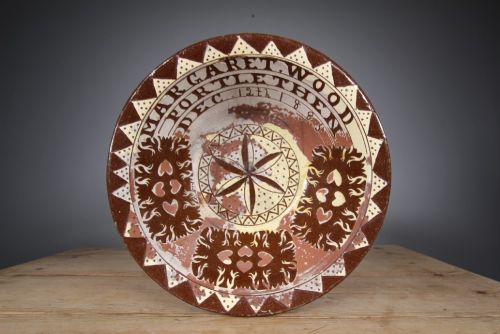
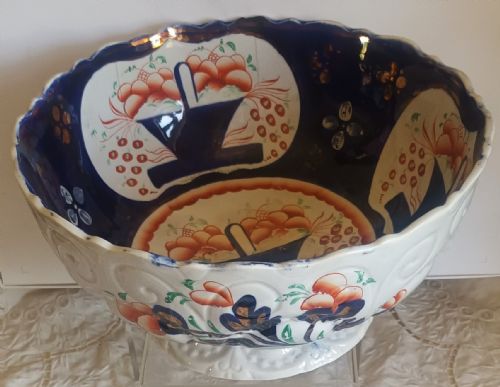
Traditional country earthenware spans sturdy domestic vessels designed for practical service around the dairy, tavern, and homestead. Buyers encountering these pieces will find heavy bowls, pitchers, jars, and money boxes rooted in regional vernacular traditions.
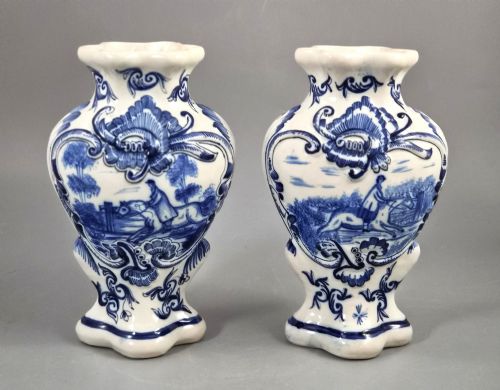
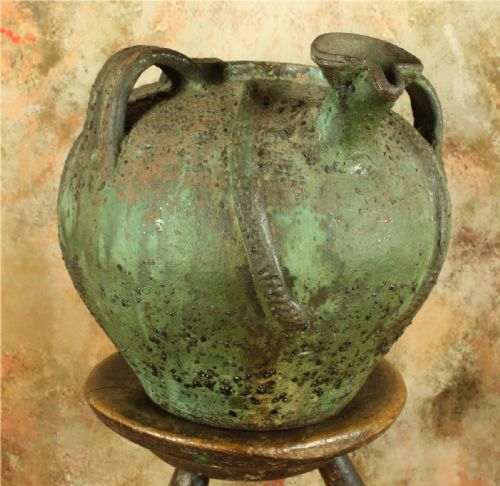
The selection here encompasses forms ranging from eighteenth-century olive and oil jugs to nineteenth-century dairy bowls and slipware jugs. English, Welsh, and French rural centres dominate the origins, reflecting local domestic habits and agricultural needs.
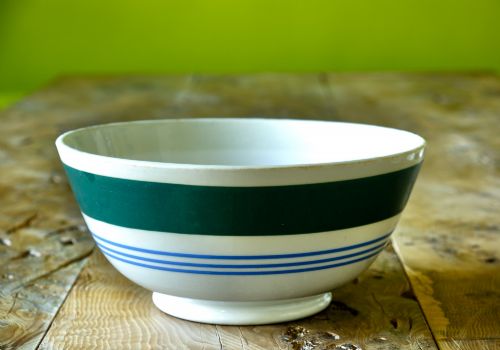
Most pieces date from the nineteenth century, though earlier slipware and seventeenth-century tavern jugs appear alongside twentieth-century banded bowls. These utilitarian wares carry the marks of everyday rural life rather than courtly luxury.
Materials and construction
Potters shaped these vessels from local clay and terracotta, throwing them on wheels or pressing them into moulds for daily service. The resulting bodies are porous and heavy, designed to withstand the rigours of farm kitchens and dairies.
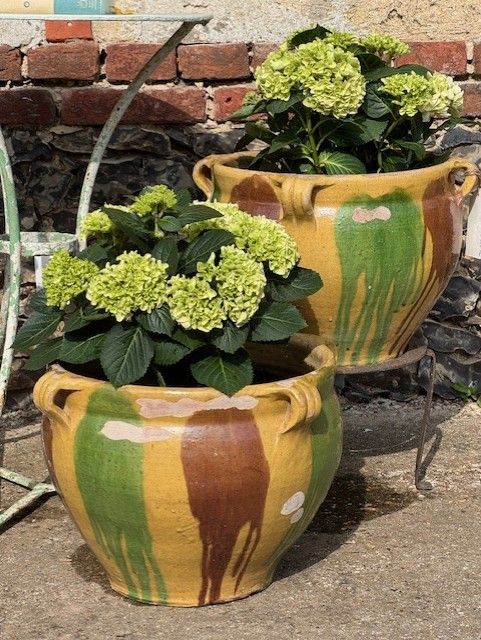
Glazes protect the porous clay, utilising lead glaze, slip glaze, and enamel to seal the interior or exterior surfaces. Dribble glazes and spongeware decoration add simple visual character to functional forms without masking the underlying material.
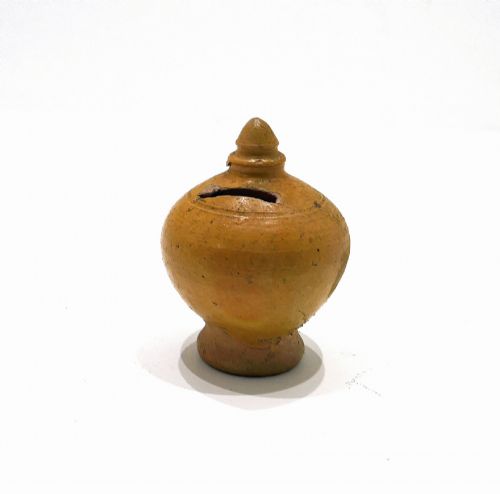
Certain money boxes include no extraction hole, requiring the owner to break the earthenware wall to recover accumulated coins.
Distinctions in quality
Quality rests upon the strength of the thrown form and the confidence of the glazing, where pooled lead or slip reveals the hand of the regional potter. Weight, thickness, and balanced proportions distinguish a well-made dairy bowl or jug intended for heavy work.
The integrity of the surface decoration determines finer examples, from controlled slip trails to even spongeware application. Pieces retaining their original domestic utility without excessive structural compromise stand apart from lesser utilitarian output.
Seaton Pottery·Fourmaintraux-Courquin·T G Green Pottery·Verwood Pottery·Mann & Co
The Traditional Country Earthenware Glossary
- Slipware
- Pottery decorated with slip, a liquid clay mixture poured or trailed onto the wet body before firing. This technique creates linear patterns and contrasting highlights beneath a clear glaze.
- Terracotta
- Fired unglazed or glazed clay of a brownish-red colour, widely used for heavy agricultural vessels and dairy bowls. It provides a robust, porous body suitable for keeping contents cool.
- Spongeware
- Pottery decorated by dabbing pigment onto the clay body with a sponge, producing a mottled or spotted pattern. It appears on domestic bowls and kitchenware from the nineteenth century.
- Dairy bowl
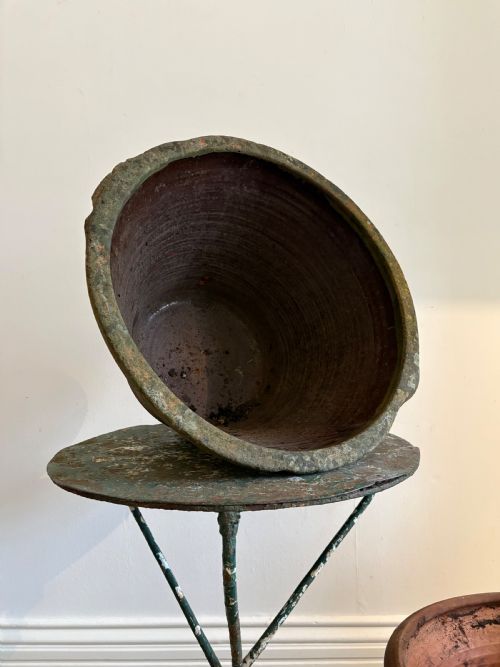
- A wide, shallow vessel used in milk production for setting cream. These bowls typically feature a glazed interior to ease cleaning and prevent absorption.
- Lead glaze
- A glossy coating applied to earthenware using lead compounds, firing to a transparent or honey-coloured finish. It seals the porous clay body against liquids.
Traditional Country Earthenware: Frequently Asked Questions
What is traditional country earthenware?
Traditional country earthenware comprises utilitarian pottery shaped from local clay for domestic, agricultural, and dairy use.
These functional pieces include heavy bowls, jugs, money boxes, and oil jars made in regional workshops across Britain and France.
How were dairy bowls used?
Dairy bowls were designed for the milk set, where fresh milk sat in shallow layers to let the cream rise to the top.
The wide openings and glazed interiors made it straightforward to skim the cream and clean the heavy earthenware surface afterward.
How do I care for antique earthenware?
Antique earthenware requires gentle handling due to the porous nature of the historic clay body.
Keep these vessels away from harsh detergents and excessive moisture, treating them as display pieces rather than active kitchenware.
How can I tell the age of these pieces?
Age is determined by studying the potting technique, weight, glaze composition, and regional clay characteristics.
Earlier pieces often display thicker potting and simpler lead glazes, while later nineteenth-century examples introduce banded decoration and spongeware.