





Art Deco Pottery Bowl
An art deco pottery bowl brings vibrant twentieth-century colour and geometric flair straight to a table.
Art Deco Pottery Bowl
An art deco pottery bowl encompasses striking decorative vessels produced primarily during the 1920s and 1930s, alongside a few pieces from the Edwardian period and 1910. These items appear as large decorative bowls, square-shaped sugar bowls, fruit bowls, and miniature sets.
The version most commonly met on this page is earthenware or porcelain decorated with bold patterns, vibrant lustre glazes, and distinct motifs. Makers such as Daisy Makeig-Jones, Maling, Clarice Cliff, and Charlotte Rhead dominate the forms available here.
Materials and manufacture
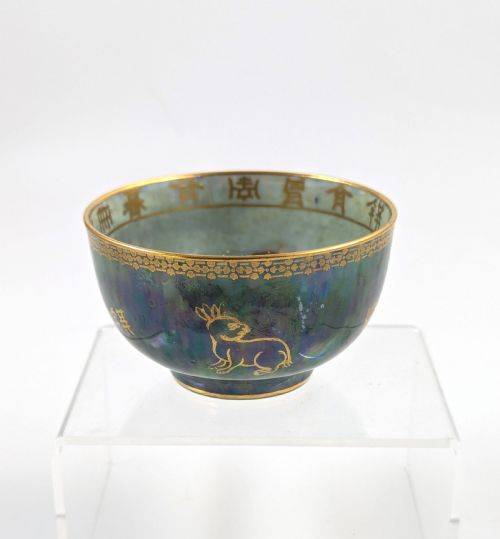
Potters shaped these vessels using earthenware and porcelain, applying rich enamel glaze, gold leaf, and gilt to finish the surfaces. Many pieces feature lustrous finishes achieved through specialised firing techniques that create shimmering, iridescent effects.
Decoration ranges from hand-painted patterns like tulip and arabesque trellis designs to printed motifs and moulded powder boxes. Stamped marks to the underside often identify the factory or specific pattern.
Art Deco Pottery Bowl Retail Price Guide 2026
Typical asking prices for art deco pottery bowl among the pieces listed under this phrase on Sellingantiques today, from the lower quarter to the upper quarter. They describe what is for sale here now, not the wider market.
Object forms on this page include decorative bowls, tea services, and powder boxes stamped by period makers.
Assessing quality and craftsmanship
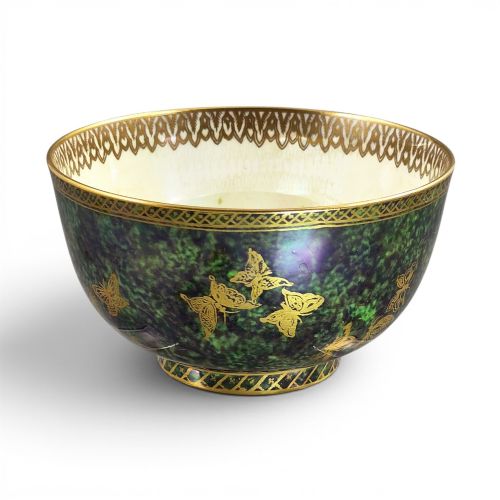
Quality in an art deco pottery bowl rests upon the crispness of the painted or printed pattern and the richness of the glaze application. Pieces featuring intricate lustre work, such as butterfly or dragon motifs with gold gilt, demand higher skill than simpler monochrome designs.
The complexity of the form, whether octagonal, square, or large and rounded, also indicates the ambition of the piece. Crisp factory stamps and well-preserved enamel colours distinguish finer examples from standard production.
Daisy Makeig-Jones Wedgwood·Clarice Cliff·Charlotte Rhead Bursley Ware·Gladstone potteries
The Art Deco Pottery Bowl Glossary
- Earthenware
- Porous pottery fired at lower temperatures, commonly used for decorated bowls and tea services. It requires a glaze to become impermeable to liquids.
- Lustre glaze
- A metallic glaze that produces an iridescent sheen when fired in a reducing atmosphere. This technique creates the shimmering orange and green surfaces seen on Wedgwood pieces.
- Gilt
- A thin layer of gold applied to the surface of ceramics for decorative embellishment. It often highlights rims and central motifs.
- Powder box
- A decorative container, sometimes featuring a figural lid like a flapper girl, used for holding cosmetic powder. These items bridge the gap between vanity accessories and display pottery.
- Enamel
- Vitreous material fused to the ceramic body at high temperatures to provide durable, bright colours. Enamel glazes allow for the vivid palettes characteristic of the 1930s.
Art Deco Pottery Bowl: Frequently Asked Questions
How do I clean an art deco bowl?
Dust the surface gently with a soft, dry cloth to remove everyday particles without disturbing the glaze.
Avoid immersing antique lustre or gilded pottery in water, as moisture can damage delicate enamel and gold leaf over time.
Can I use these bowls for food?
Most decorative bowls and sugar bowls from this era are best reserved for display rather than daily dining.
Older glazes and gold gilt may wear away or contain materials unsuited for modern culinary use.
How do I date a piece?
Examine the underside for factory stamps, pattern names, and registration numbers that link the item to specific production years.
Stylistic cues such as 1930s geometric shapes or Edwardian lustre techniques also help narrow the manufacturing period.
What is lustre ware?
Lustre ware is pottery finished with a metallic glaze that creates an oil-slick or rainbow-like iridescence.
Makers achieved this effect by introducing metallic salts into the kiln during the firing process.