

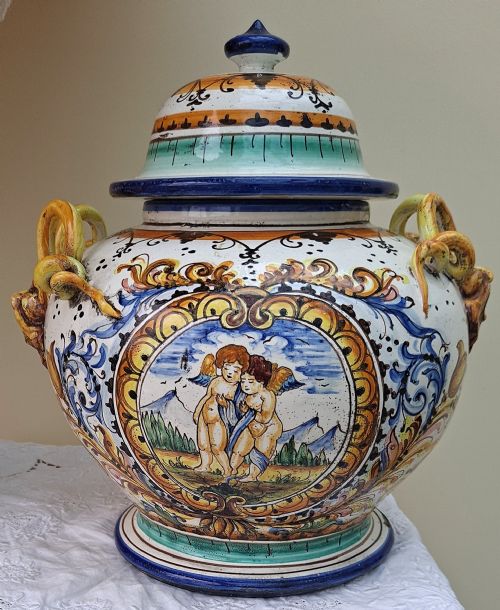


Earthenware Covered Vase
An earthenware covered vase brings robust form and painted decoration to a room, uniting pottery bodies with matching lids.
Earthenware Covered Vase
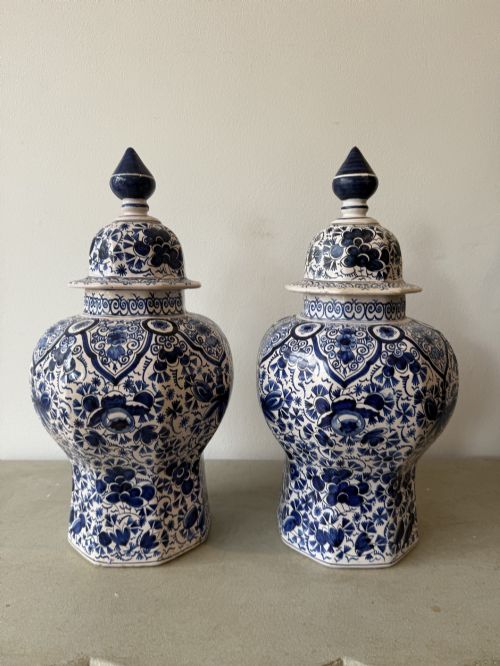
An earthenware covered vase unites a hollow ceramic vessel with a matching lid, forming a complete vessel used across centuries for display. These objects appear in forms ranging from ginger jars and urns to large display vases with handles.
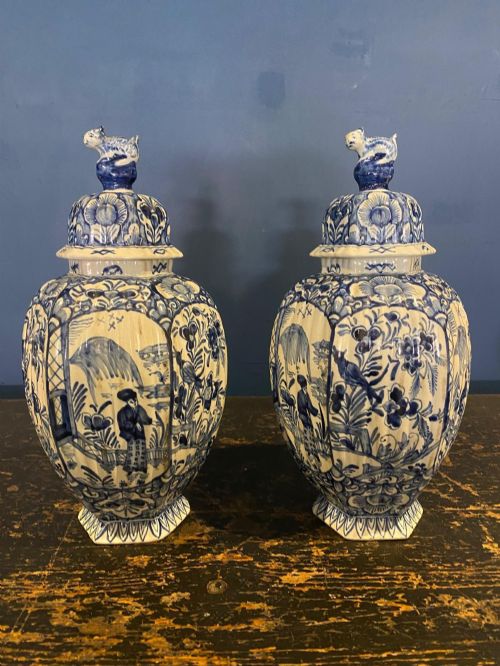
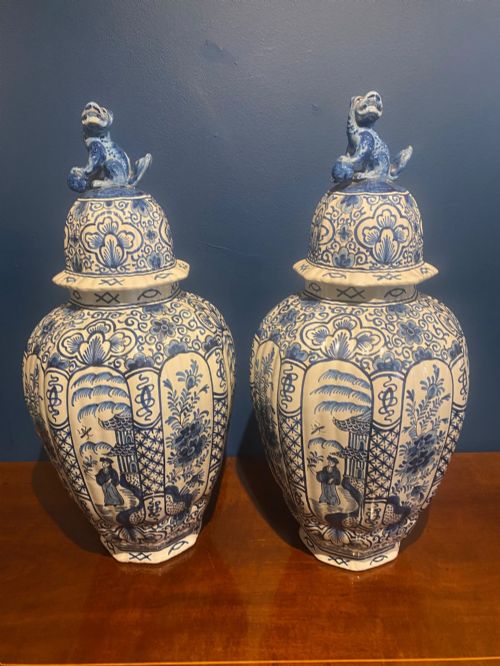
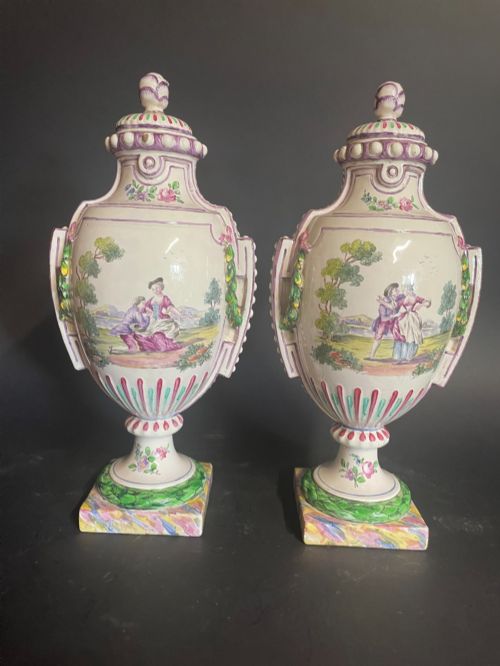
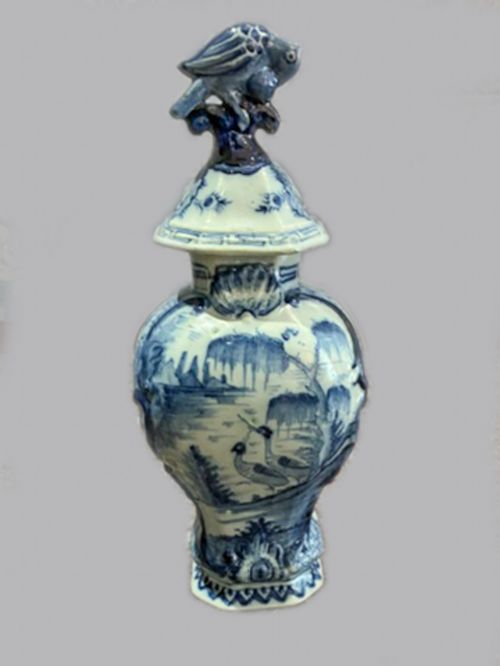
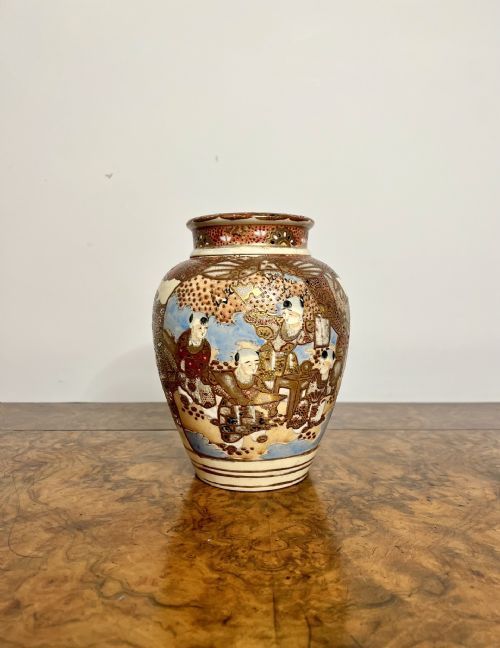
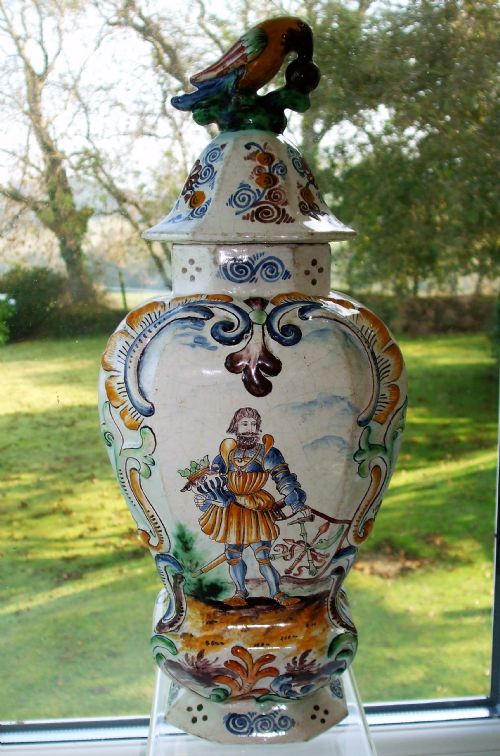
The most common examples on this page are Dutch Delftware pieces from the eighteenth and nineteenth centuries, featuring blue and white or polychrome palettes. Other notable origins include French faience, Italian maiolica, and Japanese Satsuma.
Makers shaped these vessels for interior decoration, often producing them in pairs to sit upon mantelpieces or sideboards. The addition of a fitted lid distinguishes them from open vases, creating a solid silhouette.
Materials and production methods
Potters formed these pieces from earthenware clay, applying tin glaze, enamel, or standard glaze to seal the porous body before painting. Gold leaf occasionally appears as an accent on specific imported and European decorative vessels.
Decoration relied on hand painting, seen in blue and white Delft designs, polychrome motifs, and Chinoiserie scenes rendered on the glazed surface. Firing techniques fixed these pigments into the surface glaze, locking in the colours.
Earthenware Covered Vase Retail Price Guide 2026
Typical asking prices for earthenware covered vase among the pieces listed under this phrase on Sellingantiques today, from the lower quarter to the upper quarter. They describe what is for sale here now, not the wider market.
Listings feature earthenware covered vases spanning from pre-sixteenth century Chinese pottery to twentieth-century Art Deco ceramics.
Factors that separate examples
Quality rests upon the crispness of the hand-painted decoration and the balance achieved between the vase body and its lid. Finer pieces display confident brushwork and secure alignment when the lid rests upon the rim.
The complexity of the glaze finish and the preservation of polychrome or gold leaf details further distinguish the range. Substantial size and robust potting execution also elevate certain urns and jars above standard domestic wares.
Yamashu·Royal Winton
The Earthenware Covered Vase Glossary
- Earthenware
- Porous pottery fired at lower temperatures than stoneware or porcelain. It requires a glaze to hold liquids.
- Tin-Glaze
- An opaque white glaze containing tin oxide, providing a smooth surface for painted decoration. It is characteristic of Delftware and maiolica.
- Majolica
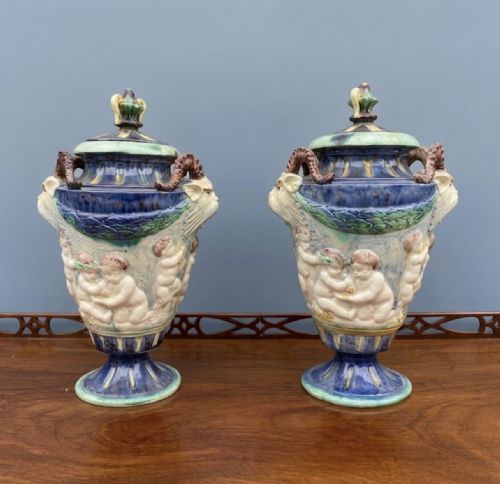
- A type of earthenware coated with a tin glaze and painted with coloured metal oxides. Italian and nineteenth-century examples often use this technique.
- Satsuma
- Japanese earthenware pottery decorated with intricate enamel patterns and gilt work. These pieces were widely exported in the late nineteenth century.
Earthenware Covered Vase: Frequently Asked Questions
What is an earthenware covered vase?
An earthenware covered vase is a ceramic vessel made from porous clay, finished with a glaze, and paired with a fitted lid. These items were created primarily for decorative display.
Potters shaped them into jars, urns, and baluster forms, often painting them with floral or landscape scenes.
How were these lidded vases used?
Historically, these pieces served as decorative ornaments on mantelpieces, tables, and cabinets within homes. Their lids completed the silhouette of the vessel.
Some forms, such as ginger jars, originally stored commodities before evolving into purely decorative objects.
How do I care for an antique vase?
Keep these ceramic pieces away from direct sunlight and areas subject to sudden temperature shifts. Dust them gently with a dry, soft cloth.
Avoid using water or cleaning solutions on antique glazed surfaces, particularly those with enamel or gold leaf details.
How do I distinguish Delftware from Satsuma?
Delftware pieces utilise tin-glazed earthenware painted in blue and white or polychrome European styles. They originate primarily from the Netherlands.
Satsuma wares consist of Japanese earthenware featuring detailed enamel work and gilt highlights, often depicting figures or landscapes.