
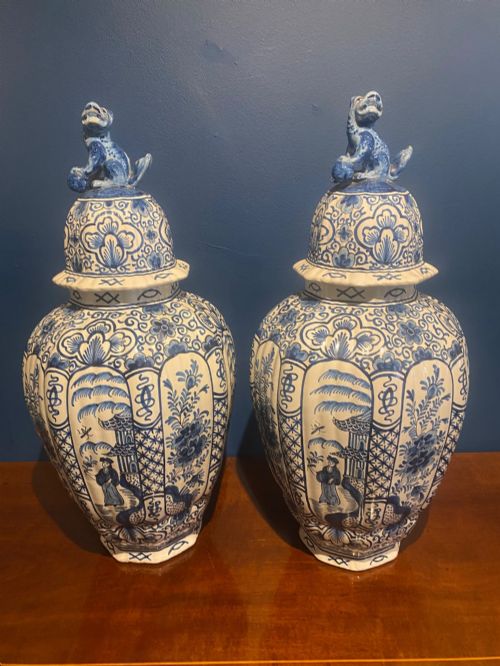
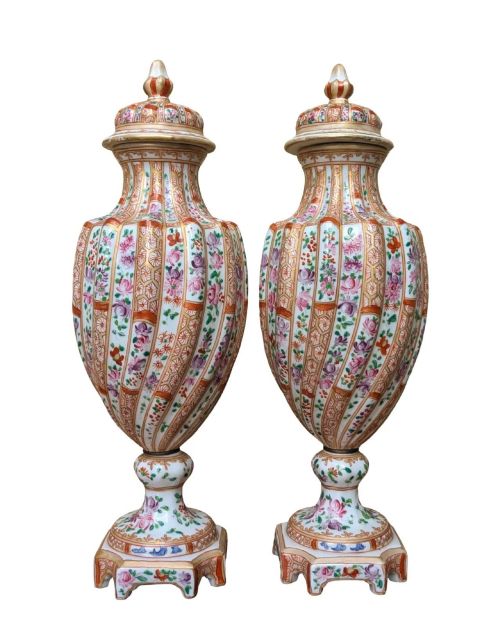
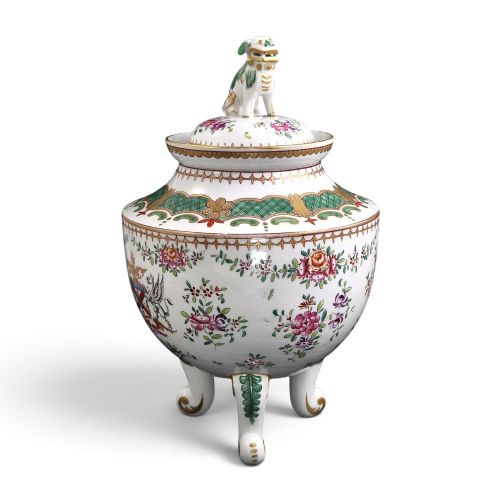
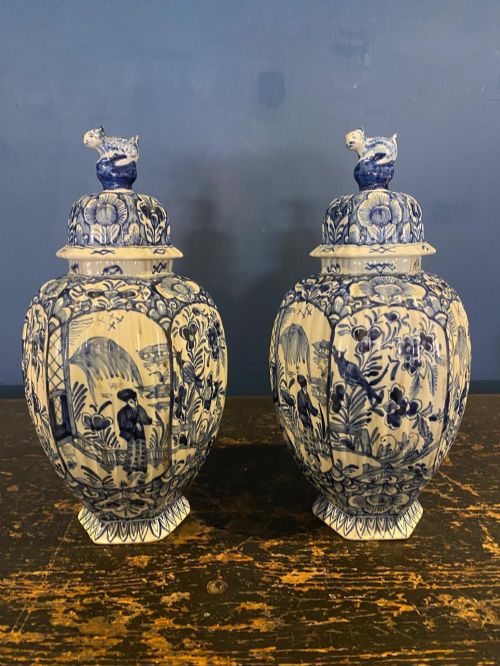


Chinoiserie Lidded Vase
A chinoiserie lidded vase brings imaginative painted scenes and decorative covers together, offering a striking display piece for any room.
Chinoiserie Lidded Vase
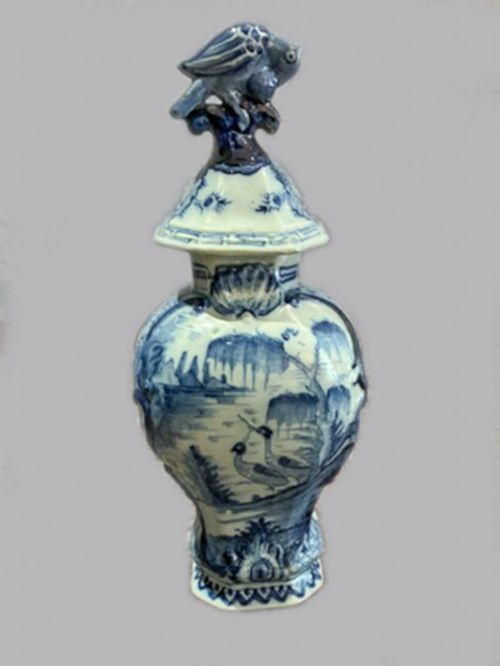
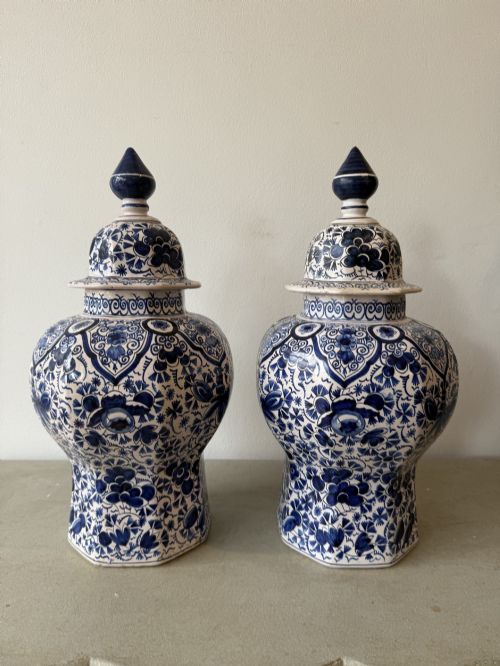
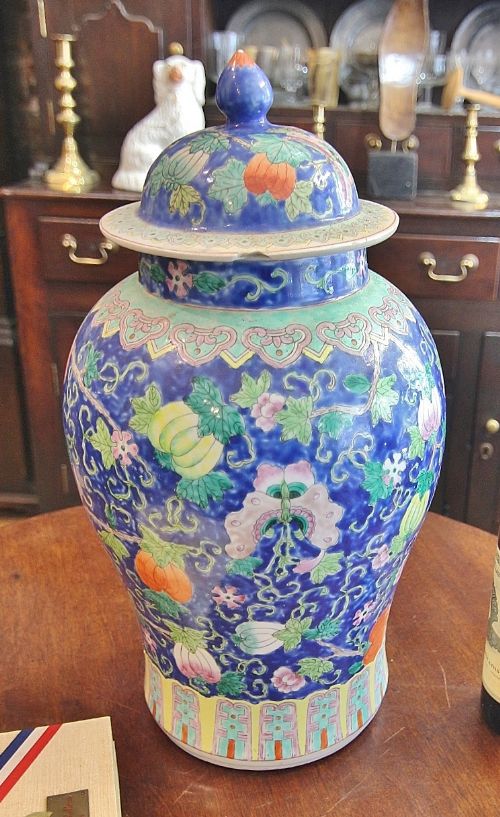
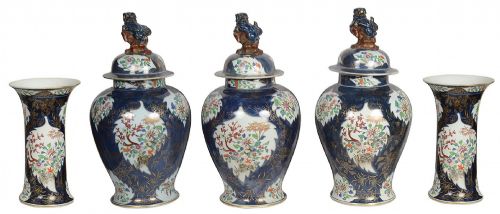
A chinoiserie lidded vase is a covered vessel decorated with European interpretations of East Asian artistic motifs, appearing in forms such as jars, urns and potpourri containers. These pieces emerge across several periods, notably the nineteenth century and the twentieth century, alongside earlier stylistic revivals.
The selection here includes earthenware, tin-glazed earthenware and ironstone bodies, often paired with matching lids. Makers applied various stylistic traditions, ranging from Dutch delftware and Japanese Imari to Victorian interpretations and Chinese porcelain designs.
Buyers encounter everything from large Continental maiolica examples to Samson porcelain copies and Mason's ironstone wares. Each object combines a distinct ceramic body with hand-painted or transferred ornamentation depicting figurative and landscape subjects.
How They Were Made
Potters shaped these vessels using ceramic materials such as porcelain, ironstone, earthenware and tin-glazed earthenware, forming sturdy bodies designed to support detailed surface decoration. Lids were thrown or moulded to fit snugly over the neck of each vase.
Decoration relied on applied glazes, enamels and sometimes gold leaf to build up complex pictorial scenes. Firing techniques fixed these pigments onto the ceramic substrate, creating the durable colourful finishes seen on nineteenth-century and twentieth-century examples.
Listings feature ceramics spanning the nineteenth century, the twentieth century, the Victorian era and the Regency period.
What Varies in Quality
Quality depends upon the crispness of the ceramic moulding and the precision of the hand-painted details. Finer vessels display carefully controlled glaze applications and well-defined pictorial elements rather than hurried brushwork.
The integrity of the matching lid heavily influences the overall standard of a piece. Examples where the cover shares the exact glaze, pattern alignment and ceramic body of the base hold greater visual cohesion.
Samson Paris·Carlton Ware
The Chinoiserie Lidded Vase Glossary
- Chinoiserie
- European artistic style reflecting Chinese and East Asian motifs. It appeared across furniture, ceramics and textiles during various historic revivals.
- Ironstone
- A type of durable heavy earthenware patented in the nineteenth century. It offered a robust alternative to porcelain.
- Maiolica
- Tin-glazed Italian earthenware painted with opaque colours. It frequently displayed bright decorative schemes.
- Imari
- Japanese export porcelain style featuring iron red, cobalt blue and gold. European factories frequently copied these distinct patterns.
Chinoiserie Lidded Vase: Frequently Asked Questions
How were lidded vases used?
These vessels served primarily as decorative garnitures or centrepieces on mantelpieces and tables. Some variations functioned specifically as potpourri containers to scent domestic interiors.
The matching lids kept aromatic mixtures contained or simply completed the symmetrical silhouette of the display object.
What ceramic materials appear most?
The listings show a frequent use of ironstone, porcelain and tin-glazed earthenware across different periods. Each material offered distinct weight and surface qualities for the painters.
Earthenware and ironstone provided sturdy foundations for nineteenth-century production, whilst porcelain suited finer decorative styles.
How do I spot a reproduction?
Examining the glaze consistency and the ageing of the ceramic body helps determine the approximate period of manufacture. Nineteenth-century pieces display different wear patterns compared to twentieth-century alternatives.
Looking closely at the pigments and the base marks provides further context regarding the workshop origin.
Are lids usually original?
Most surviving examples retain their matching covers, especially when formed as paired garnitures. Checking the fit and glaze continuity confirms whether the lid belongs to the base.
Discrepancies in the white ground or the painted decoration often indicate a replacement cover from a later date.
How do I care for antique ceramics?
Gentle dusting with a soft, dry cloth keeps the glazed surfaces clean without risking abrasion. Avoiding harsh cleaning agents preserves the delicate enamels and gold leaf.
Placing the vessels away from direct sunlight and areas of high foot traffic prevents accidental knocks or fading.