

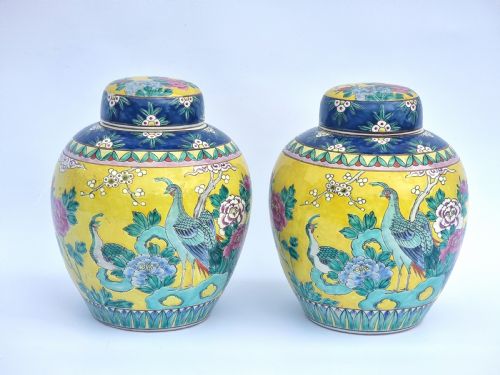


Antique Ginger Jar Pair
An antique ginger jar pair brings symmetry and rich narrative decoration to a mantelpiece, offering centuries of ceramic history in twin vessels.
Antique Ginger Jar Pair
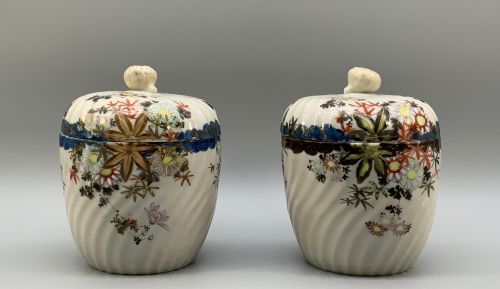
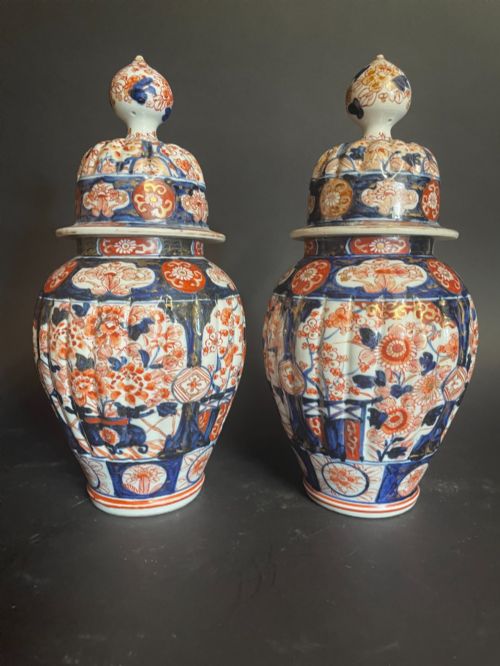
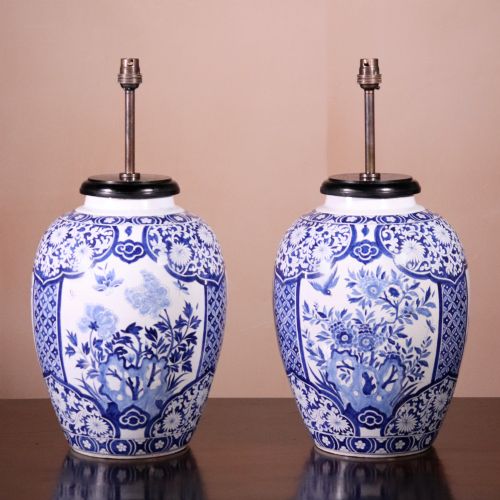
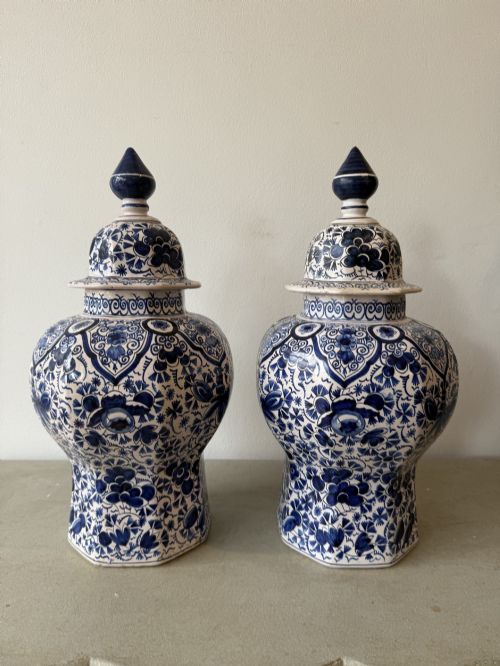
When searching for an antique ginger jar pair, buyers encounter matched lidded vessels originating from various Asian and European traditions. These pieces often serve decorative purposes or function as converted table lamps.
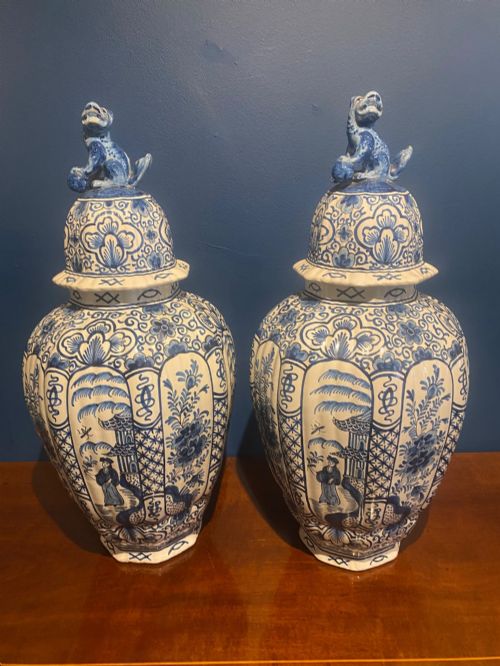
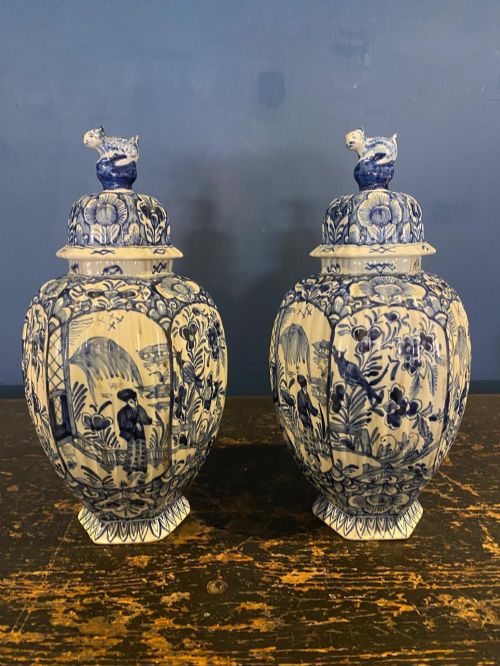
The selections span from seventeenth-century Chinese blue and white porcelain to nineteenth-century Japanese Imari and Dutch Delftware. Most examples found here date from the nineteenth century, reflecting robust trade and revival periods.
Forms range from classic ovid lidded jars to gourd pots and vases with matching covers. Many retain their original proportions designed for storing spices or simply providing domestic ornamentation.
Materials and construction techniques
Makers utilised high-fired porcelain, earthenware, and ironstone as the primary bodies for these vessels. Cobalt blue underglaze and hand-painted enamel palettes provide the enduring surface decoration seen across the pieces.
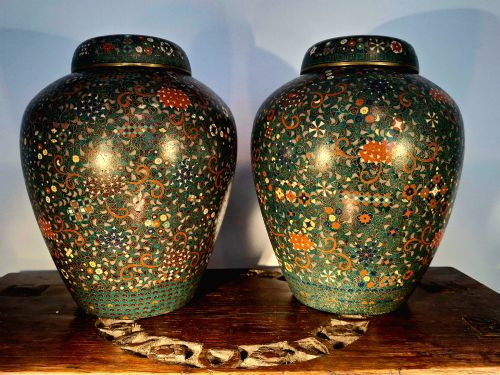
Cloisonne examples employ brass or copper wire soldered to metal bases to create cells filled with coloured enamel pastes. Other pieces integrate wood, gold leaf, and brass mountings to complete the lidded forms.
The selection includes forms adapted as table lamps alongside traditional lidded jars and covers.
Assessing quality in matched pairs
Quality rests heavily on the crispness of the hand-painted brushwork and the stability of the glaze firing. Superior examples display precise symmetry between the two vessels and well-preserved surface pigments.
The integrity of matching covers significantly influences the desirability of a pair. Finer pieces demonstrate meticulous attention to detail in secondary materials such as cloisonne wirework or gilt highlights.
Edme Samson·Mason’s·Carlton Ware
The Antique Ginger Jar Pair Glossary
- Imari
- A style of Japanese porcelain decorated in underglaze blue, iron red, and gold, named after the port from which it was exported. This aesthetic gained immense popularity in Europe during the seventeenth and eighteenth centuries.
- Cloisonne
- An enamel technique where metal wire is soldered to a body to form compartments that hold powdered glass pastes. Firing fuses the enamel to the metal base, creating intricate patterned surfaces.
- Famille Rose
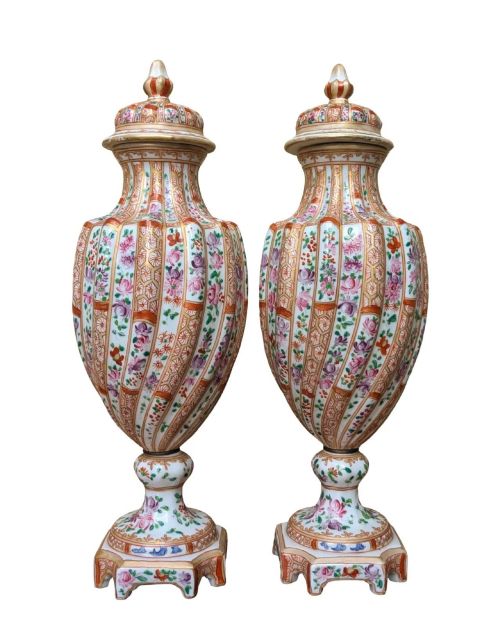
- A palette of opaque enamel colours dominated by pink or rose, introduced to Chinese porcelain during the Qing dynasty. The style depicts floral, figural, and narrative scenes with notable depth.
- Delftware
- Tin-glazed earthenware produced in the Netherlands, traditionally imitating blue and white Chinese porcelain. Potters applied a white lead glaze over buff earthenware before painting oxide designs.
- Ovid
- A rounded egg-shaped form typical of classic storage jars and vases. This profile provides a stable base and generous surface area for pictorial decoration.
Antique Ginger Jar Pair: Frequently Asked Questions
What were ginger jars used for originally?
These lidded vessels were originally produced in China to store and transport spices, salt, and oils. Their broad shoulders and secure covers protected perishable goods during transit.
Over time, European households repurposed the empty vessels purely for decorative display in reception rooms and parlours, often purchasing them in balanced pairs.
Can I safely use these jars as table lamps?
Many historical vessels arrive safely converted into table lamps through professional wiring and fitted bases. This adaptation has a long tradition in interior decoration dating back to the Victorian era.
Buyers should inspect whether the conversion drilled through the ceramic base, as intact bodies are scarcer. Ensure a qualified electrician tests any vintage wiring before daily use.
How should I care for antique ceramic and metal jars?
Dust these pieces regularly with a soft, dry cloth to prevent particulate build-up on delicate enamel or glaze surfaces. Avoid using commercial liquid cleaners or abrasive materials that might damage painted details.
Keep the vessels away from direct sunlight and dramatic temperature fluctuations to protect fragile glazes and any secondary metal or wooden components.