


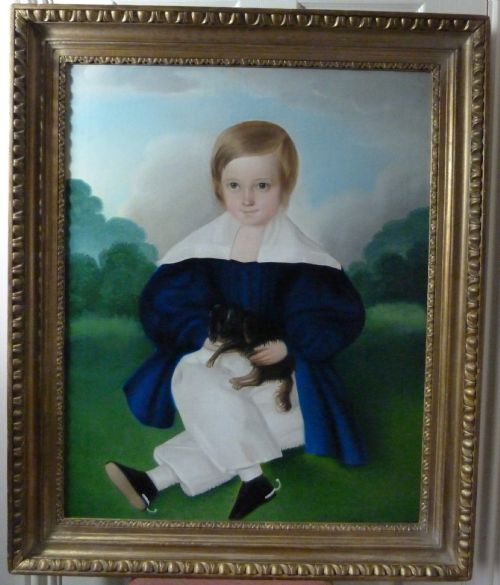
Early Victorian Oil Portrait
An early victorian oil portrait brings nineteenth-century character directly to your wall, capturing individual sitters with striking presence.
Early Victorian Oil Portrait
An early victorian oil portrait captures figures ranging from gentlemen and ladies to children, naval officers, and family groups. These works document the faces of the nineteenth century through the vision of artists working in British, provincial, and naive schools.
The version you are most likely to meet on this page is an oil on canvas or oil on board depicting a single sitter, often framed in gilt wood or gold leaf. Dating spans the 1830s and 1850s, representing domestic sitters as well as maritime subjects like ships.
Makers and circles represented include works associated with William Egley and George Chinnery, alongside inscriptions naming subjects like Waterhouse or Louisa Cooke's daughters. These pieces offer a direct window into historical dress, from frock coats to naval jackets.
What varies in quality
Skill in draftsmanship and psychological depth separate ambitious academic commissions from provincial or naive examples. The treatment of hands, facial expression, and fabric texture reveals the underlying capability of the painter.
Original frames in period gilt wood add considerably to the integrity of a piece, whereas later replacements change the visual weight. Provenance, legible inscriptions on the reverse, and identified sitters elevate historical interest.
Early Victorian Oil Portrait Retail Price Guide 2026
Typical asking prices for early victorian oil portrait among the pieces listed under this phrase on Sellingantiques today, from the lower quarter to the upper quarter. They describe what is for sale here now, not the wider market.
At least one young boy shares his canvas with a loyal dog, ensuring the pet gets equal historical billing.
William Egley·George Chinnery
The Early Victorian Oil Portrait Glossary
- Oil on canvas
- Pigment bound in drying oil applied to a woven fabric support stretched over a wooden frame. This primary medium dominates nineteenth-century portraiture.
- English Naive School
- Unvarnished provincial painting style characterised by flat perspective and honest directness rather than academic rules. These works offer immense charm through unpretentious observation.
- Gilt wood
- Carved timber finished with a thin layer of gold leaf or metallic powder. Frames of this type provide period context to the paintings they enclose.
- Half-length
- A portrait format showing the sitter from the waist or hips up. This composition balances facial detail with clues about costume and status.
- Provenance
- The documented history of ownership of an artwork. Known lineage helps confirm attribution and historical context.
Early Victorian Oil Portrait: Frequently Asked Questions
How do I date an early victorian oil portrait?
Look for clues in the sitter's costume, hairstyles, and any inscriptions left on the reverse of the canvas or stretcher bars. Contemporary framing styles and documented artist circles also help narrow down the decade.
Many pieces carry specific dates or named sitters directly on the back, offering a clear anchor for historical placement.
What is the difference between naive and academic portraits?
Academic portraits follow strict rules of proportion, perspective, and lighting taught in formal schools, aiming for a polished likeness. Naive works prioritize straightforward representation with flat planes and less formal anatomical precision.
Both styles capture nineteenth-century life, but naive paintings often appeal through their unvarnished, direct charm.
How should I care for an oil portrait on canvas?
Keep the painting away from direct sunlight, high humidity, and rapid temperature fluctuations to protect the canvas and paint layers. Dust the surface very gently with a soft, dry brush without applying pressure.
Avoid using water or chemical cleaners on the paint or the gilt frame.
Are all sitters in these portraits identified?
Many sitters remain anonymous, recorded only by their general description such as gentleman, lady, or young boy. When names do appear, they are usually written on the stretcher frame or canvas reverse.
Researching family names sometimes reveals deeper historical connections to the period.