




Early Oak Dresser Rack
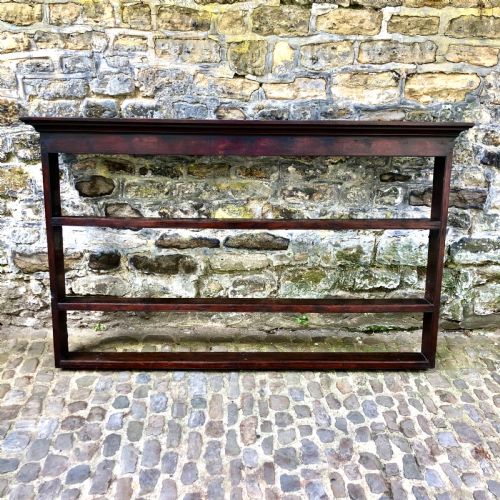
An early oak dresser rack is a wall-mounted or integrated display shelf designed for plates, offering both practical storage and traditional country character.
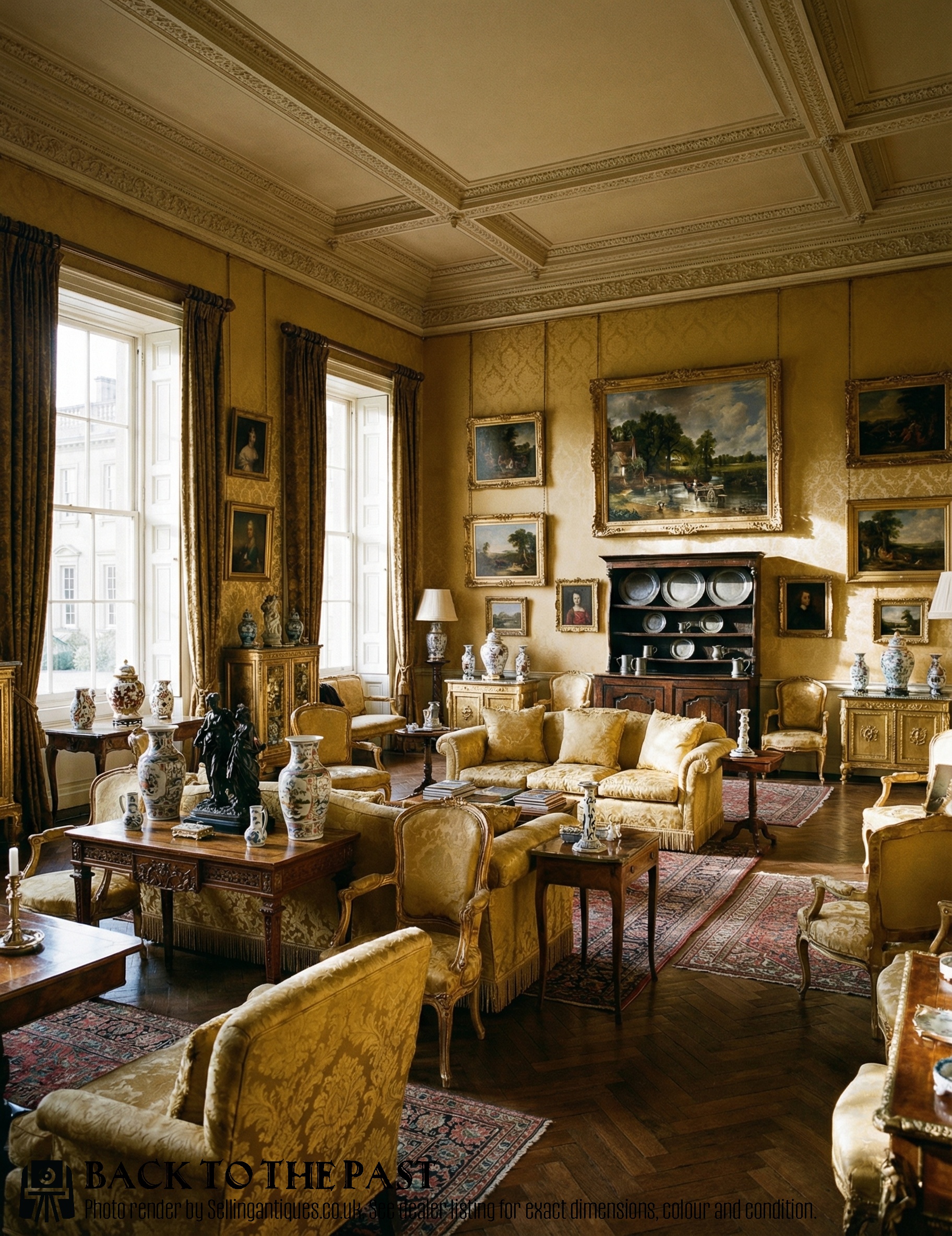
Early Oak Dresser Rack
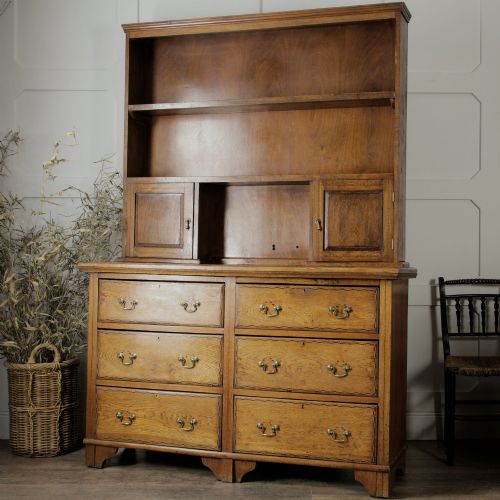
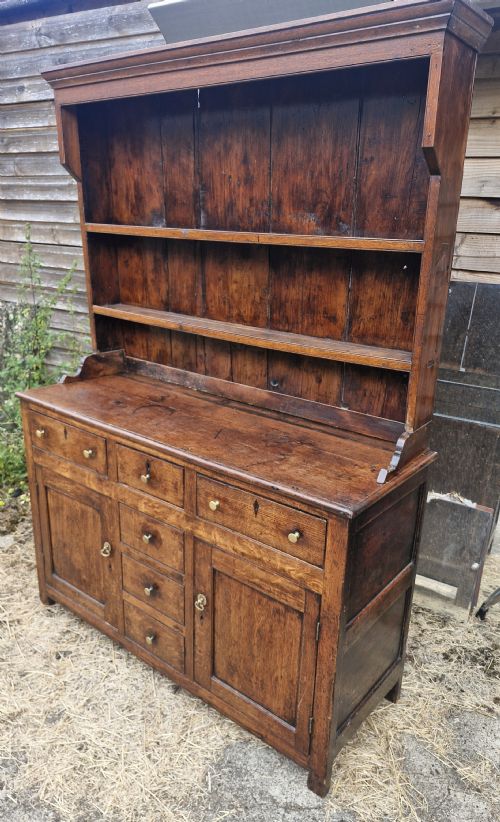
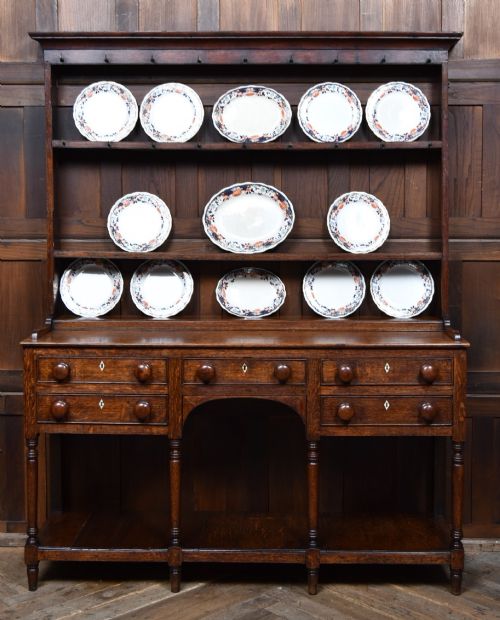
An early oak dresser rack forms the upper plate-display section of a traditional kitchen or dining room storage unit. These open shelves are encountered as standalone wall racks or as part of two-part dressers spanning from the seventeenth century through to the early twentieth century.
Regional variations appear frequently across Wales, Shropshire, and Anglesey, reflecting distinct local vernacular furniture traditions in British country homes. The forms range from simple open back plate racks to substantial two-part cupboard dressers featuring integrated shelving.
The material palette centres primarily on solid oak, occasionally paired with elm or mahogany highlights, complemented by brass and iron hardware where fitted. These pieces served historically to display pewter and ceramic tableware in everyday domestic settings.
How they were made
Joinery relies on traditional solid oak construction methods, incorporating pegged joints and planked backs suited to vernacular country workshops. Surfaces demonstrate the natural grain of timber, sometimes enriched through period inlay techniques.
Hardware elements such as brass and iron provide structural fittings and hinges where racks attach to lower dresser bases or walls. Structural integrity depends on the thickness of the oak boards and the precise fitting of plate rails.
Listings feature oak dressers and racks spanning from the seventeenth century through to the early twentieth century, incorporating regional Welsh and English country styles.
What varies in quality
Proportion and scale dictate the visual weight of the piece, with smaller proportions and well-balanced open shelves commanding particular attention from collectors. The handling of the timber grain and the crispness of early carved details reveal the competence of the maker.
State of preservation distinguishes honest vernacular survivals, where original timber patination remains intact across the rack boards and plate grooves. Alterations to shelving or replaced elements alter the historical integrity of the piece.
The Early Oak Dresser Rack Glossary
- Potboard dresser
- A traditional dresser featuring an open lower shelf beneath the main counter, used historically for storing pots and pans. This lower platform sits above the floor on short feet or stiles.
- Plate rack
- An open shelving unit designed specifically to hold plates upright on edge using horizontal display grooves or retaining rails. These racks mount either directly to a wall or sit atop a matching base.
- Welsh vernacular
- A distinct regional style of country furniture originating in Wales, characterised by robust construction and practical local utility. These pieces often utilise native oak and show specific regional building traits.
- Two-part dresser
- A storage furniture item constructed in separate upper and lower sections, typically combining a plate rack top with a base cabinet or drawers. This modular construction facilitated transport into rural cottages.
Early Oak Dresser Rack: Frequently Asked Questions
Where do I hang an early oak dresser rack?
These racks mount securely to solid walls in kitchens or dining rooms where plate display is desired. Ensure the fixings anchor directly into wall studs or masonry to support the weight of the solid timber.
Position the rack at a height that allows safe access to plates while clearing lower furniture or kitchen countertops. Traditional placement often mirrors the footprint of a sideboard or serving table.
How do I clean early oak furniture?
Dust the timber regularly with a dry lint-free cloth to prevent the accumulation of grit within the grain. Avoid silicone sprays or modern abrasive polishes that can damage the historical patination of the wood.
Apply a traditional beeswax sparingly if the oak appears dry, buffing gently to a soft finish. Keep the rack away from direct heat sources and dramatic moisture fluctuations to protect the joints.
Can these racks stand alone without a base?
Many racks operate successfully as standalone wall-mounted units without requiring a lower dresser cabinet. Historical examples frequently functioned independently in cottage kitchens to maximise vertical storage space.
Check the structure of the backboards and hanging points to confirm the piece is stable enough for wall suspension. Professional installation is recommended given the considerable weight of solid oak.
How do I identify a regional Welsh rack?
Welsh pieces often exhibit specific proportions, such as compact dimensions or distinct cornice details characteristic of rural workshops. Local cabinetmakers utilised native oak timbers and traditional regional joinery methods.
Examine the backboards and shelf construction for evidence of hand-working traits typical of country furniture. Comparing the piece to documented regional archetypes helps confirm its geographical origins.