

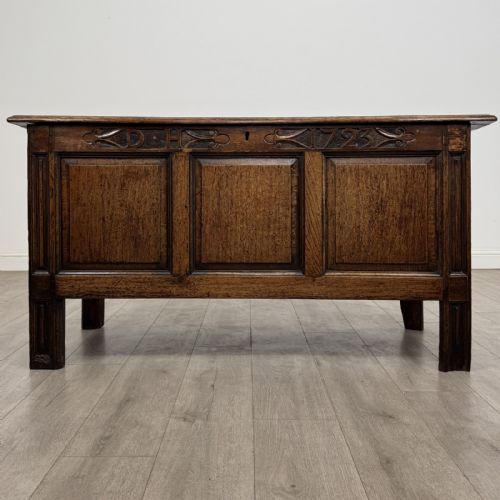
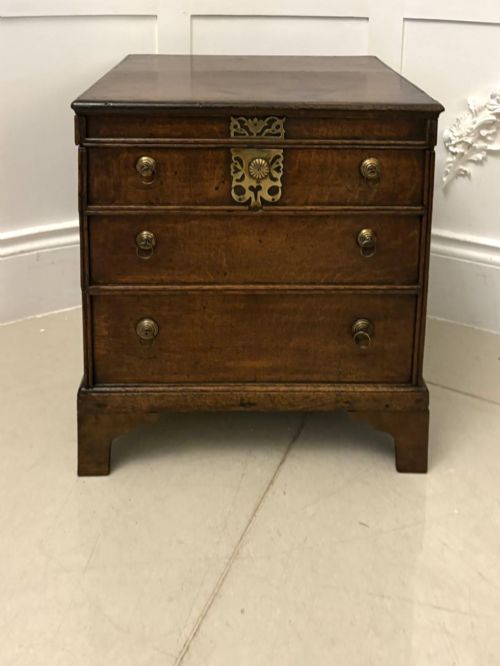
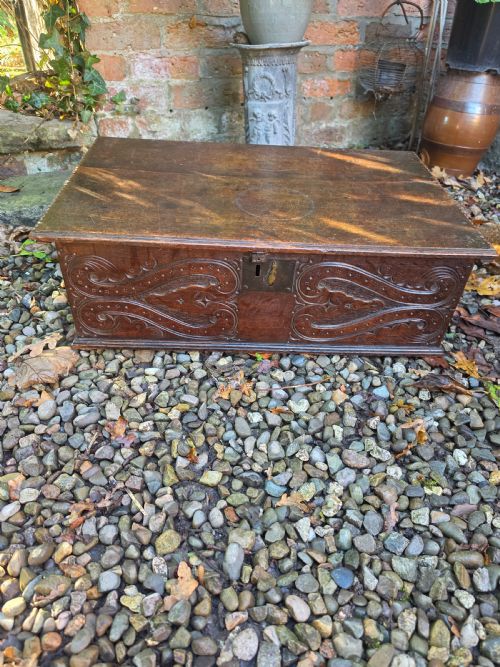
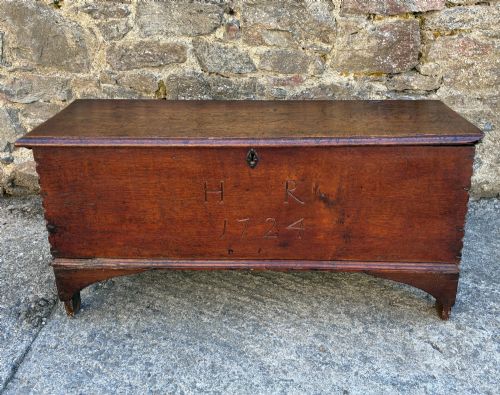


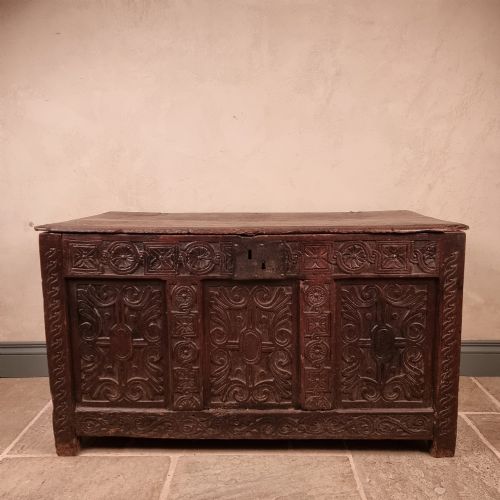
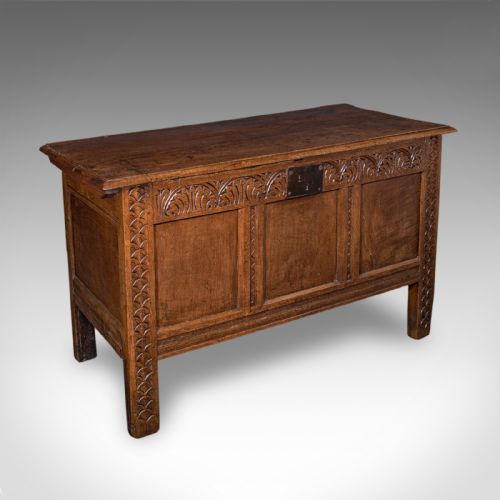
Early Oak Blanket Box
An early oak blanket box provides centuries of domestic storage, bringing honest timber grain and vernacular craft straight into a modern interior.
Early Oak Blanket Box
When searching for an early oak blanket box, buyers encounter sturdy storage chests dating from the sixteenth century through the eighteenth century, alongside occasional nineteenth-century country pieces. These utilitarian containers served households for linen, documents, and valuables before specialised wardrobes and chests of drawers became common.
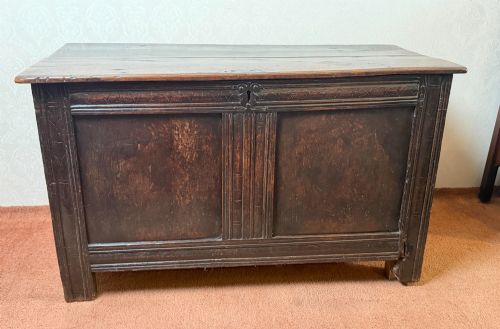
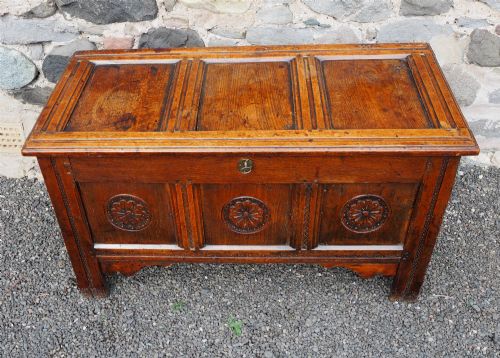
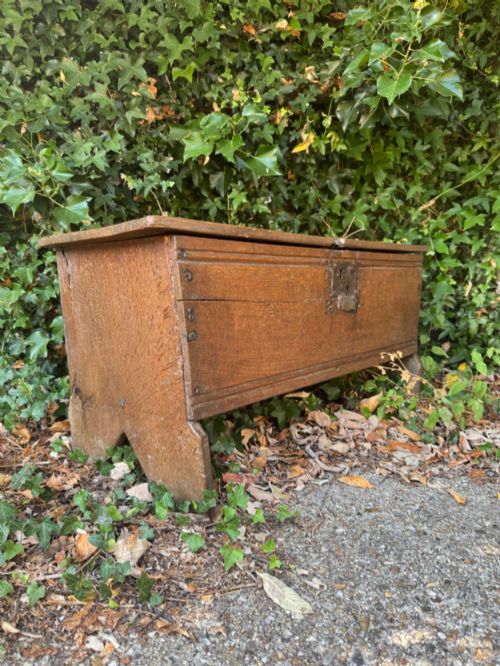
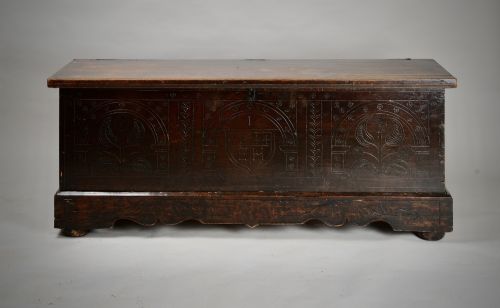
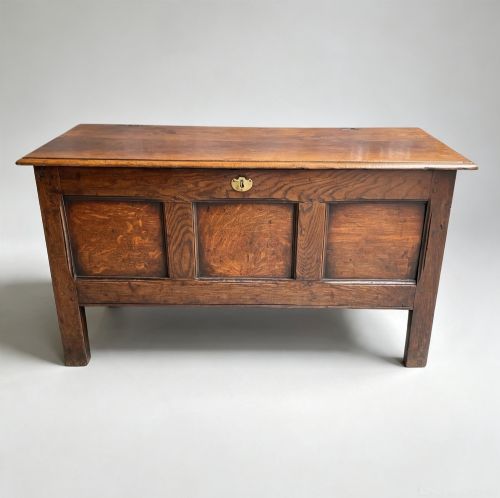
The inventory on this page centres heavily on seventeenth-century and eighteenth-century examples, spanning regional English, Welsh, and continental workshops. Forms range from simple six-plank constructions to panelled coffers and mule chests fitted with lower drawers.
Buyers also find specialised variations such as miniature tabletop boxes, coffer bach formats, and green-painted coaching trunks. Most pieces display the robust joinery and heavy timbers characteristic of early domestic furniture.
How they were made
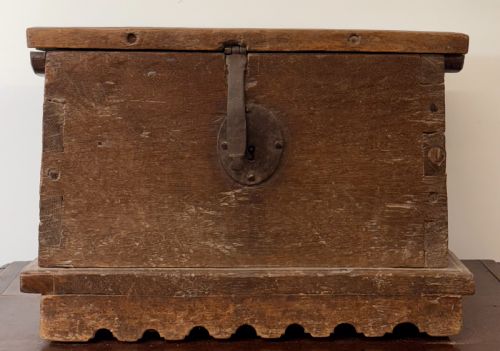
Carpenters constructed these boxes primarily from solid oak, sometimes utilising walnut or fruitwood, shaped with hand tools and secured with pegged mortise and tenon joints. Simpler six-plank versions relied on vertically rebated boards joined at the edges with iron or wrought iron hardware.
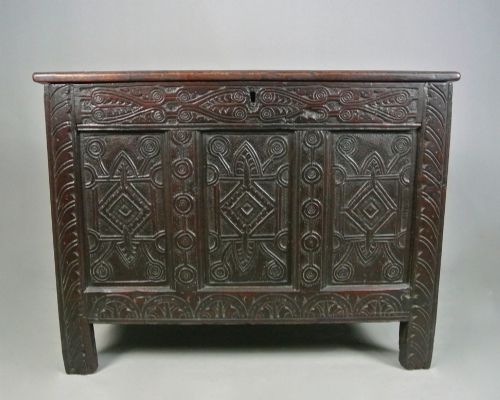
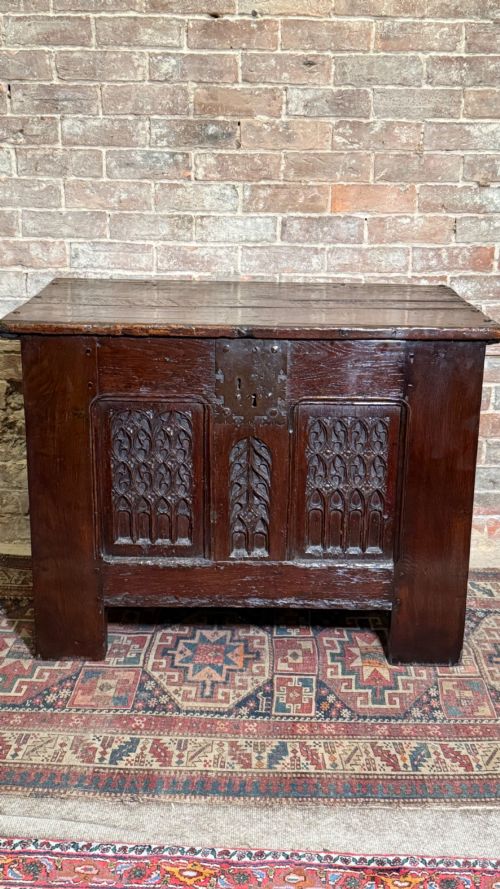
Carvers decorated the structural panels with geometric arcading, fluting, linenfold motifs, or figural carvings reflecting Tudor, Elizabethan, and Jacobean styles. Surviving surfaces often retain traces of early paint, wax finishes, or fruitwood inlay.
Hardware played an essential structural role, employing brass or iron hinges, locks, and strapping to reinforce the lids and protect contents against theft.
Early Oak Blanket Box Retail Price Guide 2026
Typical asking prices for early oak blanket box among the pieces listed under this phrase on Sellingantiques today, from the lower quarter to the upper quarter. They describe what is for sale here now, not the wider market.
What varies in quality
Quality in an early oak blanket box rests upon the integrity of the original timber and the crispness of the hand-carved ornamentation. Pieces retaining their original bottoms, lids, and hinges command greater appreciation than those assembled from later replacement elements.
Proportion and scale distinguish superior items, particularly scarce small-format coffers and miniature chests that demonstrate greater joinery skill. The depth of colour and the presence of untouched patination accumulated over centuries elevate a piece above standard utility examples.
The Early Oak Blanket Box Glossary
- Coffer
- A heavy wooden chest traditionally used for storing valuables or dry goods. These sturdy containers predate modern wardrobes.
- Mule chest
- A storage chest featuring one or more drawers built into the base beneath the main compartment. This hybrid form emerged as domestic storage needs evolved.
- Linenfold
- A style of wood carving that imitates folded linen drapery. It is frequently seen on sixteenth-century panels.
- Six-plank coffer
- A primitive chest constructed from six individual boards joined directly at the edges. This represents one of the earliest forms of case furniture.
- Coffer bach
- A small Welsh box or chest, often standing on short legs. The term translates directly from Welsh as little coffer.
Early Oak Blanket Box: Frequently Asked Questions
What were early oak blanket boxes used for?
Households utilised these heavy chests primarily to store household textiles, woolen blankets, and precious garments safe from pests and dampness. They also functioned as secure receptacles for important family documents, legal deeds, and portable valuables.
In daily domestic life, their flat lids served double duty as impromptu tables, work surfaces, or window seats. Their robust build meant they could also double as travel trunks for carriage transport.
How do I date an early oak box?
Dating relies heavily on examining the construction methods, such as the transition from primitive six-plank boards to sophisticated pegged frame-and-panel joinery. Tool marks left by adzes and pit saws provide vital clues to the manufacturing era.
Stylistic details like arcading, linenfold carving, or geometric mouldings also align pieces with specific reigns from the sixteenth century onward. Original ironwork and locks further help narrow down the chronological window.
How should I care for an antique oak chest?
Keep wooden chests away from direct heat sources, radiators, and strong sunlight to prevent the dry oak boards from splitting or warping. Maintaining a stable indoor humidity preserves the structural integrity of the ancient timbers.
Apply a traditional beeswax polish sparingly to nourish the surface and maintain the natural lustre without sealing the grain. Avoid modern chemical cleaners that might strip away centuries of accumulated patina.
Are these chests suitable for modern living rooms?
These versatile pieces integrate smoothly into contemporary living spaces, providing practical concealed storage for blankets, board games, or media equipment. Their flat tops make them ideal candidates to serve as coffee tables or hallway benches.
The rich grain and historical character of aged oak add warmth and visual grounding to minimalist or traditional interior schemes alike.