




Early Georgian Slant Desk
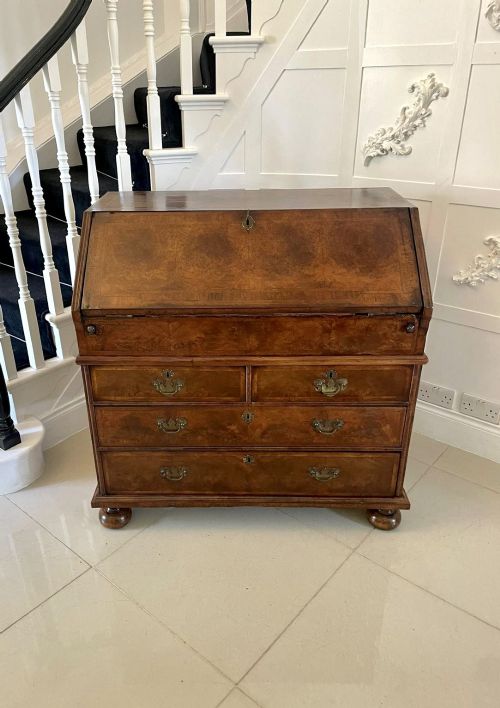
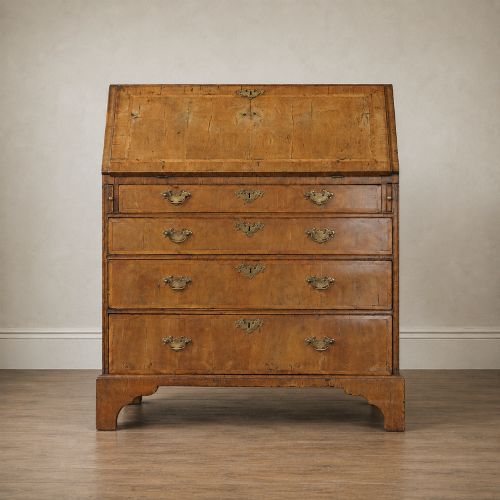
An early georgian slant desk offers a hinged fall front opening to reveal fitted interior compartments, serving as a compact writing cabinet.
Early Georgian Slant Desk
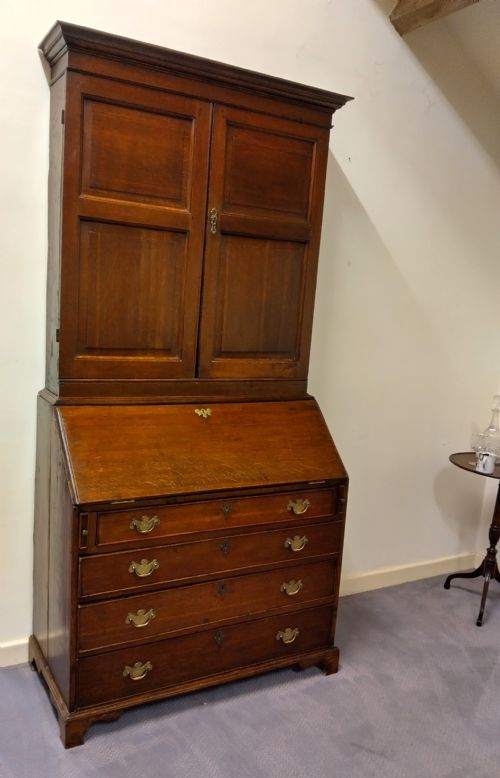
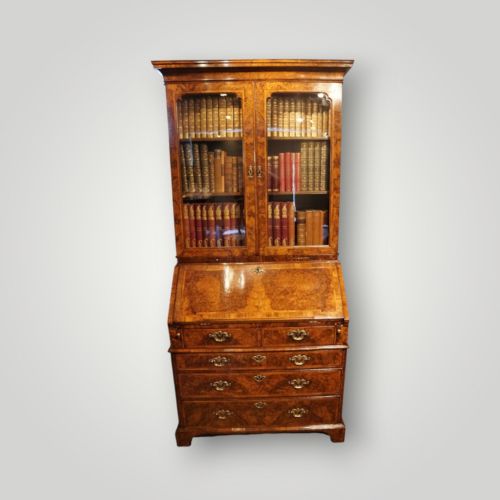
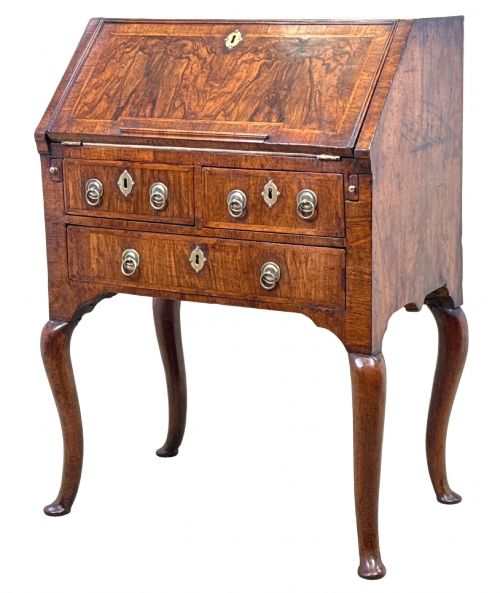
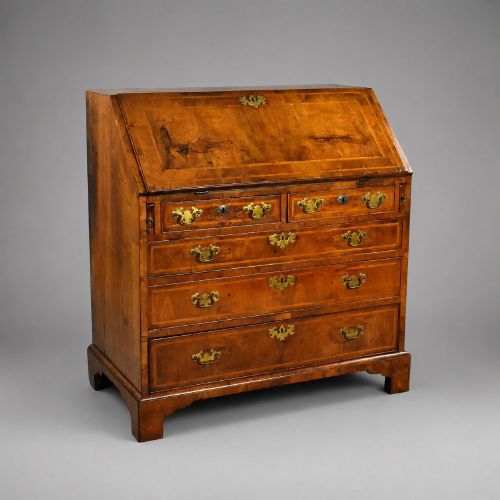
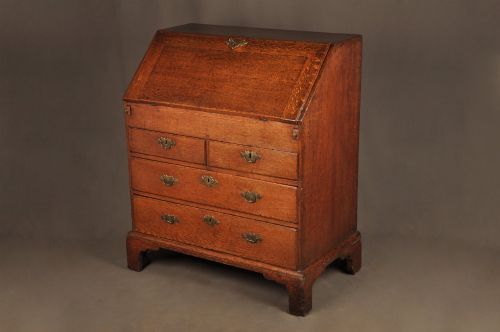
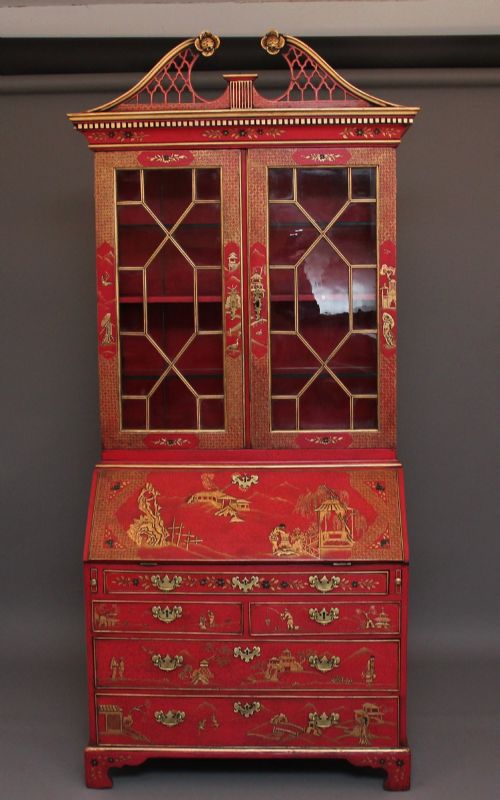
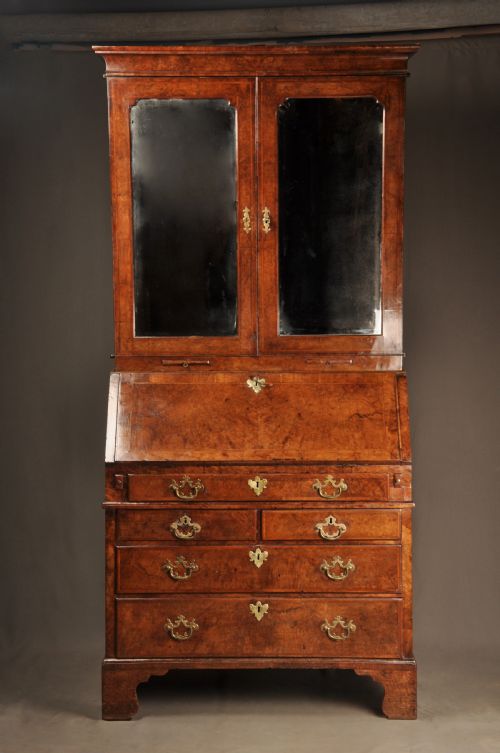
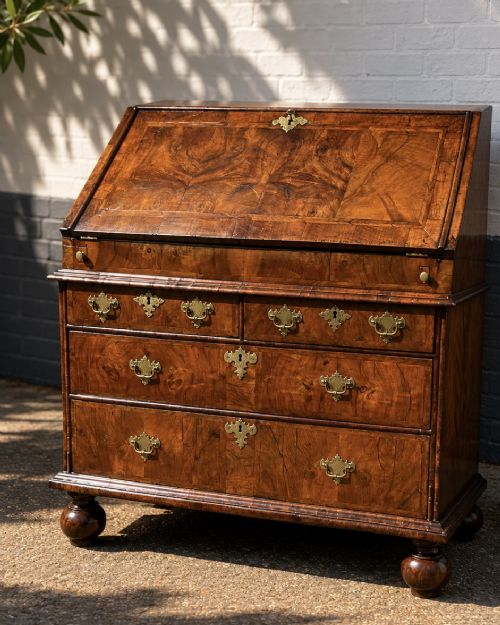
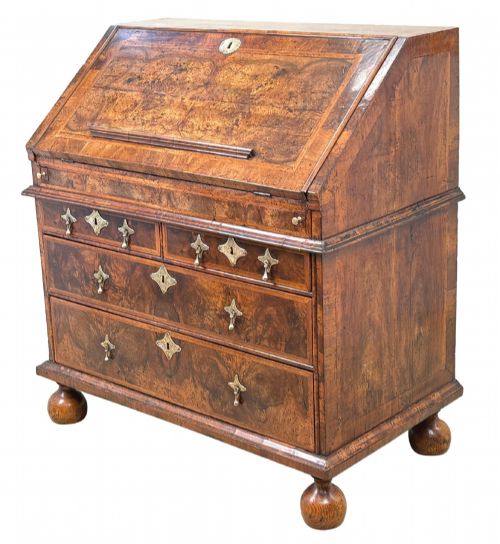
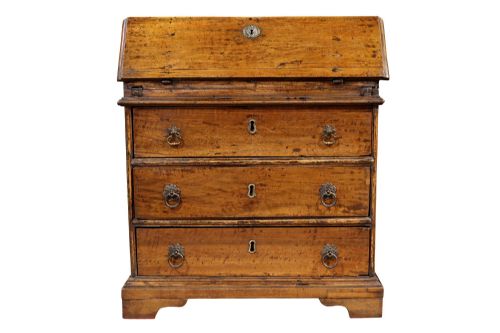
An early georgian slant desk combines a writing surface with concealed storage drawers behind a sloping fall front. These pieces appear in forms ranging from compact fall-front cabinets to tall bureau bookcases featuring glazed upper sections.
Examples on this page span the seventeenth, eighteenth and nineteenth centuries, alongside twentieth-century revivals. Walnut, oak, mahogany, and burr elm dominate the structural timber choices.
Styles trace through William and Mary, Queen Anne, George I, and George II periods. Chinoiserie decoration and revival interpretations also surface among the listings.
Materials and construction
Cabinetmakers utilised native and imported timbers, applying burr walnut veneer, herringbone inlay, and solid oak or walnut construction. Surfaces frequently display figured grain patterns and original patination developed over centuries.
Fitted interiors incorporate pigeonholes, small drawers, and secret compartments behind the sloping fall. Hardware components include brass handles, original ironwork, and candle slides on upper cabinet sections.
Listings feature walnut, oak, mahogany, burr elm, and mulberry timbers across eighteenth and nineteenth-century periods.
Assessing quality and character
The choice of timber grain defines visual hierarchy, with heavily figured burr walnut and mulberry veneers representing finer cabinetmaking. Intricate herringbone stringing and retained original ironwork elevate the standing of an individual piece.
Proportions and structural integrity dictate desirability, particularly in taller bureau bookcases divided into multiple sections. Alterations or adaptations, such as television conversions, alter the historical status of early examples.
The Early Georgian Slant Desk Glossary
- Fall front
- The hinged sloping board that pulls down to form a writing surface. This panel conceals the internal pigeonholes and small drawers.
- Bureau bookcase
- A dual-purpose piece combining a lower slant desk with an upper shelving cabinet, often enclosed by glass doors.
- Herringbone inlay
- A decorative banded wood veneer laid in a V-shaped zig-zag pattern. Cabinetmakers used this detail to frame drawer fronts and panel borders.
- Candle slides
- Pull-out wooden battens positioned beneath upper bookcase doors to support lighting. They retract flush when not in use.
- Patina
- The surface sheen and mellow colour acquired by wood through age and handling. Original patination indicates minimal chemical stripping.
Early Georgian Slant Desk: Frequently Asked Questions
What is inside the slant desk?
Opening the sloping fall reveals a fitted interior containing pigeonholes, small document drawers, and sometimes secret compartments. Many examples also include central cupboards and sliding wells.
These internal compartments served to organise correspondence, writing materials and ledgers in domestic or office settings.
How do I spot a revival piece?
Revival pieces display construction methods, timber treatments and hardware characteristic of later centuries despite adopting earlier Queen Anne or George I styling. Machine-cut elements and modern adhesives differentiate twentieth-century interpretations from eighteenth-century originals.
Examining the internal drawer linings and secondary timbers helps clarify the actual period of manufacture.
Were these desks used for writing?
The sloping front provided a comfortable angle for handwriting while seated on a chair. Lower compartments stored paper, inkwells and ledgers close to hand.
Wealthy households utilised these cabinets in private studies, bedchambers and parlour rooms for managing personal correspondence.
What timber was most popular?
Walnut and burr walnut dominate early eighteenth-century pieces, prized for rich figuring and decorative veneer potential. Oak served for sturdy provincial desks, while mahogany appeared toward the middle of the eighteenth century.
Exotic veneers and burr elm also feature among high-status examples from the period.