



Early Georgian Glassware
These early georgian glassware pieces are tactile drinking vessels and table items in clear lead glass, flint glass, and coloured varieties that bring historical weight to a modern room.
Early Georgian Glassware
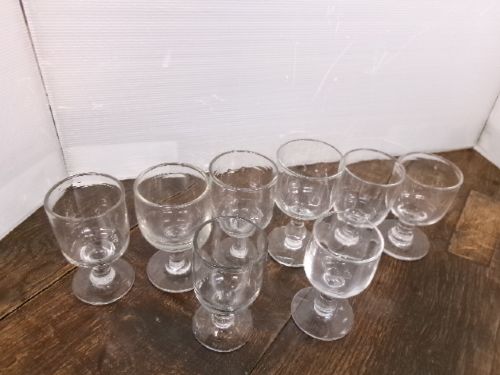
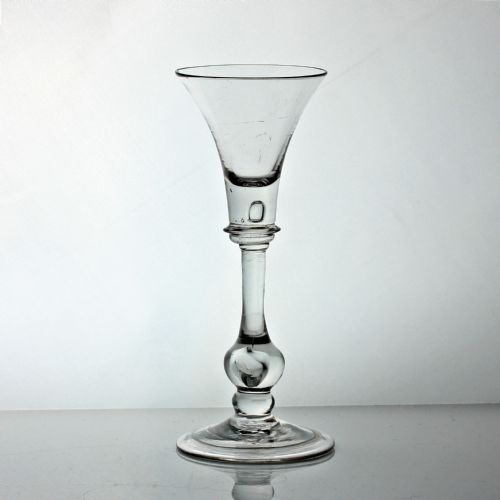
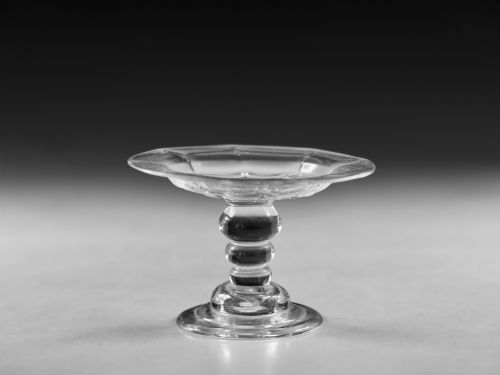
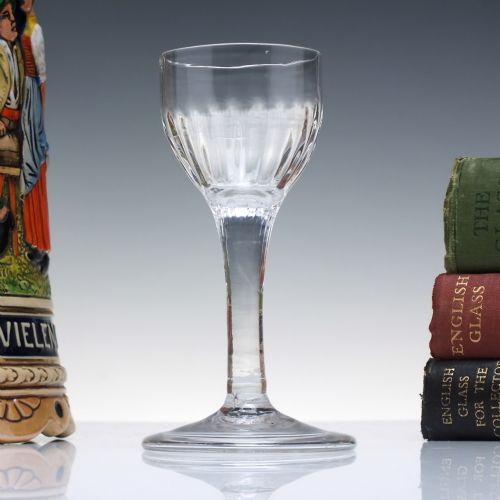
Early georgian glassware encompasses drinking glasses, decanters, patch stands, and small dishes spanning the eighteenth century and the early decades of the nineteenth. The pieces you encounter most frequently on this page are wine glasses, rummers, and decanters shaped in lead glass, clear glass, and flint glass.
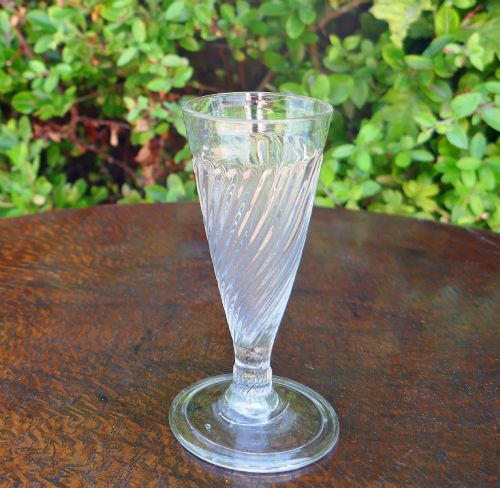
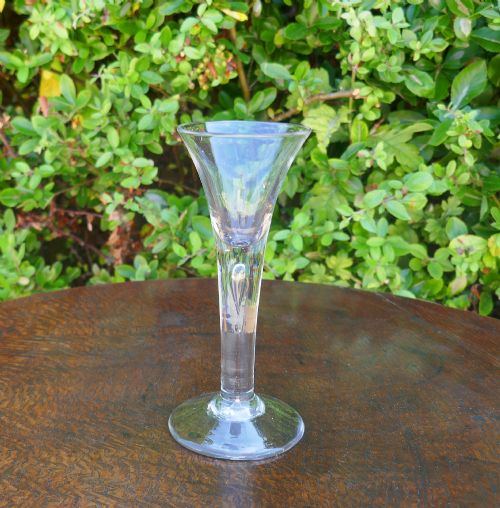
Forms range from early baluster dram glasses and trumpet-bowl wine glasses with folded feet to later cut glass champagne glasses and mell decanters. Makers from this span utilised simple blown techniques, ribbing, and wrythen twists alongside later decorative cutting.
How they were made
The primary material across these listings is lead glass, alongside flint glass, clear glass, and occasional cobalt or Bristol blue glass. Master glassmakers shaped molten metal by hand, incorporating air bubbles into stems or moulding vessels with nut-moulded and ribbed bowls.
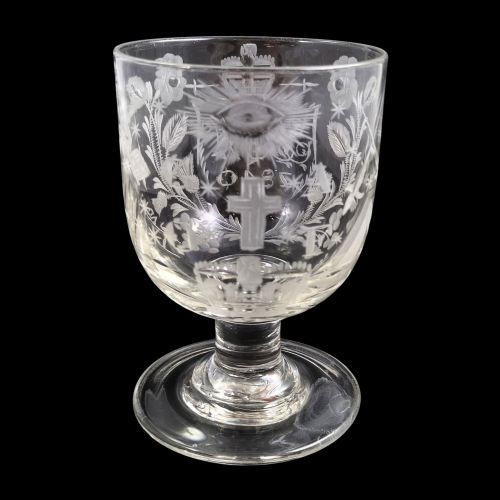
Finishing techniques involved folding the foot under for stability, hand-engraving floral or geometric motifs, and applying gold leaf or cutting facets into heavy blanks.
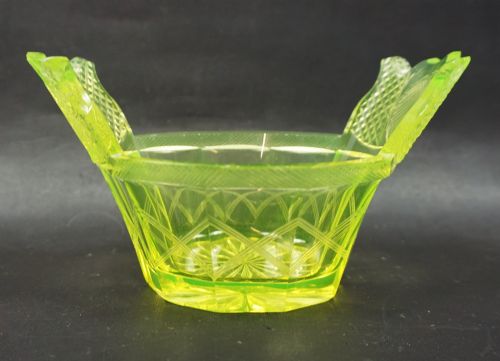
Listings feature lead glass, cobalt glass, and uranium glass across Georgian, Regency, and Bohemian Biedermeier styles.
What varies in quality
Quality rests in the weight of the metal, the clarity of the glass, and the balance of the proportions. Heavy baluster stems with tight knops and well-formed air bubbles represent a different standard of craftsmanship than later pressed or standard blown pieces.
The crispness of the hand-engraving and the neatness of a folded foot distinguish finer examples from standard production items of the period.
The Early Georgian Glassware Glossary
- Lead glass
- Heavy glass containing lead oxide, introduced to increase brilliance and weight. It forms the foundation of much early British table glass.
- Baluster stem
- A thick, swelling stem shape reminiscent of architectural balusters, common in early eighteenth-century drinking vessels.
- Folded foot
- A glass foot where the outer rim is folded underneath to create a thicker, more stable edge. This feature protects the delicate base from chipping.
- Wrythen
- A decorative spiral pattern twisted into the glass body or stem during blowing. It creates a subtle optical movement in the transparent metal.
- Patch stand
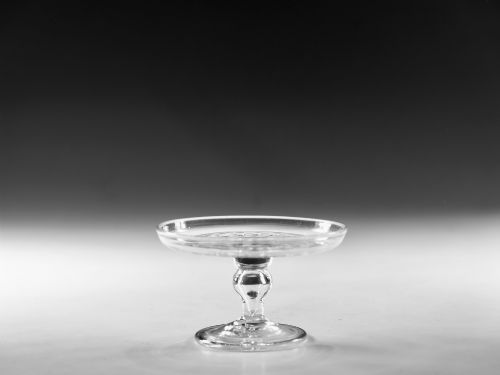
- A small circular glass dish used during the eighteenth century to hold cosmetic face patches. These delicate items sit on short stems or feet.
- Mell decanter
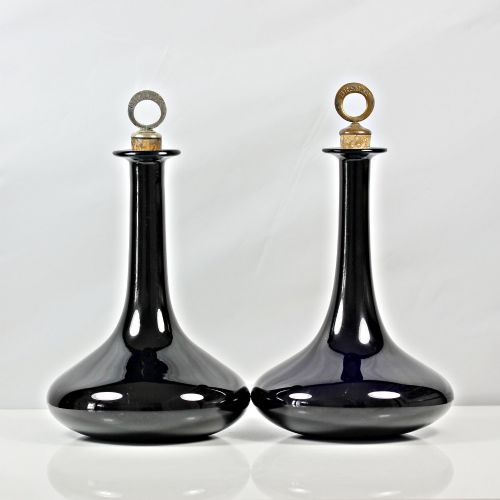
- A mallet-shaped decanter with a wide base and short neck, designed to sit securely on ship tables or sideboard trays.
Early Georgian Glassware: Frequently Asked Questions
What is early georgian glassware used for?
These items were made for dining, drinking wine, spirits, and ale, or displaying small vanity items like face patches. Today, collectors use them to set a period table or display them in lighted cabinets.
While robust enough for careful occasional use, many owners prefer to treat them as cabinet pieces to preserve their surface finish and historical integrity.
Why do some glasses have folded feet?
Makers folded the rim of the foot underneath to add weight and strength to the base of the vessel. This technique was standard practice for better quality drinking glasses in the first half of the eighteenth century.
It provides a tactile ridge on the underside that helps separate earlier hand-formed examples from later flat-footed glassware.
Can I use antique decanters for wine?
Many collectors use antique decanters for serving wine, provided the interior is clean and free from old sediment staining. Lead glass holds liquids safely, though modern detergent should be avoided in favour of warm water.
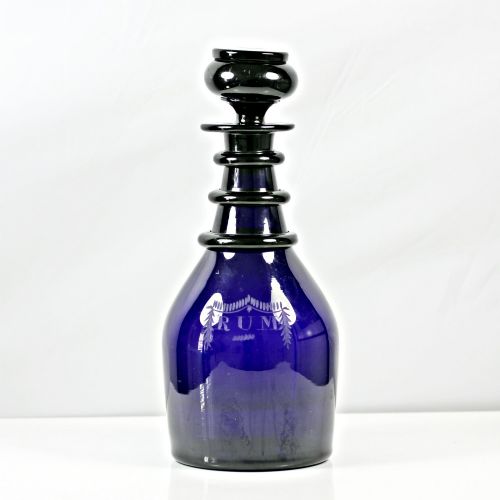
Checking for ring numbers, such as three-ring decanters, helps date the vessel to the Regency or William IV periods.