

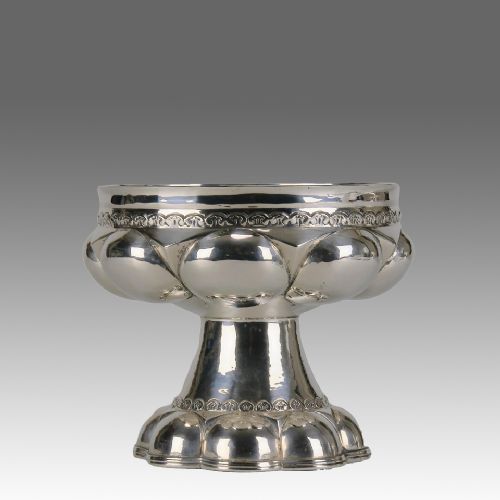


Early 20th Century Pedestal
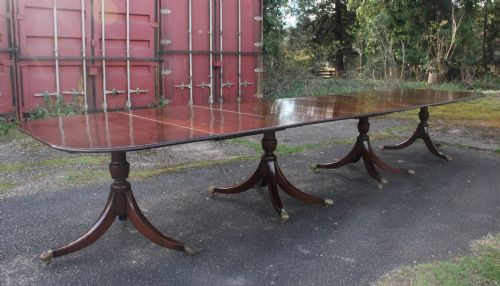
An early 20th century pedestal brings architectural presence and practical display space to a room, spanning grand mahogany desks and carved wooden columns.
Early 20th Century Pedestal
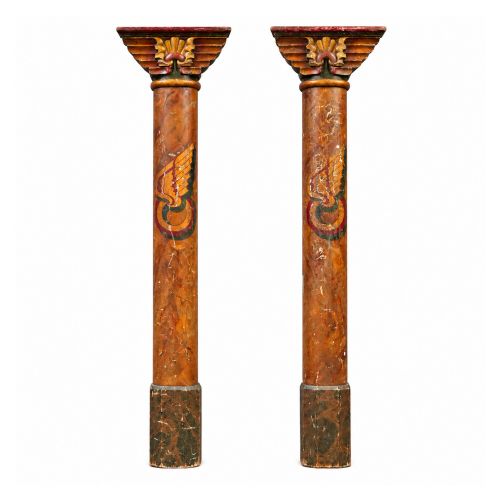
Beyond standard writing and partners desks, the category encompasses matched pairs of carved fairground columns, gilt pedestal columns, and bedside cabinets. These pieces reflect revival styles spanning Georgian, Regency, Neoclassical, and Empire designs, demonstrating the period's preference for historical interpretation in domestic and commercial interiors.
Assessing Craftsmanship
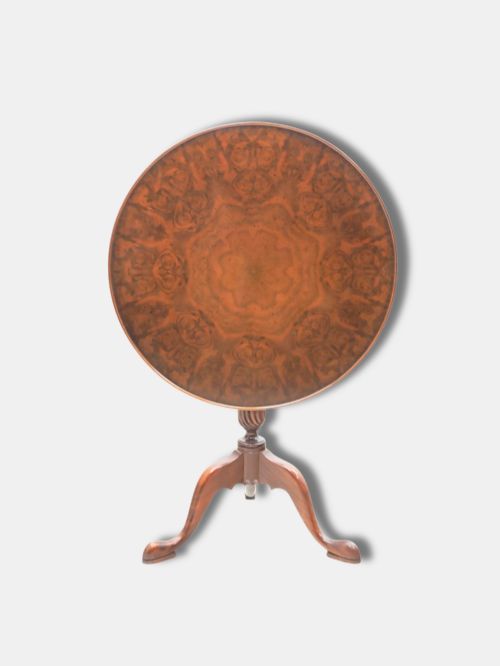
The distinction between tiers of production lies in the selection of timber, particularly the choice of curl mahogany or burr walnut veneers over secondary woods. Superior examples demonstrate meticulous attention to internal drawer construction, matching veneer grains across multiple pedestals, and crispness in hand-carved details.
Proportion and execution define the upper range, where revival styles closely follow historical proportions without appearing heavy. Finer desks and stands incorporate subtle design nuances, such as integrated leather tooling and substantial brass hardware, which separate standard utilitarian pieces from high-workshop commissions.
Early 20th Century Pedestal Retail Price Guide 2026
Typical asking prices for early 20th century pedestal among the pieces listed under this phrase on Sellingantiques today, from the lower quarter to the upper quarter. They describe what is for sale here now, not the wider market.
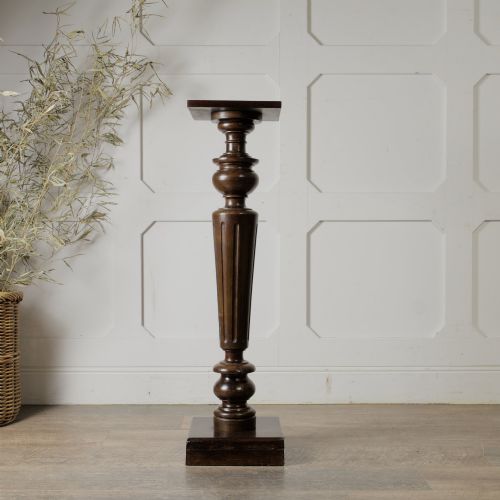
Listings feature pedestal desks in oak, mahogany, and walnut, alongside occasional tables, plant stands, and decorative columns.
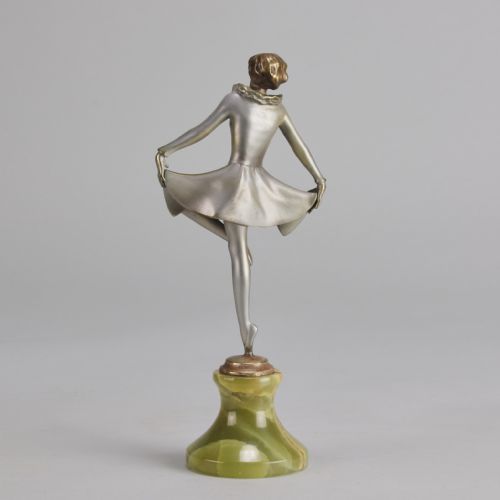
Hobbs and Co·Maples and Co·Globe Wernicke·Nathan and Hayes·Josef Lorenzl
The Early 20th Century Pedestal Glossary
- Pedestal Desk
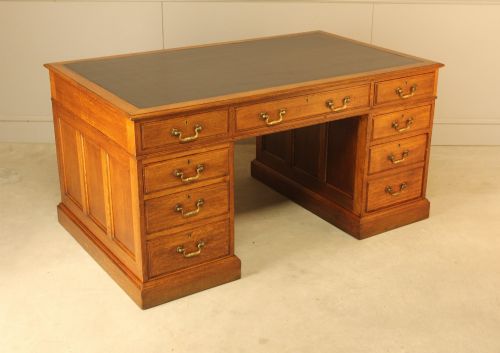
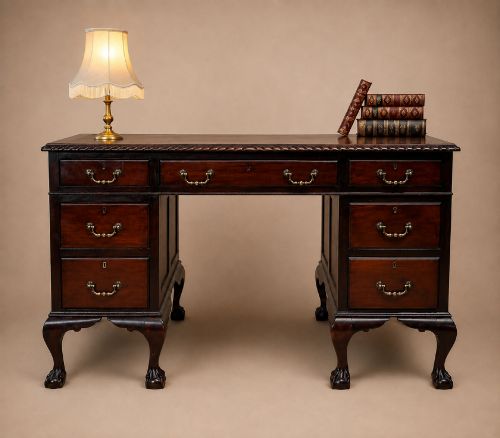
- A heavy executive or writing desk comprising a central section supported by two independent banks of drawers. These units frequently feature inset leather panels on the writing surface.
- Partners Desk
- A large double-sided desk designed for two people to work opposite one another, featuring drawers and cupboards on both longitudinal faces. They typically employ solid oak, mahogany, or walnut.
- Veneer
- A thin layer of figured wood, such as curl mahogany or burr walnut, applied over a stable secondary timber base. This technique creates decorative grain patterns across large flat surfaces.
- Kneehole
- The central recessed space beneath a desk or dressing table designed to accommodate the user's legs. It is often flanked by single or double banks of graduated drawers.
- Plinth
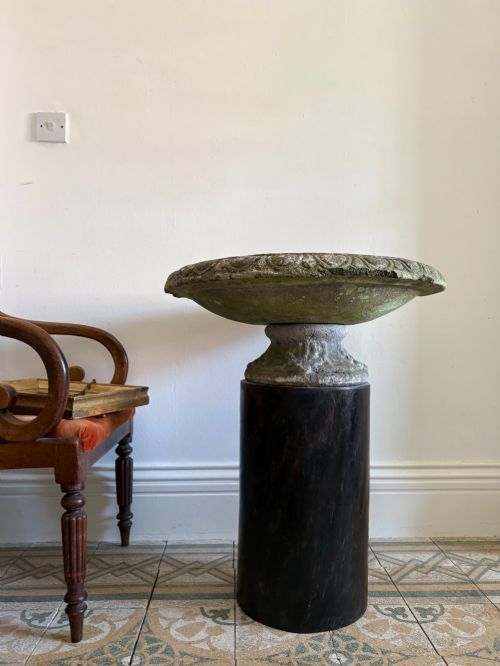
- A heavy rectangular or cylindrical base supporting a column, statue, or piece of furniture. In this period, they appear in solid mahogany, ebonised wood, or cast stone.
Early 20th Century Pedestal: Frequently Asked Questions
What is a twin pedestal desk?
A twin pedestal desk is a large freestanding writing table supported by two separate pedestals containing drawers or cupboards. The top surface spans across both units to create a central kneehole space.
These desks were commonly produced in mahogany, oak, and walnut during the Edwardian period and subsequent decades for home studies and professional offices.
How do I identify an Empire Revival pedestal?
Empire Revival pedestals display classical motifs inspired by the early nineteenth century, typically rendered in Scandinavian birch or exotic hardwoods. They feature clean architectural lines, occasional gilt highlights, and classical column structures.
These pieces contrast with heavily carved Baroque or Rococo revival items by prioritising symmetrical form and striking timber grain.
Where were architectural columns used?
Architectural columns and fairground pedestals served as decorative interior supports or display stands for sculptures, urns, and lamps. They were carved from timber, cast in stone, or finished with gesso and gilt.
In domestic settings, they lifted decorative objects to eye level, creating focal points in hallways and reception rooms.
How should I care for a leather top desk?
Leather top desks require gentle maintenance using specialised leather balms to prevent the hide from drying and cracking over time. Avoid exposing the surface to direct sunlight and excessive moisture.
The gold tooling around the perimeter should be dusted carefully with a soft brush rather than wiped with harsh cleaning liquids.