


Early 19th Century Trunk
An early 19th century trunk offers substantial period storage, uniting robust utility with regional craftsmanship from Regency and Georgian workshops.
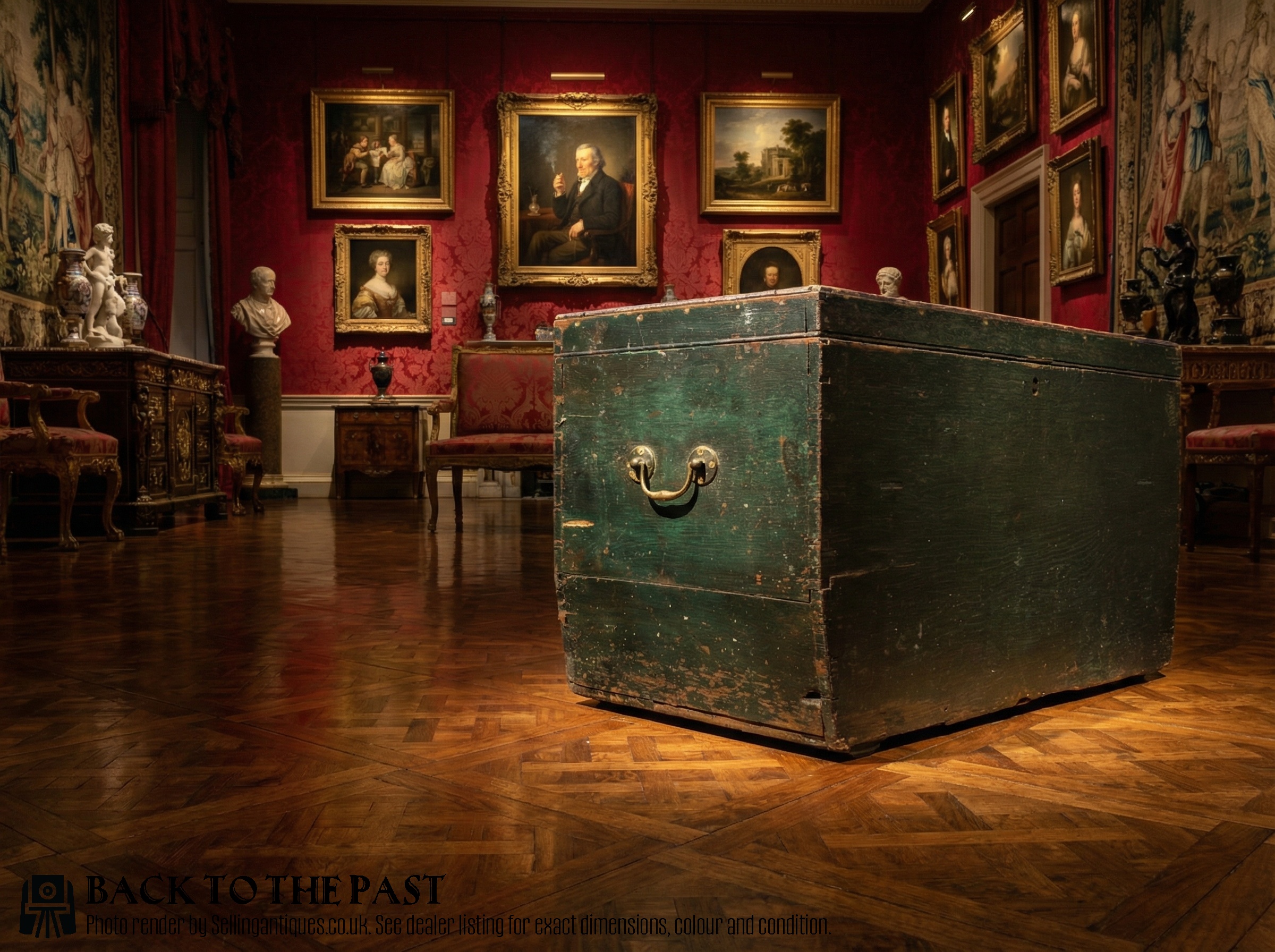
Early 19th Century Trunk
When searching for an early 19th century trunk, buyers encounter a diverse selection of storage chests, blanket boxes, and travelling containers spanning the Regency and Victorian eras. These items served practical purposes for travel, seafaring, and domestic storage before modern wardrobes became common.
Pine and oak appear frequently among the listings, often finished with paint, scumble, or iron strapping. Campaign chests in teak, mahogany, and camphor wood represent the travel-oriented examples designed for military officers and merchants.
Regional variations span British country pieces, Scandinavian folk art painted boxes, and China Trade items. Mule chests and blanket boxes provide domestic storage with lower drawer compartments, while coaching trunks and seaman chests reflect transit needs.
Materials and construction
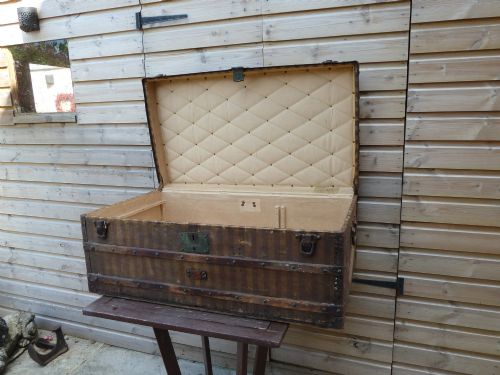
Cabinetmakers and joiners utilised solid timbers including pine, oak, elm, teak, and mahogany, selecting each wood for its local availability or resilience against travel. Iron and brass hardware, such as straps, locks, and carrying handles, reinforced the structural integrity of pieces destined for coaching or maritime journeys.
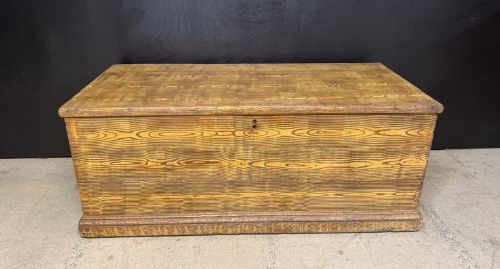
Surface treatments varied from clear wax on hardwoods to protective lead-based paints, scumble glazes, and intricate folk art decoration on softwood boxes. Dovetail joints and hand-forged wrought iron nails secure the panels of these chests, demonstrating traditional construction methods.
One seaman's chest proudly bears the painted motto Emblem of Liberty, proving sailors enjoyed philosophical decoration.
Distinctions in quality
The distinction between standard utility items and superior examples lies in the choice of materials and the refinement of surface decoration. Hardwood construction using teak, camphor wood, or figured mahogany with integrated brass banding indicates pieces commissioned for officers or wealthy travellers.
Original painted surfaces, such as Swedish scumble glazes or folk art motifs, elevate provincial pine boxes above plain utilitarian containers. The integrity of original ironmongery, locks, and dovetailed joints further separates superior examples from heavily altered pieces.
Louis Vuitton·H Pidduck & Son
The Early 19th Century Trunk Glossary
- Campaign trunk
- A portable storage chest constructed in sections or fitted with carrying handles for military officers on active service abroad.
- Mule chest
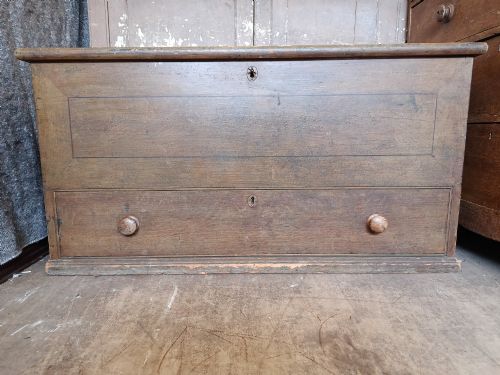
- A traditional storage chest featuring one or more drawers built into the base beneath the main compartment.
- Scumble painted
- A decorative surface technique where a translucent top coat is manipulated over a lighter ground to simulate graining or texture.
- Coaching trunk
- A sturdy travelling chest designed to be strapped to the roof or boot of a horse-drawn stagecoach.
- China Trade
- Goods manufactured in East Asia during the eighteenth and nineteenth centuries specifically for export to Western markets.
Early 19th Century Trunk: Frequently Asked Questions
What is an early 19th century trunk?
An early 19th century trunk is a wooden storage box or travelling chest made between eighteen hundred and the middle of the Victorian period. They encompass military campaign chests, seafaring boxes, and domestic blanket chests.
These containers were built to withstand rigorous transport by ship, coach, or horse. Today, buyers utilise them as coffee tables, blanket boxes, and prominent storage furniture.
How do I identify a Swedish painted trunk?
Swedish painted trunks from the early nineteenth century typically feature bright polychrome decoration, floral motifs, or scumble graining on pine. They often carry inscriptions, dates, or marriage symbols associated with rural Scandinavian folk art.
These pieces contrast sharply with British hardwood campaign chests by prioritising decorative domestic warmth over military utility. The softwoods used are joined with traditional dovetails beneath the painted layers.
How should I clean a leather clad trunk?
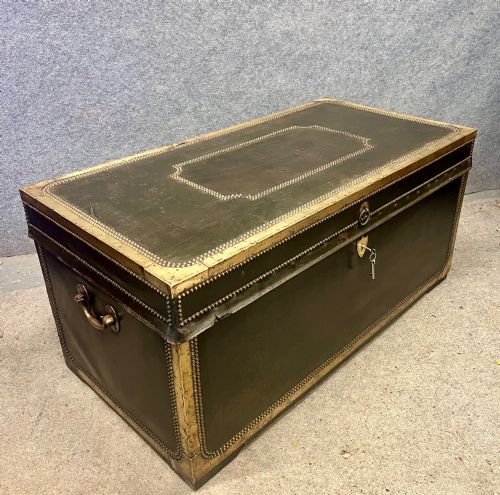
Leather clad trunks require gentle maintenance to preserve the aged hide and any associated brass studding. Dusting with a soft dry cloth removes surface particles without disturbing the historic material.
Application of a specialist microcrystalline wax helps protect the leather from drying out. Avoid modern chemical cleaners that might strip the original nineteenth century finish.