
Early 19th Century Drawers
Early 19th century drawers encompass practical storage furniture from the Georgian, Regency and early Victorian eras that bring period character to modern interiors.
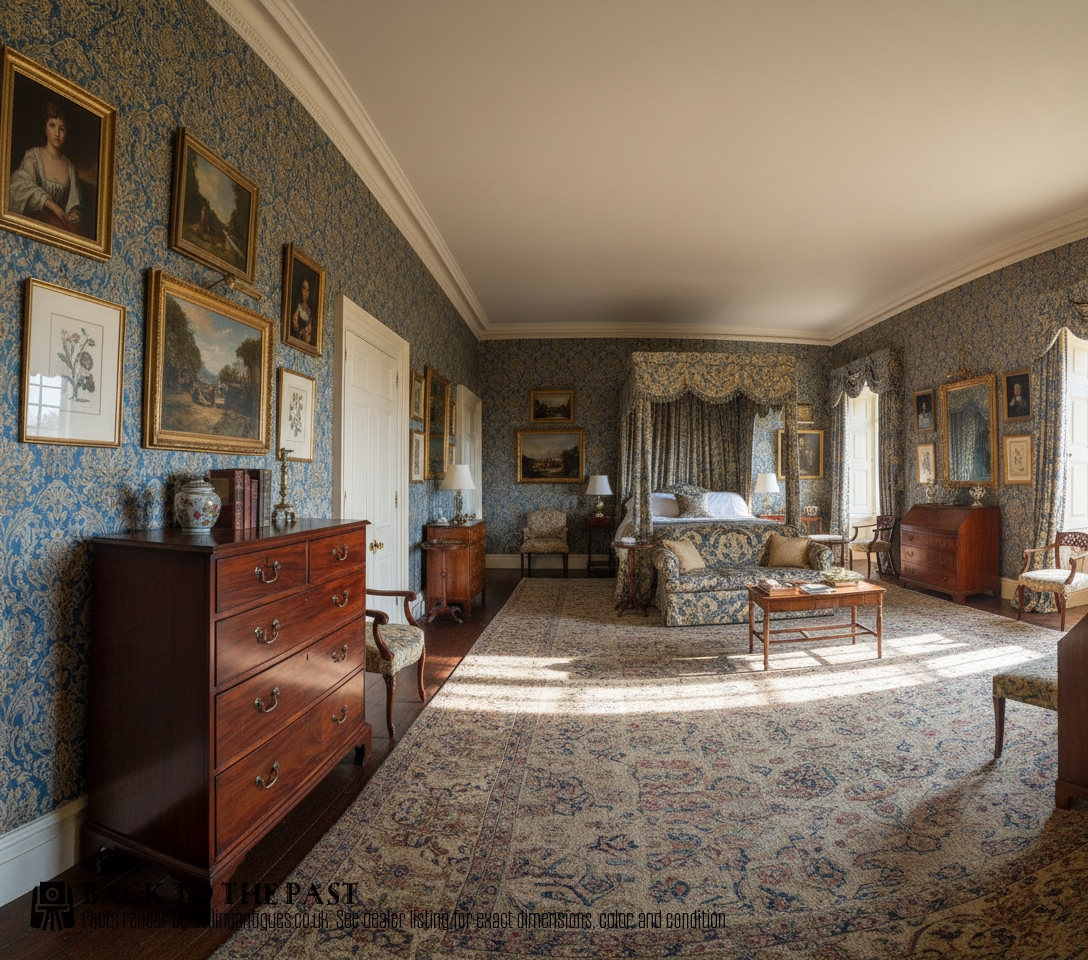
Early 19th Century Drawers
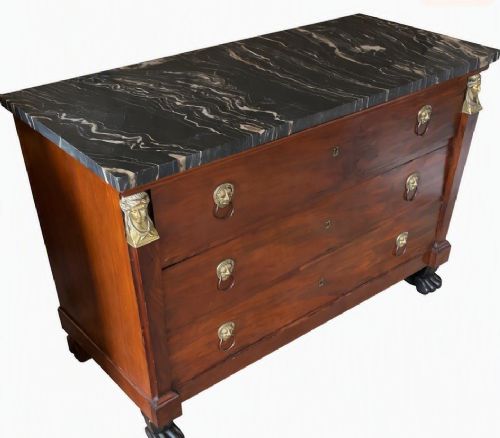
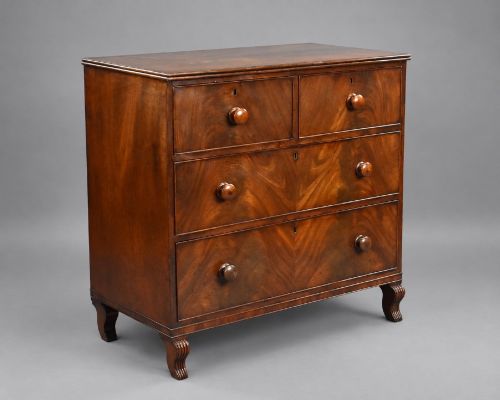
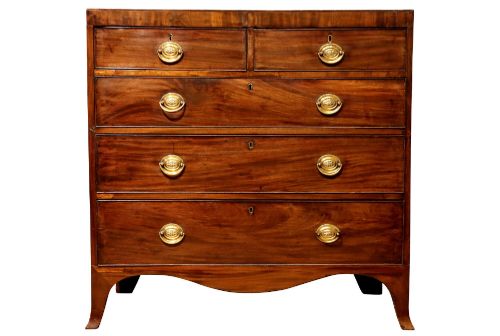
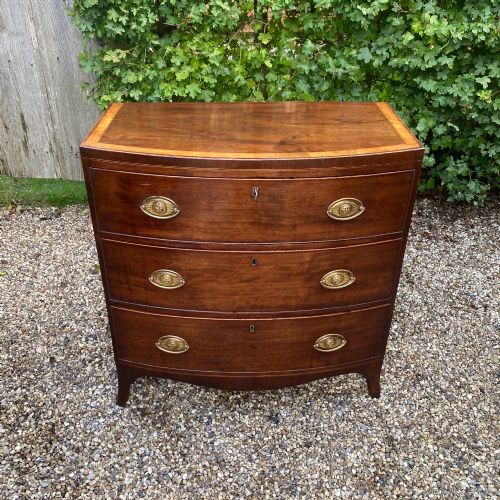
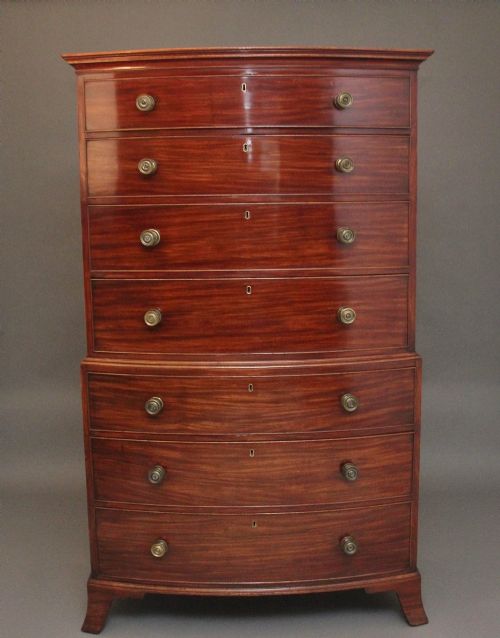
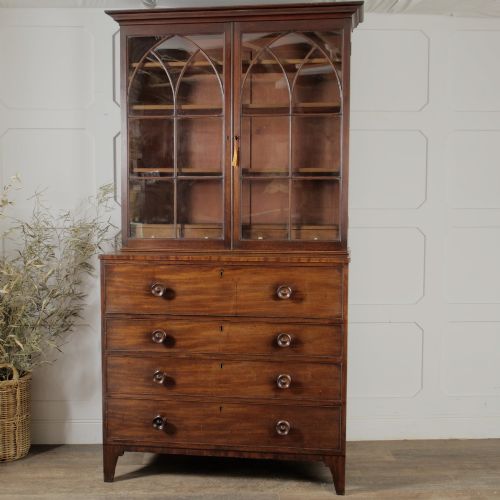
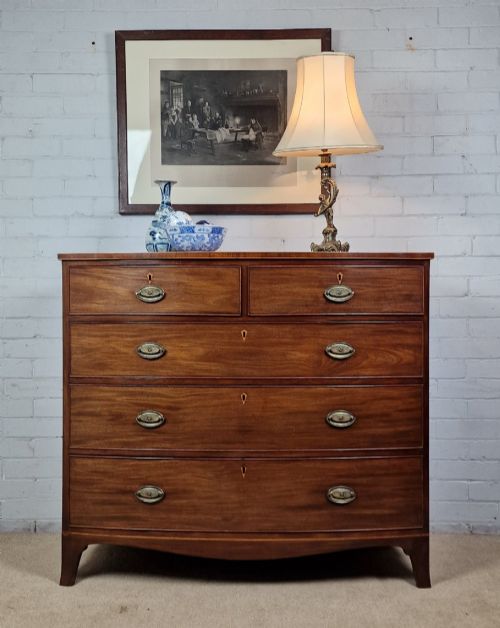
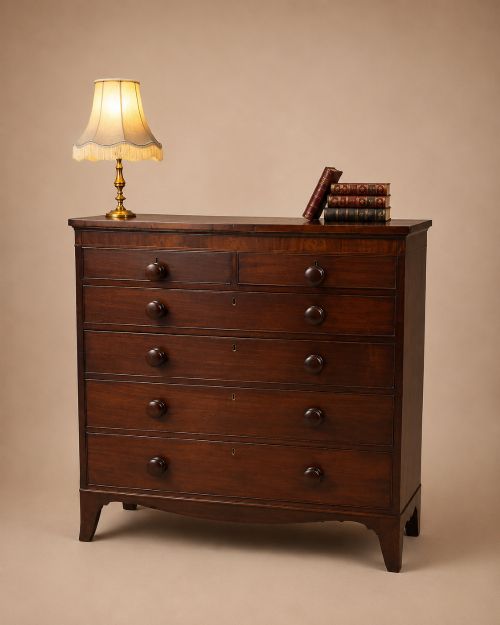
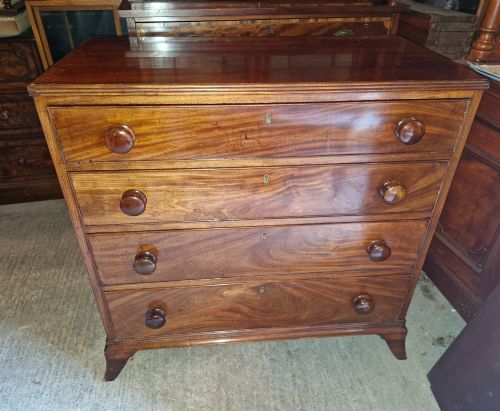
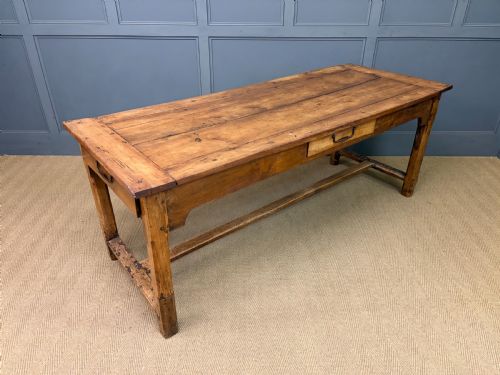
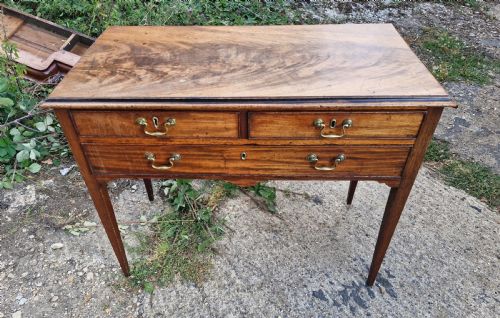
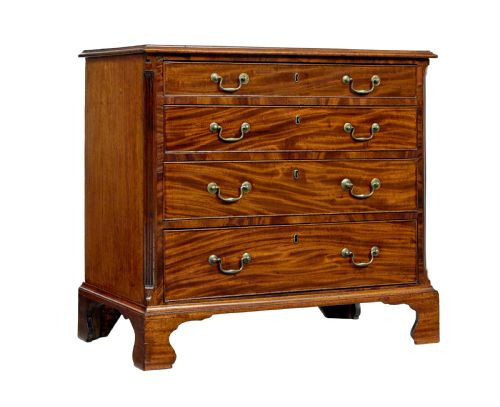
Early 19th century drawers primarily take the form of chests, ranging from compact bow-front designs to larger tallboys and secretaire variants. These pieces served essential domestic storage roles in bedrooms and living spaces across the Georgian and Regency periods.
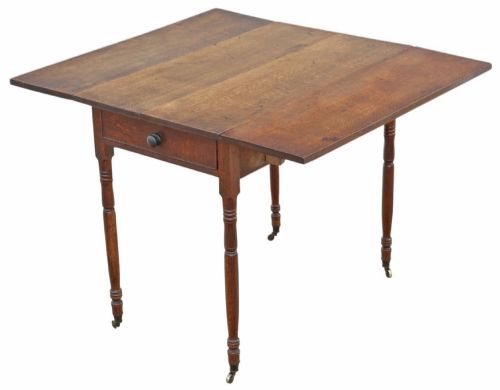
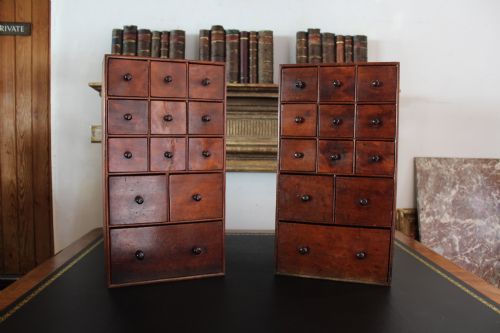
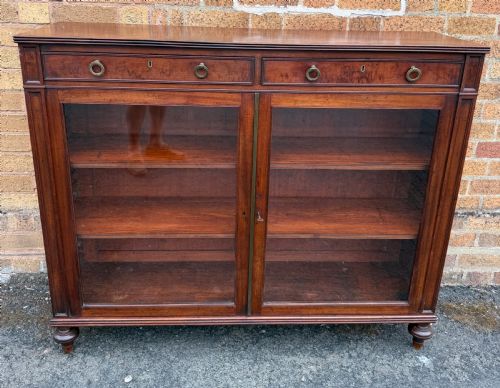
The selection frequently includes mahogany chests featuring various drawer configurations, alongside specialised apothecary, campaign or commode formats in oak, walnut and painted finishes.
Regional variations span English country workshops to continental European styles, offering buyers diverse timber tones and proportions suited to contemporary spaces.
How they were made
Cabinet makers utilised solid timbers such as mahogany, oak and fruitwood, frequently applying decorative veneer like flame mahogany or satinwood cross-banding to drawer fronts and top surfaces.
Drawer construction relied on hand-cut dovetail joints for stability, while secondary woods like pine appeared in concealed structural areas.
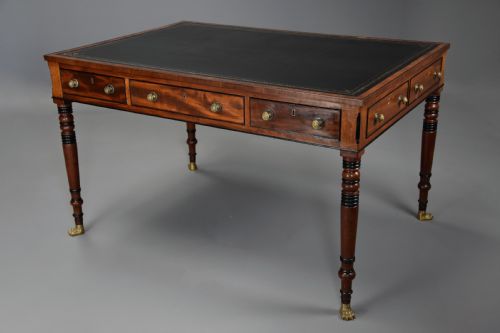
Hardware typically consisted of cast brass handles and escutcheons, complemented occasionally by hand-painted geometric designs or leather writing inserts.
Early 19th Century Drawers Retail Price Guide 2026
Typical asking prices for early 19th century drawers among the pieces listed under this phrase on Sellingantiques today, from the lower quarter to the upper quarter. They describe what is for sale here now, not the wider market.
Listings feature mahogany, oak, walnut, fruitwood, pine and sycamore alongside brass hardware and leather inserts.
What varies in quality
The choice of timber grain significantly impacts visual appeal, with highly figured flame mahogany or burl veneers commanding greater aesthetic interest than plain secondary woods.
Execution of fine details, such as precise inlay work, balanced proportions in bow-front and serpentine forms, and original patinated surfaces, distinguishes superior cabinet making from simpler utility pieces.
Gillows of Lancaster
The Early 19th Century Drawers Glossary
- Bow-front
- A cabinet front curved outward in a convex shape. This configuration became especially popular on mahogany chests during the Regency period.
- Tallboy
- A tall chest of drawers made by stacking one chest upon another or built as a single towering unit. They maximised vertical storage in bedrooms.
- Secretaire
- A cabinet incorporating a pull-down writing drawer fitted with small compartments and pigeonholes. These multifunctional pieces combined desk space with standard drawer storage.
- Commode
- A decorative low chest of drawers or cabinet originating in France. Examples from this era often feature marble tops and walnut or mahogany construction.
- Cross-banding
- A strip of veneer applied to the borders of a surface so that the grain runs perpendicular to the central panel. This technique framed drawer fronts on refined pieces.
Early 19th Century Drawers: Frequently Asked Questions
How do I identify a genuine piece?
Examine the drawer construction for hand-cut dovetails and inspect the secondary timbers inside the frame. Hand-planed surfaces and naturally aged timber patination indicate period authenticity.
Compare the hardware fixing methods and timber shrinkage patterns with known examples from the Georgian and Regency eras to confirm age.
Were these used in bedrooms?
These chests primarily provided bedroom storage for clothing, linens and personal items. Their varied drawer arrangements accommodated everything from small accessories to bulky garments.
Compact models also functioned effectively in dressing rooms, studies and hallways across large households.
How do I care for the timber?
Maintain consistent indoor humidity and temperature levels to prevent wood movement, veneer lifting or splitting. Avoid placing pieces near direct heat sources or in prolonged direct sunlight.
Apply a microcrystalline wax periodically to clean and protect the aged surface finish without building up heavy residues.
What is the difference between Georgian and Regency styles?
Georgian furniture produced in the early 19th century often retained classical proportions with restrained mahogany veneers and bracket feet. Pieces tended toward solid architectural dignity.
Regency designs introduced bolder grain figures like flame mahogany, more pronounced curves such as bow-fronts, and occasional brass inlay inspired by classical antiquity.