
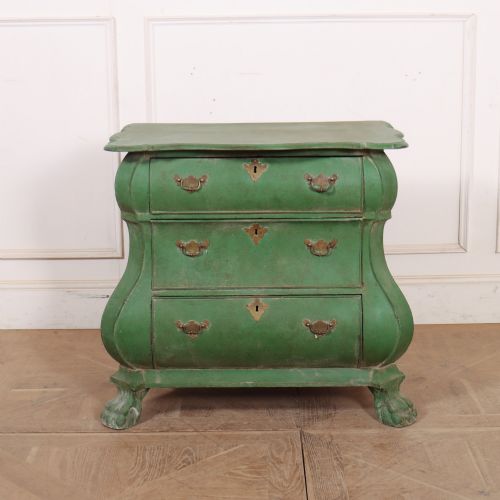


Dutch Rococo Chest
A dutch rococo chest brings sweeping serpentine lines and intricate floral marquetry into a room, offering both grand presence and practical storage.
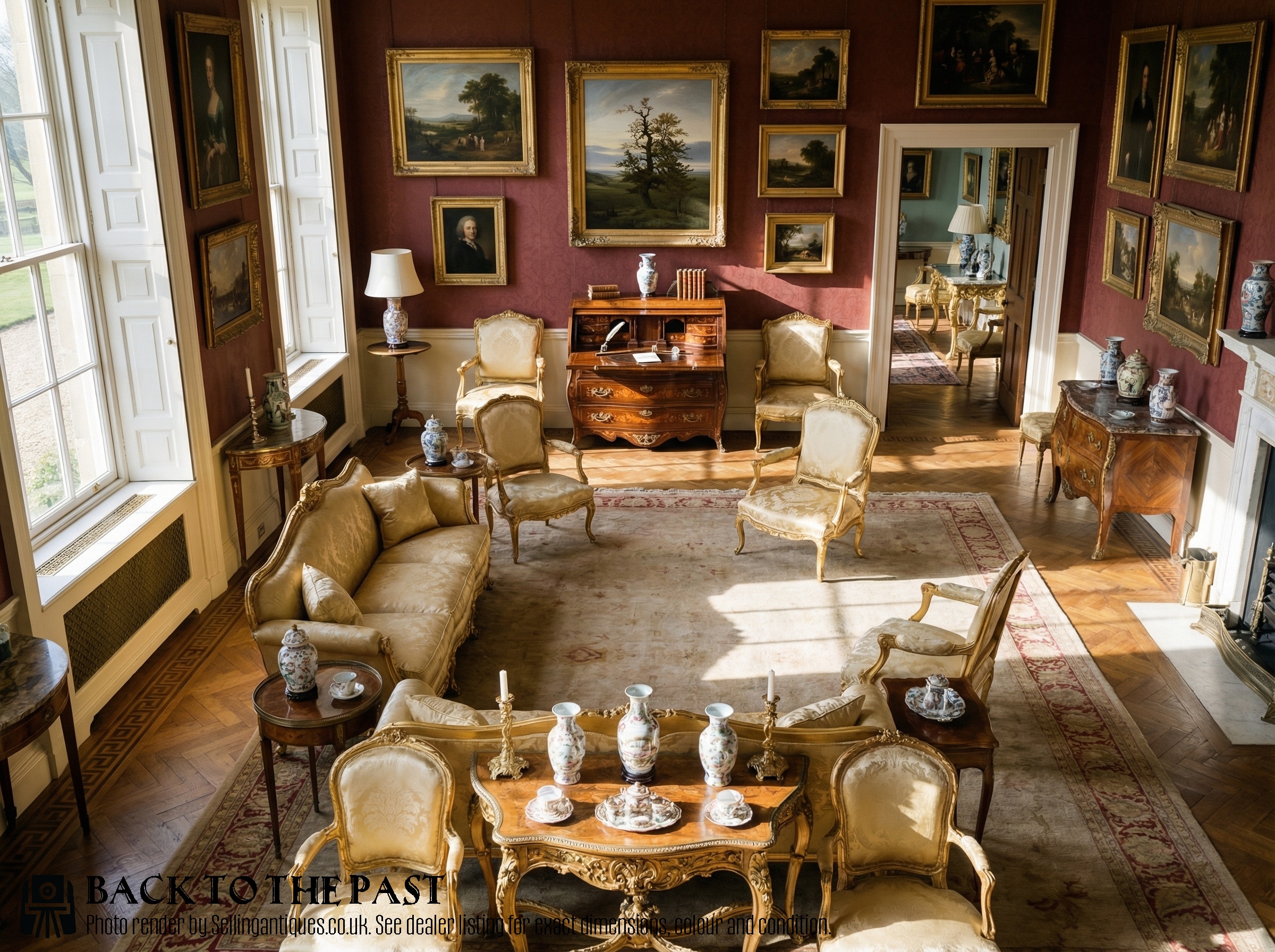
Dutch Rococo Chest
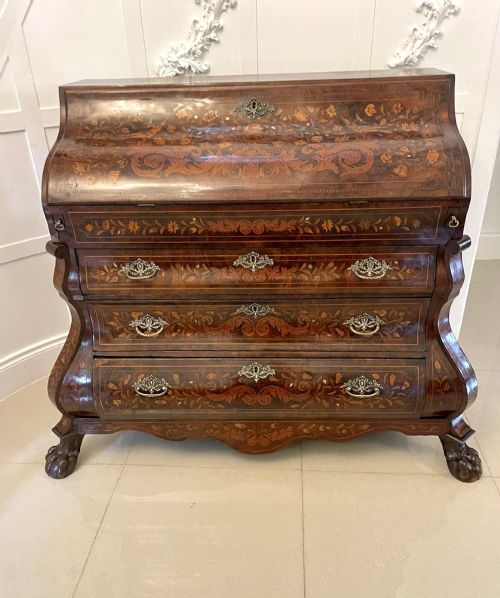
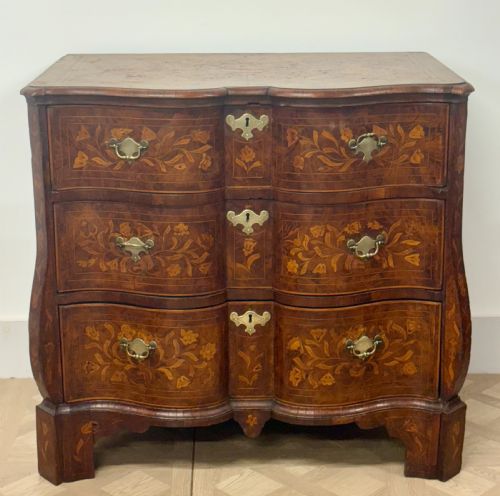
A dutch rococo chest of drawers presents a distinctive bombé silhouette, curving outward dramatically from top to bottom with an swelling serpentine front. These pieces emerge across the eighteenth and nineteenth centuries, spanning cabinet forms, commodes, and bureau desks.
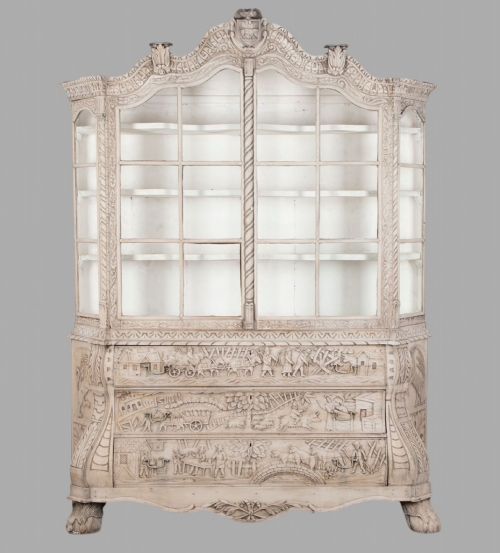
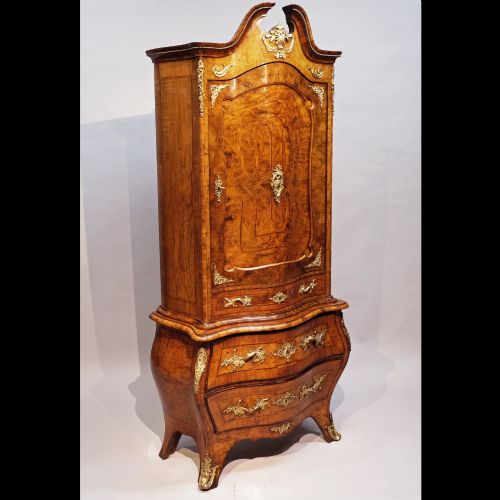
The most frequent variations on this page include walnut and burr walnut commodes alongside oak, mahogany, and painted wood examples. Buyers also encounter taller display cabinets, vitrines, and bureau bookcases built with the same characteristic curved profile.
Origins trace through eighteenth-century pieces as well as nineteenth-century revivals, alongside apprentice pieces and miniature furniture. The decorative vocabulary relies heavily on elaborate floral marquetry laid across the sweeping wooden surfaces.
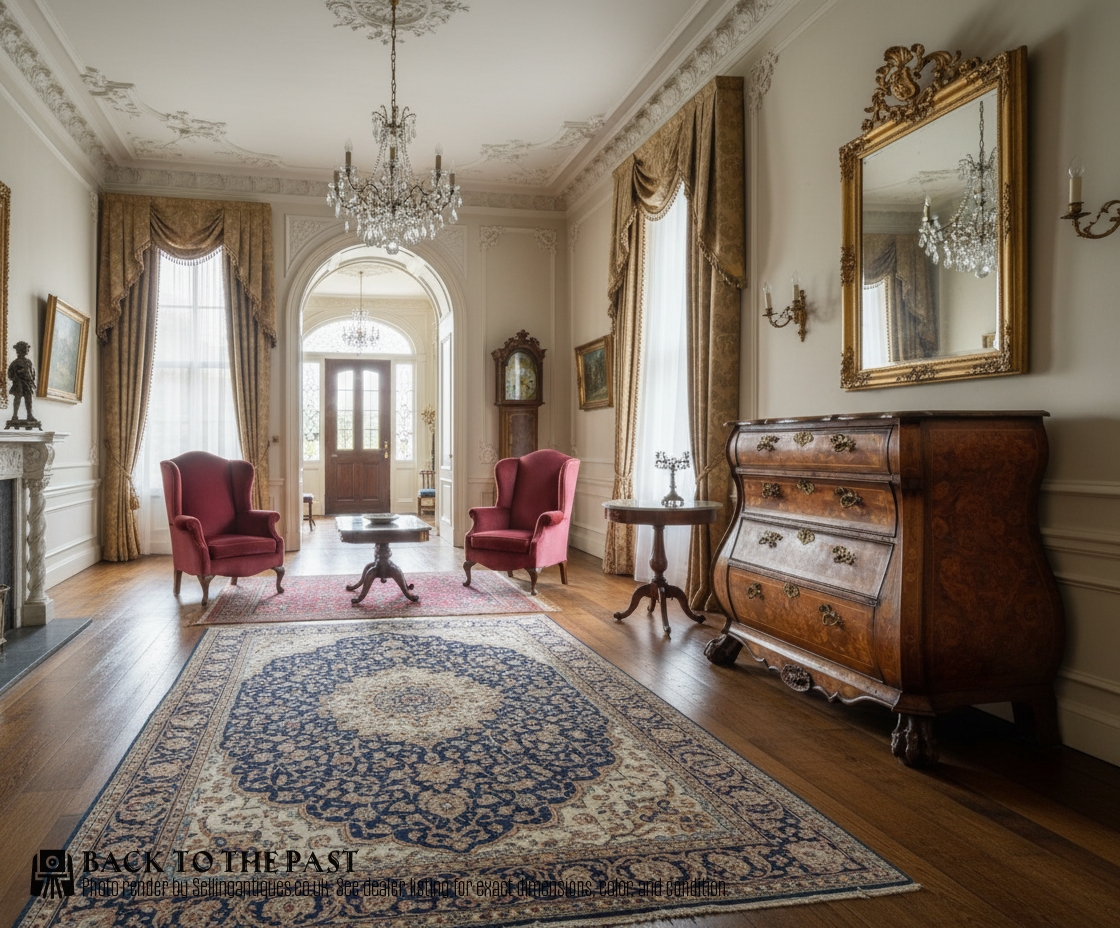
Materials and Construction
Cabinetmakers construct these pieces using sturdy foundational timbers like oak, walnut, and mahogany, overlaid with figured veneers such as burr walnut and fruitwood. Marquetry panels are meticulously cut and inlaid by hand to create intricate floral patterns across the curved drawer fronts and sides.
The challenging bombé form requires expert joinery to shape the timber outward while ensuring the drawers operate smoothly within the swollen frame. Brass hardware, including handles and escutcheons, provides functional contrast to the dark polished wood and painted surfaces.
Listings feature 18th-century, 19th-century, and Georgian pieces, utilising walnut, burr walnut, oak, mahogany, fruitwood, and painted wood.
Judging Quality and Execution
The sophistication of the floral marquetry dictates much of the visual distinction, separating simple geometric or sparse inlay from dense, finely shaded botanical compositions. The precision of the bombé shaping shows in the balance of the curves and how seamlessly the drawer fronts follow the convex contours.
The choice of timber underpins the finish, with rich burr walnut veneers offering greater depth of grain than plain painted wood or standard oak. Original brass mounts and the integrity of the structural carcass further mark out superior execution.
The Dutch Rococo Chest Glossary
- Bombe
- A bulging, outward-curving shape typical of continental furniture from this period. This swelling profile requires complex carpentry to maintain structural stability.
- Marquetry
- Decorative veneer work arranged in pictorial patterns using different coloured woods. Artisans cut thin slices of fruitwood and walnut to form intricate floral motifs.
- Commode
- A low chest of drawers, often standing on short cabriole or bracket feet. The form serves as both a decorative surface and deep storage.
- Bureau
- A desk featuring a sloping fall-front that opens to reveal internal compartments and pigeonholes. Many examples combine this writing surface with a bombé chest base.
- Vitrine
- A glass-fronted cabinet designed for displaying porcelain and curiosities. These pieces lift the display space above a chest or commode base.
Dutch Rococo Chest: Frequently Asked Questions
How do I care for burr walnut?
Keep the wood away from direct sunlight and sudden temperature shifts to prevent the delicate veneer from drying out or splitting. Regular gentle dusting and occasional waxing preserve the polished finish without building up residue.
Avoid placing damp items directly on the surface, as moisture can penetrate the polished grain and leave permanent marks. Handling the drawers with care ensures the fitted internal runners remain aligned.
Where should I place a bombé commode?
These pieces command attention and suit placement in a hallway, drawing room, or bedroom as a primary statement focal point. Their curved profile requires slightly more floor clearance than a straight-sided chest.
Ensure the room has stable humidity levels to protect the timber and marquetry inlay. Allowing enough space around the piece lets the sweeping serpentine lines be fully appreciated.
How do I distinguish eighteenth-century pieces?
Examine the construction methods visible on the interior drawer linings and backboards for hand-cut joinery and period-specific saw marks. Eighteenth-century examples often display subtle asymmetries in the hand-cut marquetry and natural patina on the walnut.
Nineteenth-century revival pieces may show tighter mechanical uniformity and machine-processed elements within the internal framing. Comparing the timber density and wear patterns helps clarify the age of the carcass.
What is an apprentice chest?
Apprentice pieces are smaller scaled models created by journeymen to demonstrate their mastery of complex techniques like bombé shaping and marquetry. These miniature items function as fully detailed cabinets in miniature.
Despite their reduced size, they share the exact construction methods and timber choices of full-sized furniture. Collectors prize them for the concentrated skill required to execute fine joinery on a small scale.