







Dutch Pottery Charger Plate
A dutch pottery charger plate brings centuries of tin-glazed earthenware and painted cobalt pigment directly to your wall or table.
Dutch Pottery Charger Plate
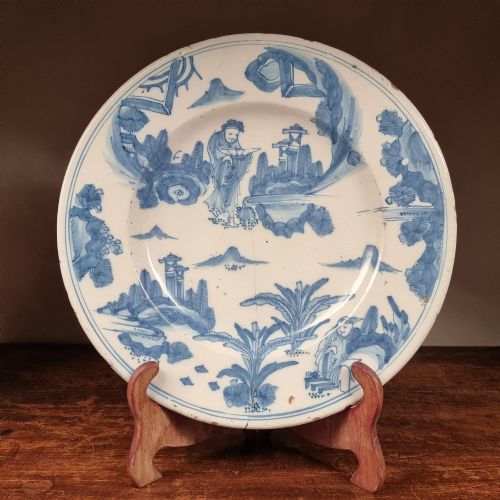
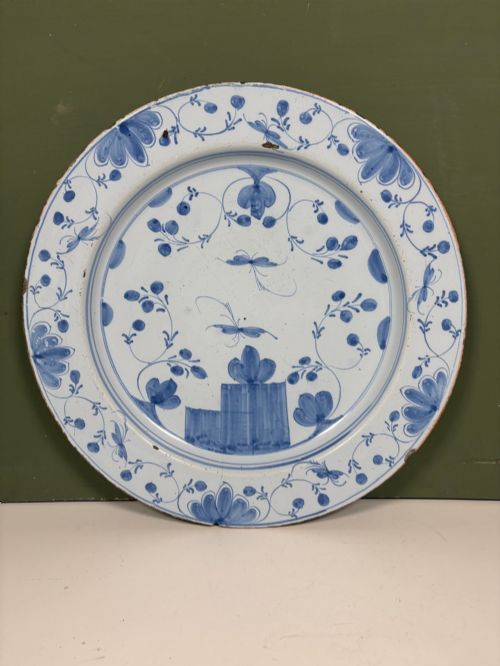
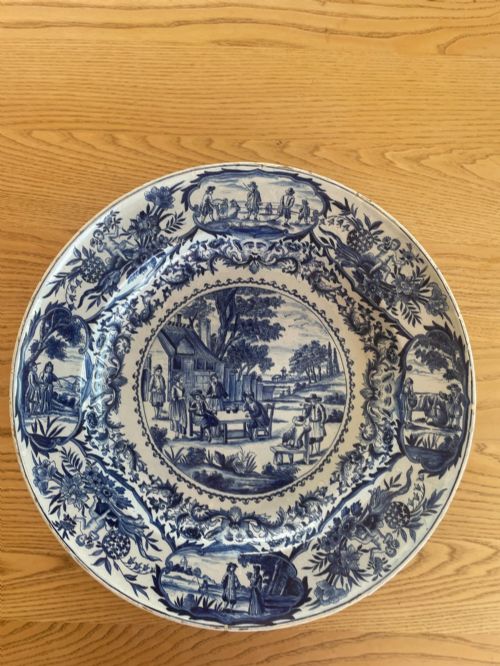
A dutch pottery charger plate stands as a broad circular dish designed for display or serving, emerging primarily from the seventeenth and eighteenth centuries. These pieces span from large wall chargers to shallow bowls and lobed dishes created in the Dutch Golden Age tradition and later European periods.
The most frequent examples found on this page are eighteenth-century delft chargers and plates decorated with blue and white or polychrome pigments. Buyers will also encounter seventeenth-century specimens and occasional nineteenth-century interpretations sharing the same fundamental ceramic forms.
What varies in quality
The refinement of the painted brushwork separates finer examples from simpler production, particularly in botanical, figurative, or Chinese-inspired motifs. Crisp cobalt lines and balanced polychrome palettes indicate greater skill in the pottery workshop.
The planarity and weight of the earthenware body also distinguish better vessels, alongside the evenness of the tin glaze application across the face and rim of the charger.
Dutch Pottery Charger Plate Retail Price Guide 2026
Typical asking prices for dutch pottery charger plate among the pieces listed under this phrase on Sellingantiques today, from the lower quarter to the upper quarter. They describe what is for sale here now, not the wider market.
De Witte Ster
The Dutch Pottery Charger Plate Glossary
- Charger
- A large decorative plate or dish intended primarily for display on a wall or sideboard rather than daily dining use.
- Tin-Glazed Earthenware
- Pottery fired from common clay and coated with an opaque white glaze containing tin oxide, providing a smooth canvas for painted decoration.
- Grand Feu
- A high-temperature ceramic firing technique that bonds painted metallic oxides directly into the molten tin glaze.
- Polychrome
- A multi-coloured decorative scheme utilising various mineral pigments alongside standard blue and white painting.
- Kraak plate
- A style of ceramic plate inspired by imported Chinese export porcelain, featuring segmented panel designs around a central motif.
Dutch Pottery Charger Plate: Frequently Asked Questions
How were dutch pottery chargers displayed?
Historic interiors utilised these large plates as prominent wall decoration or set them upon buffets and sideboards to catch the light.
Their broad rims and painted surfaces made them ideal focal points in seventeenth and eighteenth-century domestic spaces.
What is the difference between a plate and a charger?
Chargers are significantly broader than standard dining plates, engineered primarily for visual impact and ceremonial presentation.
Plates of smaller dimensions served both functional and decorative purposes within domestic settings.
How do you identify seventeenth-century delftware?
Seventeenth-century pieces often display heavier earthenware bodies and distinct tin glaze characteristics associated with the Dutch Golden Age.
Pigment application frequently reflects early attempts to emulate imported Asian porcelain during this era.
Can these plates be hung on walls safely?
Many chargers possess historical wiring or rims suited for specialised display hangers designed to distribute weight evenly.
Modern display methods require secure fastenings that protect the earthenware edges from pressure damage.