
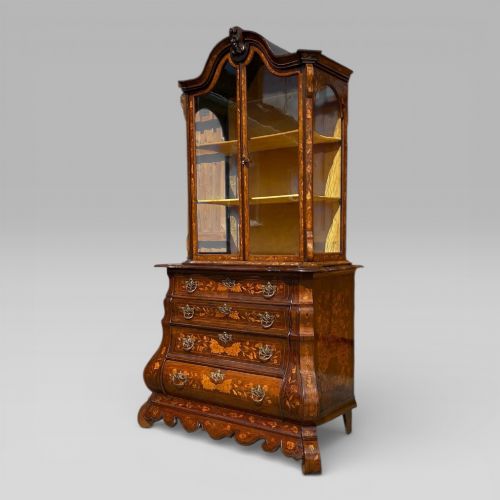


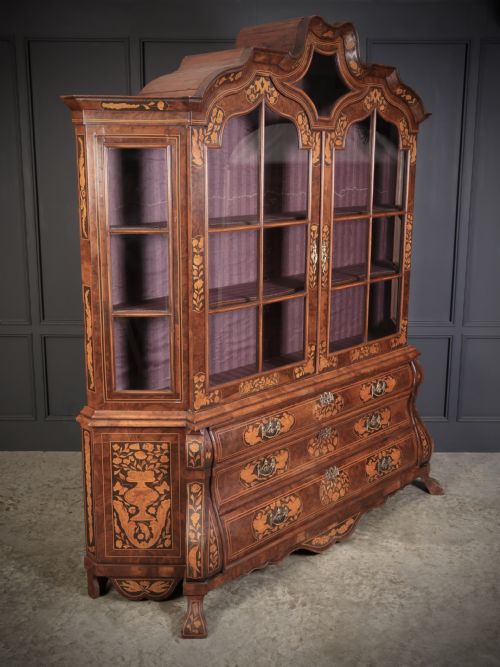


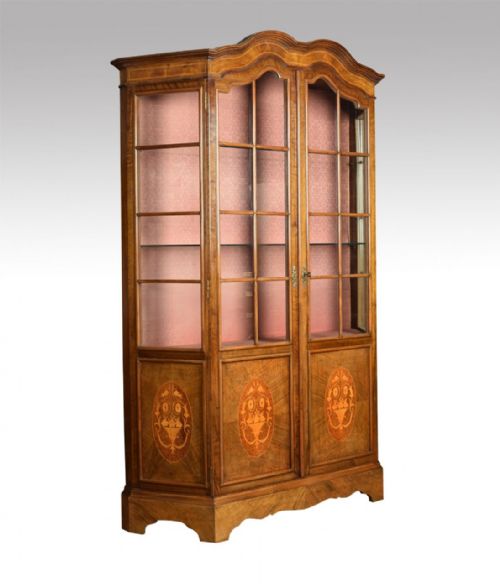


Dutch Marquetry Vitrine Cabinet
A dutch marquetry vitrine cabinet brings complex floral inlay and historic display space into a room.
Dutch Marquetry Vitrine Cabinet
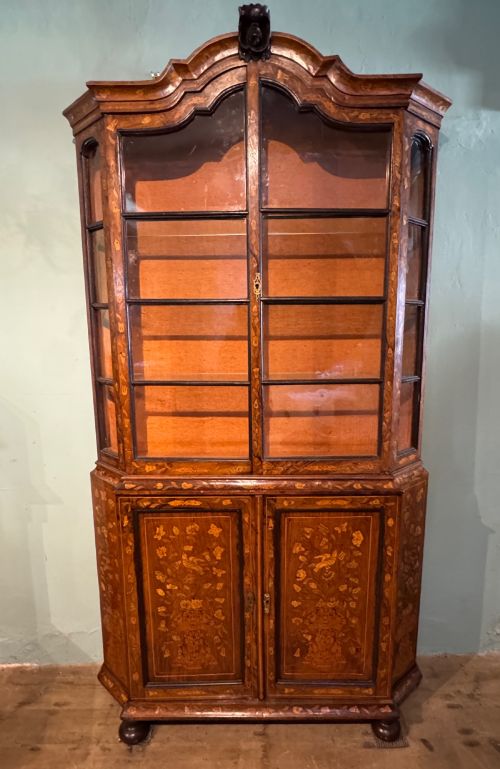
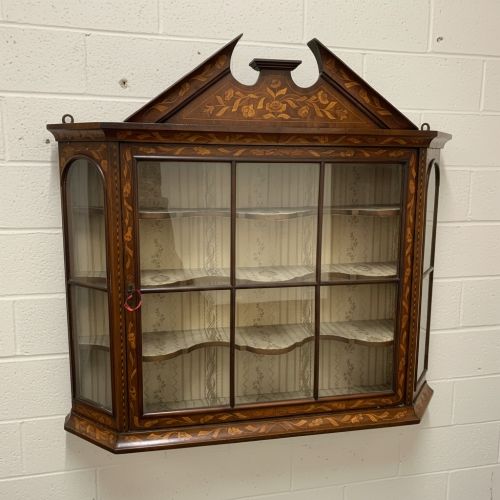
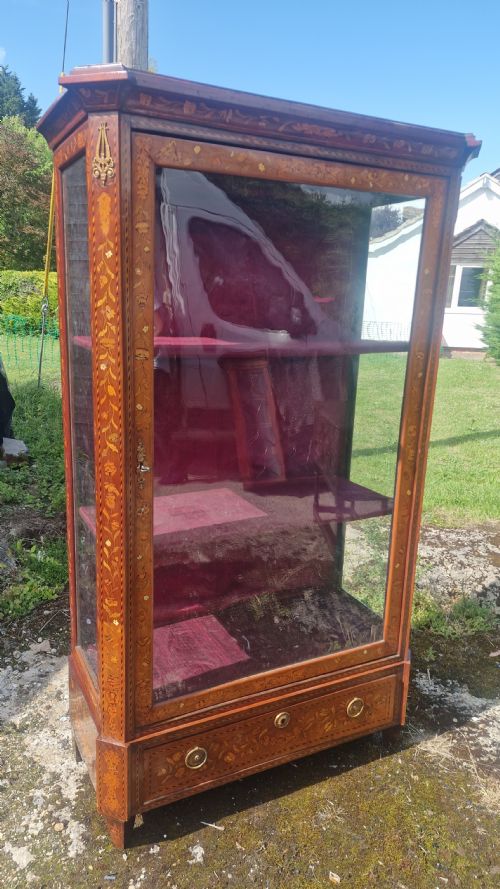
A dutch marquetry vitrine cabinet is a glazed display case adorned with intricate floral and scrollwork wood inlays. These pieces range from upright display cabinets and bookcases on chest to corner cupboards and wall cabinets.
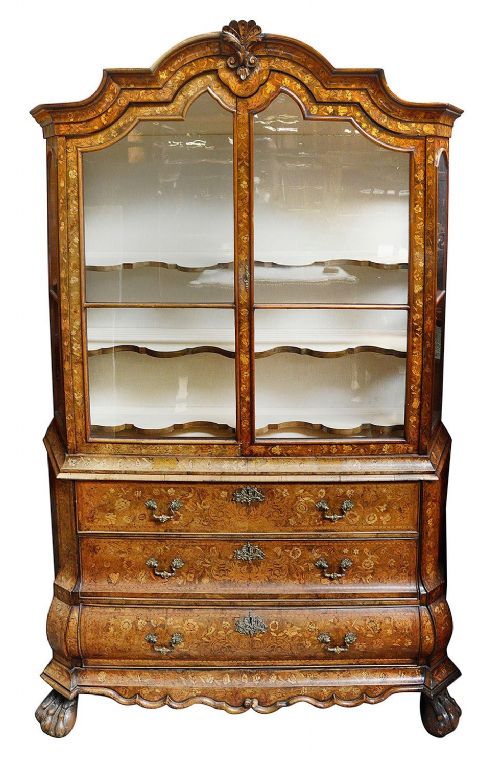
The most common examples encountered here are walnut display cabinets spanning the eighteenth century to the early twentieth century. Makers utilised various forms including bombe shapes and traditional upright display cases to showcase valued possessions.
How they were made
Cabinet makers constructed the carcases using solid woods such as oak and walnut, applying richly figured walnut veneers across the main surfaces. Glazed doors provided visibility for the interior shelves while protecting objects from dust.
The characteristic floral marquetry was created by cutting delicate pieces of fruitwood, satinwood, and other contrasting timbers and fitting them into a prepared background veneer.
Recorded periods range from the eighteenth century through Victorian revivals up to the nineteen-thirties.
What varies in quality
Quality rests upon the depth and precision of the floral marquetry and the choice of timbers used for the contrasting veneers. Finer examples display meticulous shading within the leaf and petal motifs rather than flat, simple cuts.
Structural harmony also separates the work, particularly in the shaping of bombe bodies and the integration of glazed doors with the veneered carcase.
Edwards & Roberts
The Dutch Marquetry Vitrine Cabinet Glossary
- Marquetry
- A decorative technique where small pieces of various coloured woods are fitted together to form pictorial or floral designs on a veneer background. This artistry defines the surface of these cabinets.
- Vitrine
- A glass-fronted display cabinet designed for showing porcelain, silver, or curiosities. The glazed doors and side panels allow light to enter from multiple angles.
- Bombe
- A bulging or swelling contour found on the lower sections of certain cabinets. This curved profile requires advanced woodworking skill to veneer successfully.
- Fruitwood
- Dense, fine-grained timber derived from fruit-bearing trees such as pear or apple, traditionally used for lighter details in marquetry panels. Its neutral tone takes stains and shading exceptionally well.
Dutch Marquetry Vitrine Cabinet: Frequently Asked Questions
What are these cabinets used for?
These cabinets serve primarily to display collections of porcelain, glassware, and small ornaments behind protective glass doors. The interior shelving and glazed panels keep items secure while allowing them to be viewed clearly from across a room.
Historically, wealthy households utilised such furniture in formal reception rooms to exhibit imported ceramics and valued curiosities. Today, they continue this traditional function in domestic settings.
How do I tell an eighteenth century cabinet from a later revival piece?
Earlier pieces typically show hand-cut dovetails, older secondary woods such as oak, and subtle signs of hand-carving and hand-fitting in the door frames. The marquetry on eighteenth-century examples often utilises natural shading techniques achieved by scorching veneer edges in hot sand.
Later revival pieces from the nineteenth and twentieth centuries frequently display machine-sawn elements and brighter, more uniform veneer colours. Examining the interior construction and timber ageing helps clarify the period of manufacture.
Where should I place a vitrine cabinet in my home?
A vitrine cabinet suits drawing rooms, dining rooms, or large hallways where natural light can illuminate the glazed display area. Placing the piece away from direct sunlight protects both the delicate wood veneers and the displayed contents from fading.
Because many examples feature finished sides or take corner forms, they can anchor awkward wall spaces or fit neatly into room angles. Ensuring stable floor levels is essential for tall or bombe-shaped cabinets with heavy glass doors.
What is the difference between a vitrine and a bookcase on chest?
A vitrine generally focuses on glazed display space for ornamental objects, sometimes featuring glass sides as well as doors. A bookcase on chest combines upper shelving with a lower set of drawer storage enclosed in a solid chest base.
Both forms utilise walnut carcases and marquetry decoration in this selection, but their internal storage configurations cater to different types of collections.