
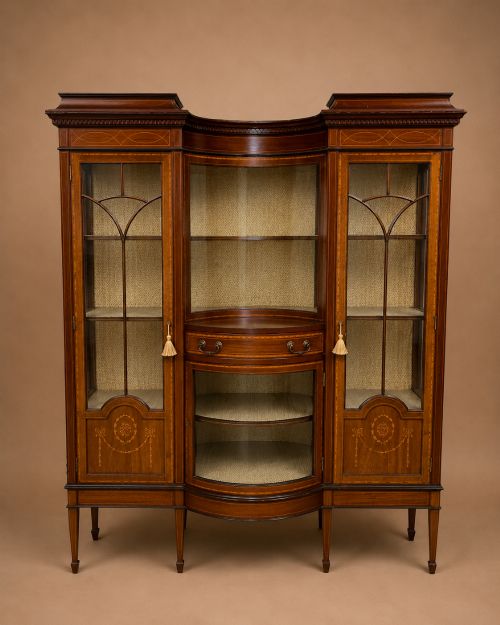
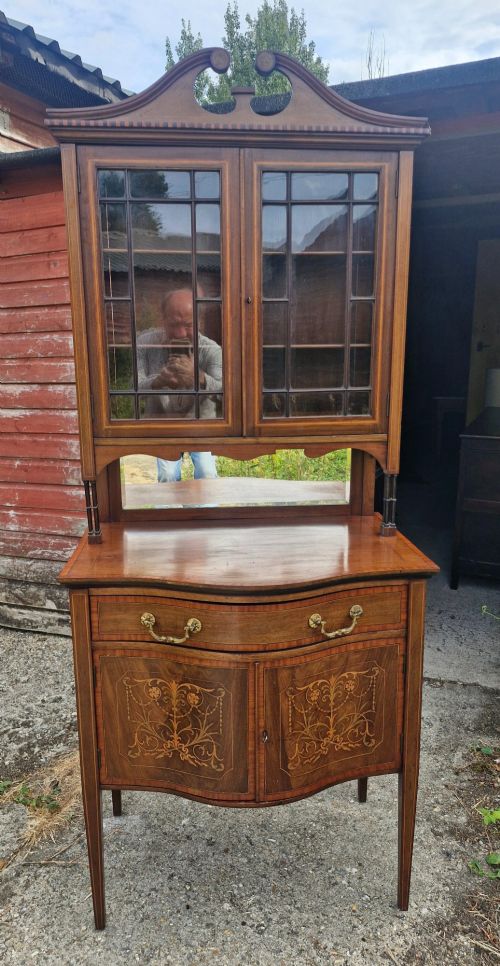
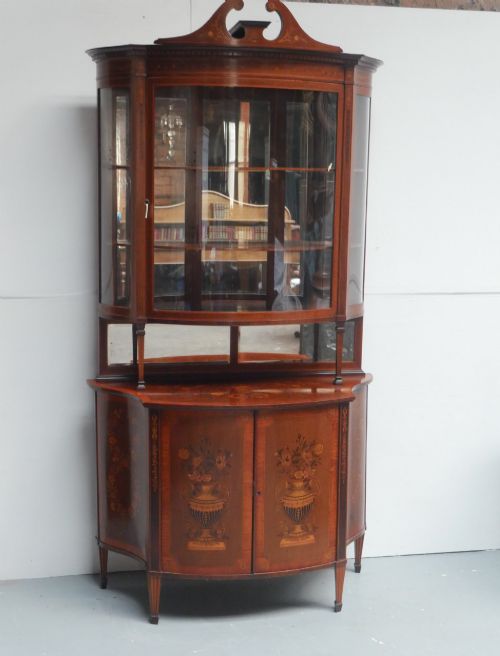
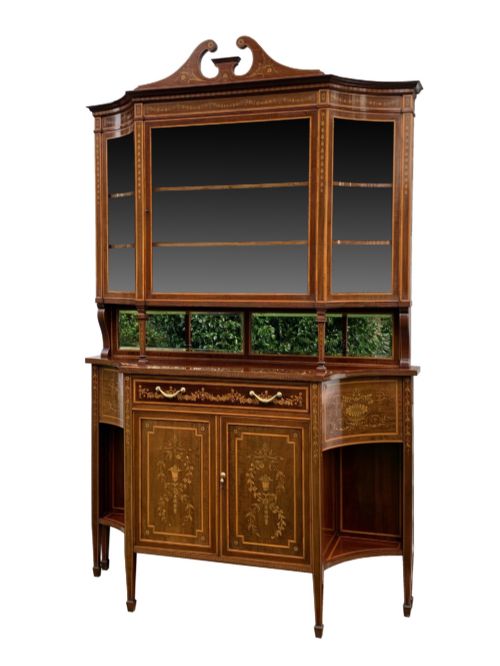
Marquetry China Display Cabinet
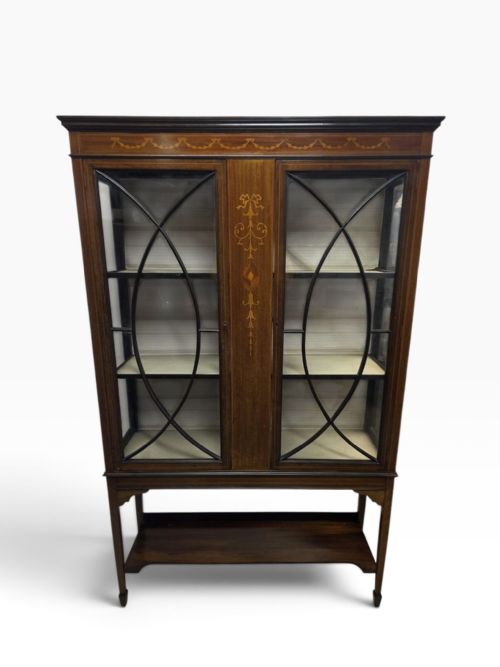
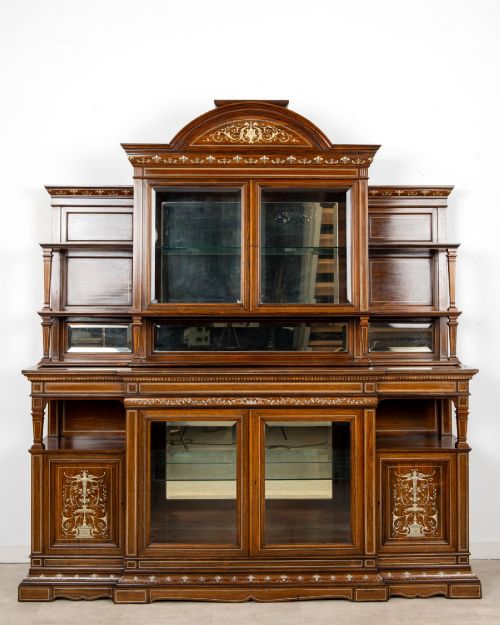
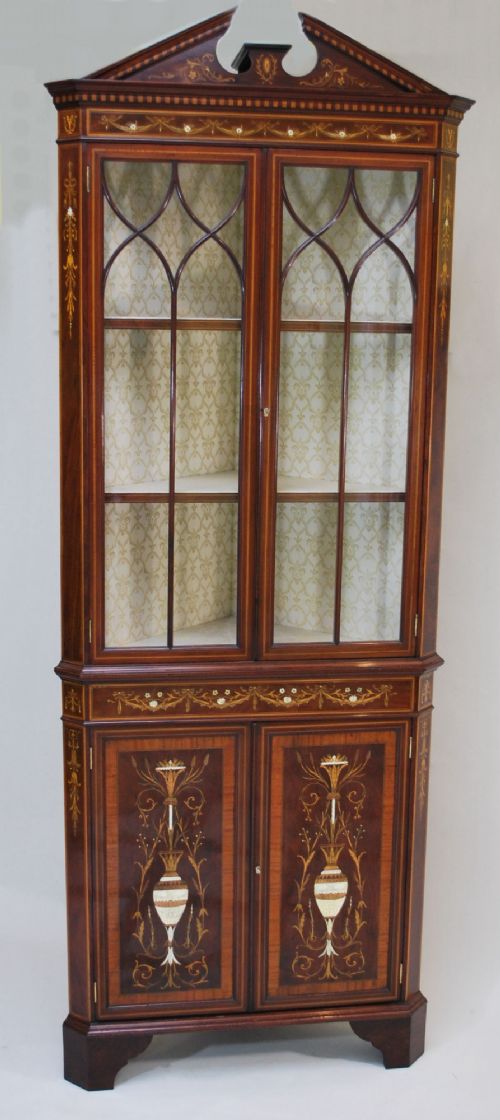
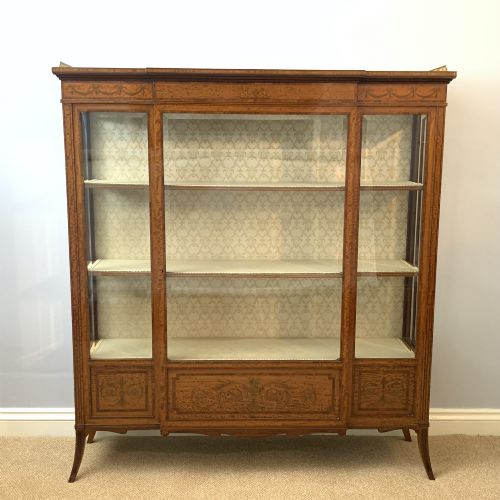
A marquetry china display cabinet holds porcelain behind glass while showing elaborate inlaid wood patterns across its surface.
Marquetry China Display Cabinet
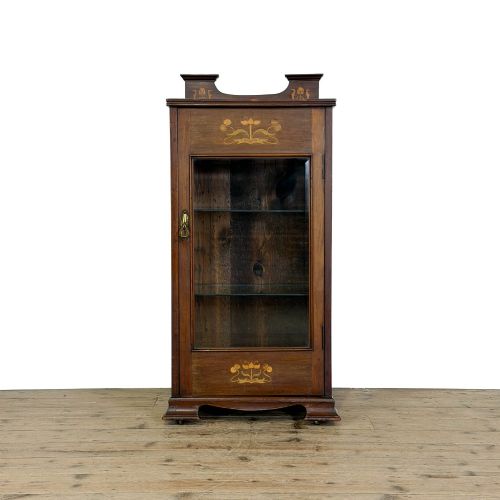
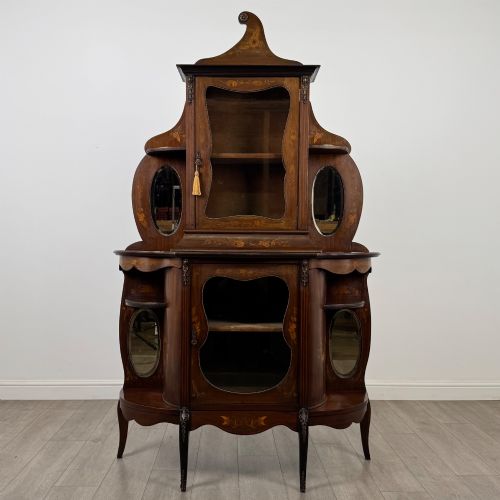
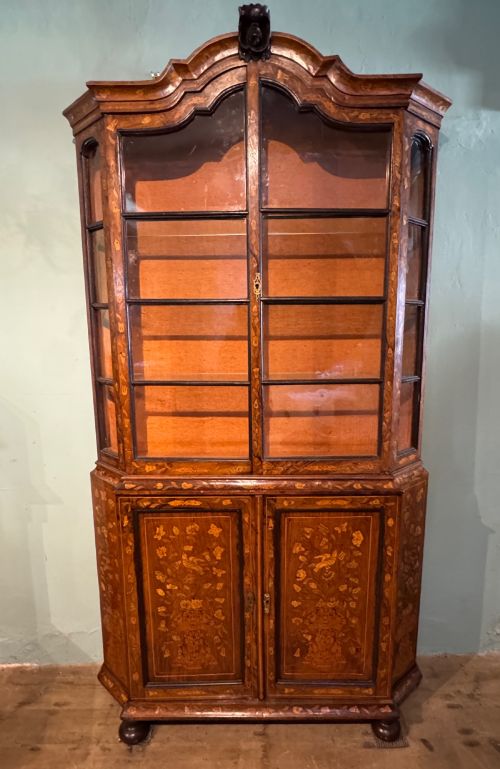
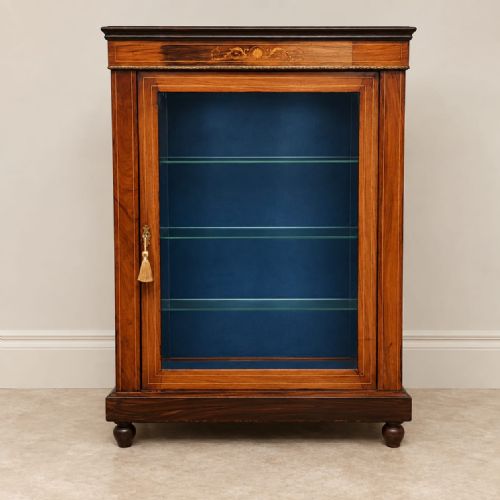
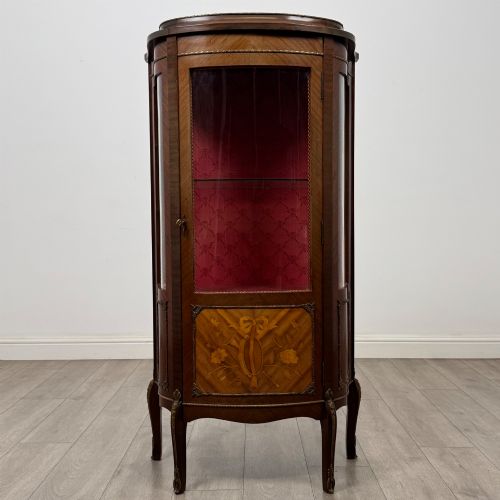
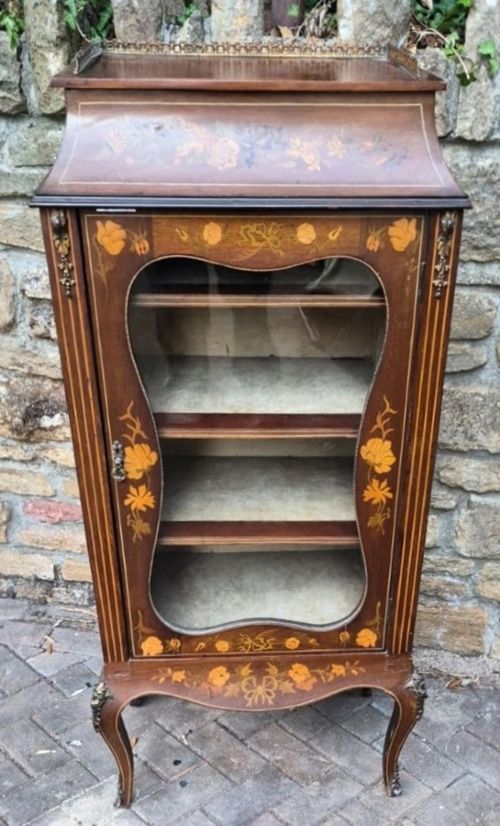
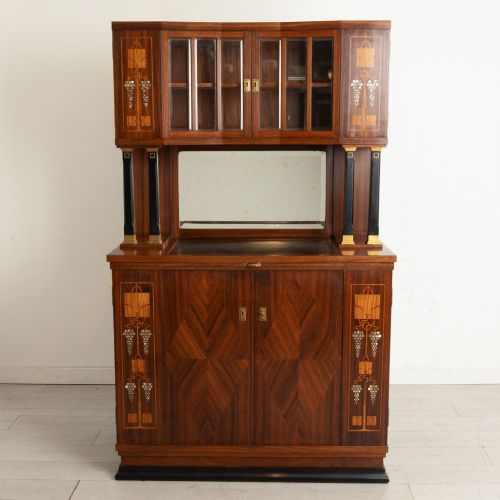
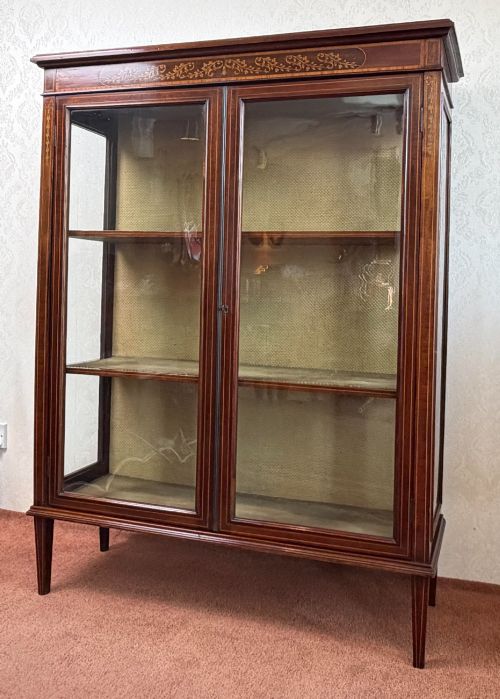
Buyers seeking a marquetry china display cabinet encounter pieces principally from the Victorian and Edwardian eras, alongside earlier eighteenth-century examples and turn-of-the-century designs. These items appear in various forms including corner cabinets, pier cabinets, and two-part display cabinets with glass doors for exhibiting ceramics.
The aesthetic draws on styles such as Sheraton Revival, French Rococo Revival, Art Nouveau, and Dutch Baroque. Makers employed diverse woods and intricate floral or geometric inlays to create decorative furniture intended for formal reception rooms.
Materials and construction methods
Cabinet makers built these structures using solid timbers and veneers of mahogany, walnut, satinwood, and kingwood. Surfaces received detailed marquetry and satinwood inlay depicting floral motifs, while mounts of ormolu and brass added structural and decorative accents.
Glazing typically involved individual panes held by wooden astragal bars, and interiors often incorporated mirrored backs to reflect light through displayed porcelain. Carved details and marble tops complete the construction of specific French and continental models.
Cabinet makers sometimes hid intricate floral marquetry on interior shelves where only the porcelain stood to witness the secret detail.
Distinctions in craftsmanship and design
Quality rests upon the precision of the marquetry cutting and the choice of timbers used for both the body and the inlay. Finer pieces demonstrate seamless integration of contrasting woods, crisp floral motifs, and substantial mounts without clumsy joints.
The architectural proportion of the cabinet and the refinement of the glazing bars also distinguish standard production from superior work. Cabinets bearing attribution to notable makers or exhibiting elaborate internal mirror work represent the upper tier of surviving examples.
Collinson & Lock·Edwards & Roberts·August Ungethüm·Maple & Co.
The Marquetry China Display Cabinet Glossary
- Marquetry
- Decorative patterns created by fitting thin pieces of wood veneer onto a structural surface. This technique produces detailed pictorial designs or repeating geometric motifs.
- Vitrine
- A glass-fronted cabinet designed specifically for the display of curiosities and porcelain. These pieces protect delicate objects while offering all-round visibility.
- Ormolu
- Gilt bronze mounts applied to furniture for decorative effect. The technique involves coating bronze with a mercury and gold amalgam.
- Astragal glazing
- Wooden bars that divide a glass door into smaller panes. They provide structural support while framing the interior display.
- Pier cabinet
- A narrow piece of furniture built to stand against the wall space between windows. These compact cabinets suited formal Victorian interiors.
Marquetry China Display Cabinet: Frequently Asked Questions
What is a marquetry china display cabinet?
A marquetry china display cabinet is a glazed wooden piece of furniture adorned with inlaid wood veneers, designed to store and exhibit porcelain collections.
These items combine practical storage behind glass doors with decorative surface patterns created from contrasting timbers.
How do I date a display cabinet?
Dating relies on examining the timber choices, construction techniques, and stylistic influences present in the piece. Victorian and Edwardian examples often feature mahogany or satinwood with specific revival styles.
Cabinet hardware, glass manufacturing methods, and historical attribution marks also help determine the period of origin.
Where were these cabinets placed?
These cabinets traditionally stood in formal reception rooms, drawing rooms, and parlours where guests could view porcelain collections. Corner units utilised awkward room angles effectively.
Pier cabinets occupied narrow wall spaces between windows to maximise light reflection from interior mirrors.
How do I care for inlaid wood?
Inlaid wood requires stable room humidity and protection from direct sunlight to prevent veneer lifting and timber fading. Gentle dusting with a dry cloth maintains the surface.
Avoid excessive liquid polishes and chemical cleaners that can damage historical finishes and antique adhesives.