


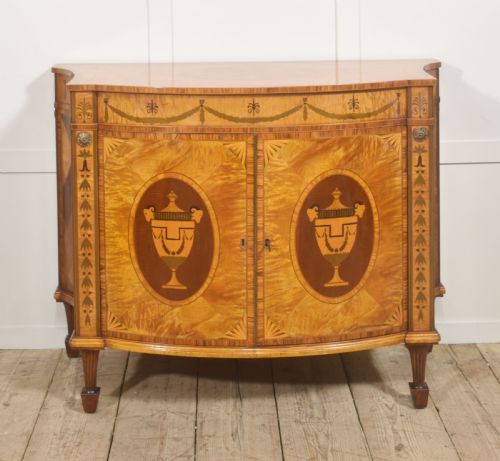


Antique Urn Marquetry Cabinet
An antique urn marquetry cabinet brings classical botanical and architectural motifs into the room through intricate wood inlay.
Antique Urn Marquetry Cabinet
The decorative focus centres on floral, foliate, and classical urn designs rendered in contrasting timber veneers. Side cabinets and demi-lune forms provide surface display space alongside enclosed shelving, while specialised pieces like music cabinets cater to specific Victorian domestic habits. Most surviving examples date from the nineteenth and early twentieth centuries, aligning with Georgian revivals.
How they were made
Cabinet makers construct the primary carcase using timbers like mahogany, walnut, or rosewood, often applying veneers to stable underlying woods. Satinwood, boxwood, and fruitwood are cut into thin sheets for the marquetry decoration, contrasting sharply against the darker carcase timber. Brass fittings, glass panels, and turned legs complete the construction of these refined storage items.
Marquetry involves assembling fine pieces of dyed and natural wood to form pictorial urns and botanical sprays before pressing them onto the cabinet surface. Craftsmen utilise hand-cut veneers, securing them with traditional animal glues and finishing the exterior with French polish to highlight the grain and colour variations.
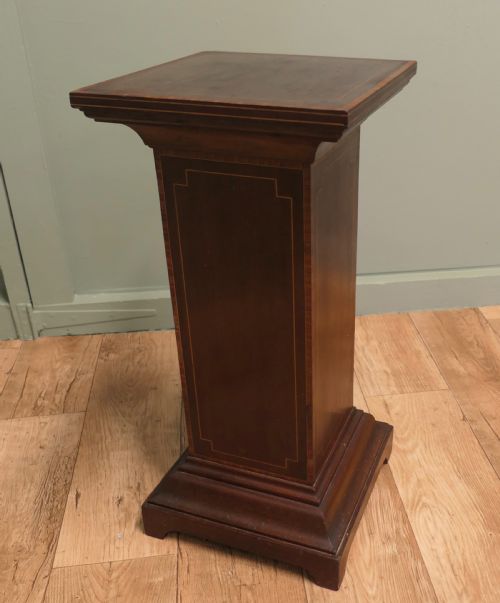
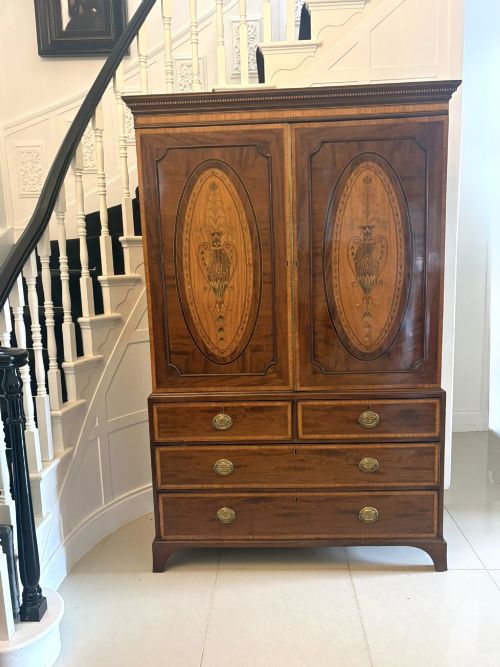
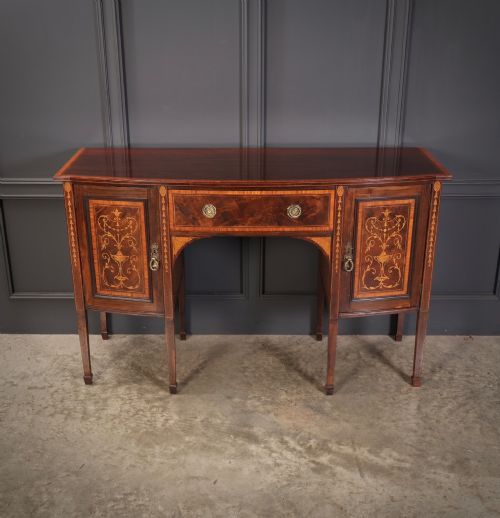
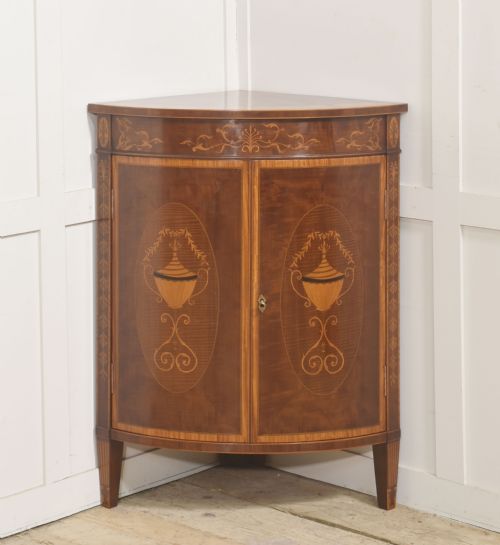
Listings feature mahogany, satinwood, and rosewood cabinets decorated with intricate boxwood and fruitwood marquetry urns.
What varies in quality
Quality rests in the precision of the veneer work and the depth of the timber selection. Finer cabinets display exceptionally tight shading within the marquetry urns, where scorching sand creates three-dimensional curves on tiny leaf and urn motifs. Lesser examples rely on printed or stamped details rather than genuine multi-wood hand-cut inlay.
Structural integrity and secondary wood choice also distinguish superior pieces. High-grade makers employ solid mahogany or oak for drawer linings and carcase backs, whereas standard production utilises softer secondary conifers. The crispness of the brass mounts and the fluidity of the serpentine or demi-lune curves further separate workshop standards.
Keeble London·Edwards and Roberts
The Antique Urn Marquetry Cabinet Glossary
- Marquetry
- The art of applying fitted pieces of wood veneer to a structure to form decorative patterns and pictures. In these cabinets, it frequently depicts classical urns, swags, and floral motifs.
- Demi-Lune
- A half-moon shape characteristic of tables and cabinets designed to sit flush against a wall. This profile showcases curved wood veneers and intricate front-facing marquetry panels.
- Sheraton Revival
- A late nineteenth and early twentieth-century design movement inspired by the neoclassical furniture of George Sheraton. Pieces from this era emphasise satinwood, painted details, and delicate urn marquetry.
- Compactum
- A large fitted wardrobe or combination wardrobe designed to maximise internal storage through specialised compartments. They often feature inlaid panel doors and crown moulding.
Antique Urn Marquetry Cabinet: Frequently Asked Questions
What is an antique urn marquetry cabinet?
An antique urn marquetry cabinet is a piece of wooden furniture decorated with detailed veneer work depicting a classical urn. These storage items range from side cabinets to music cabinets.
They date primarily from the Victorian and Edwardian eras, combining practical storage with refined neoclassical decoration. The urn motif sits centrally amidst floral and foliate marquetry.
How do I identify a Sheraton Revival cabinet?
Sheraton Revival cabinets typically date from around nineteen hundred and feature light timbers like satinwood and mahogany. They draw heavily on eighteenth-century classical geometry.
Look for symmetrical urn marquetry, tapered legs, and fine stringing lines. The overall aesthetic is lighter and more delicate than heavy mid-Victorian furniture.
Where should I place a demi-lune cabinet?
A demi-lune cabinet suits hallways, living rooms, or dining spaces where floor space is limited. Its flat back allows it to sit securely against a wall.
The curved front showcases the marquetry urn design effectively. Placing the piece away from direct sunlight protects the delicate satinwood and fruitwood veneers from fading.
How do I care for marquetry furniture?
Caring for marquetry involves maintaining stable room humidity and avoiding direct heat sources. Extreme temperature changes can cause veneers to lift or crack.
Dust the surface gently with a dry, soft cloth and apply traditional beeswax polish sparingly. Avoid modern chemical sprays that can damage the French polished finish.