

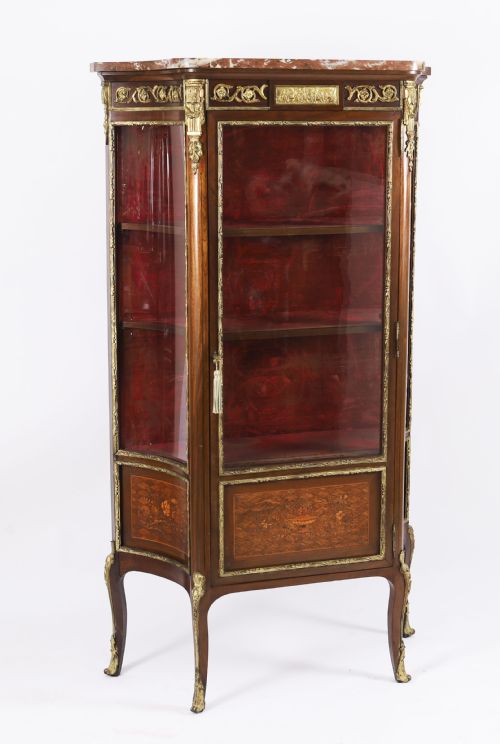


Victorian Curio Cabinet
A victorian curio cabinet brings order to eclectic collections through generous glass panels and rich timbers.
Victorian Curio Cabinet
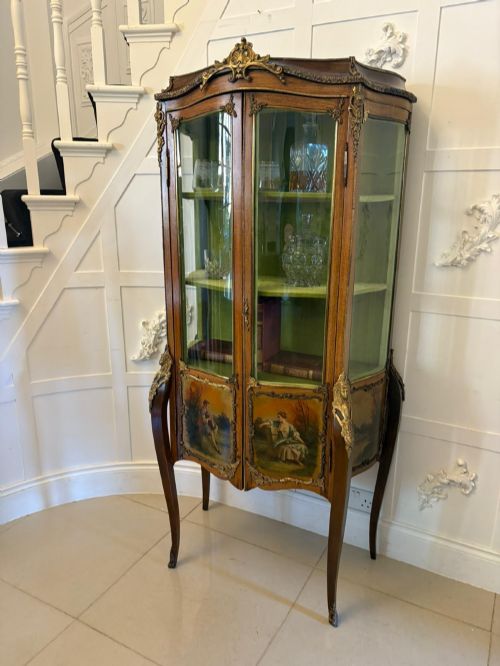
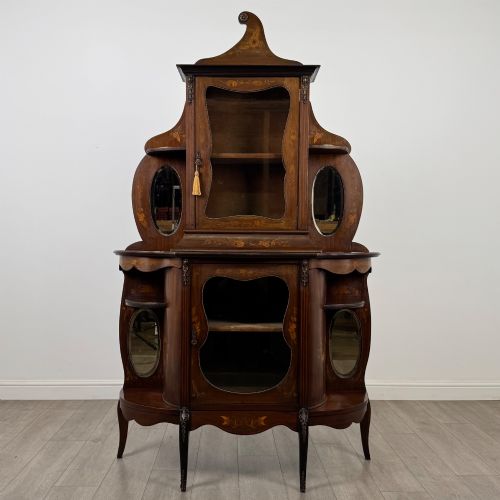
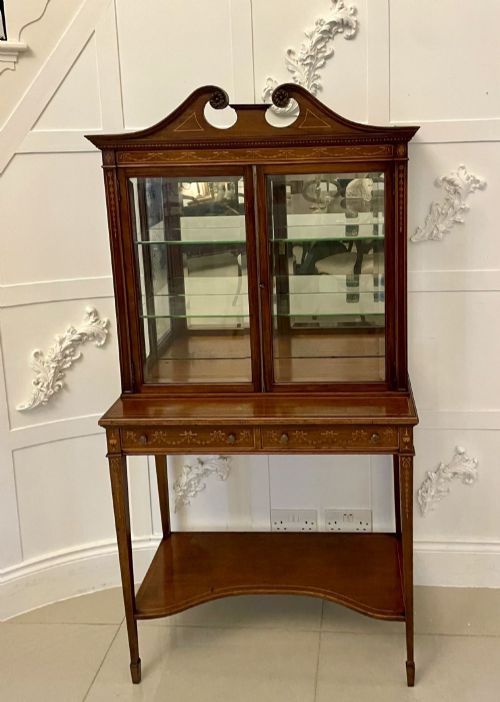
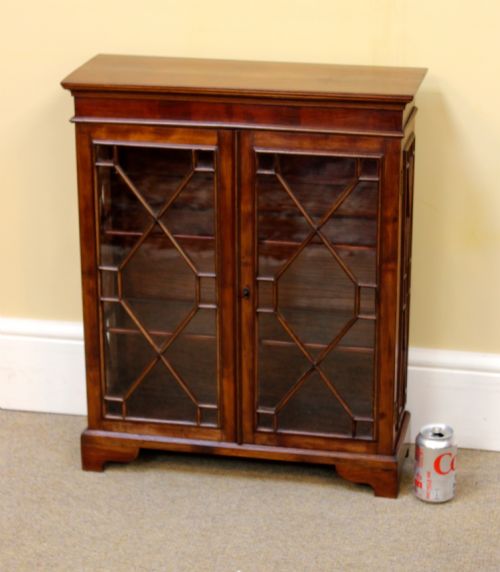
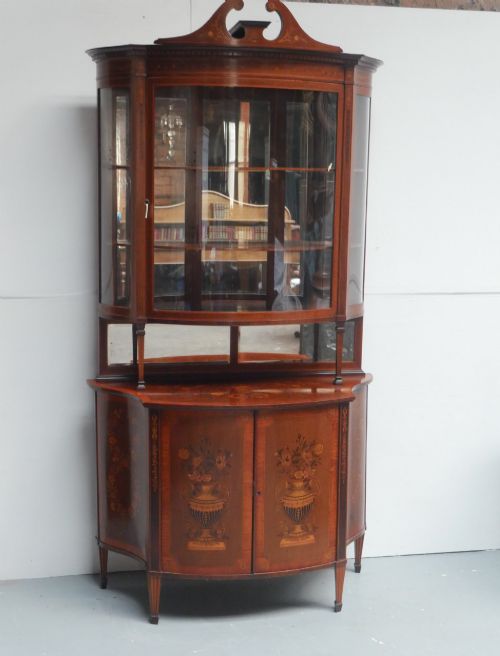
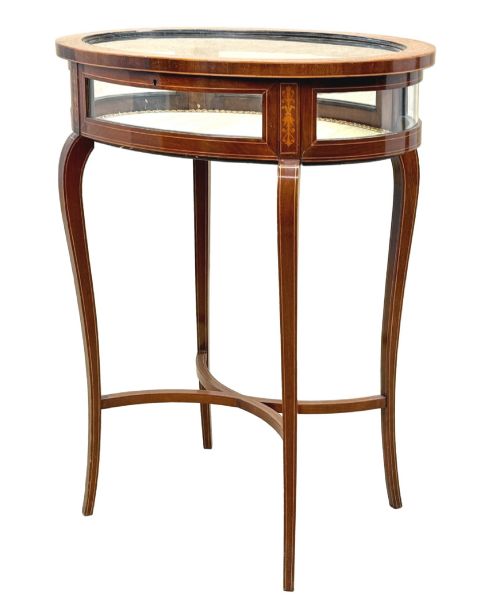
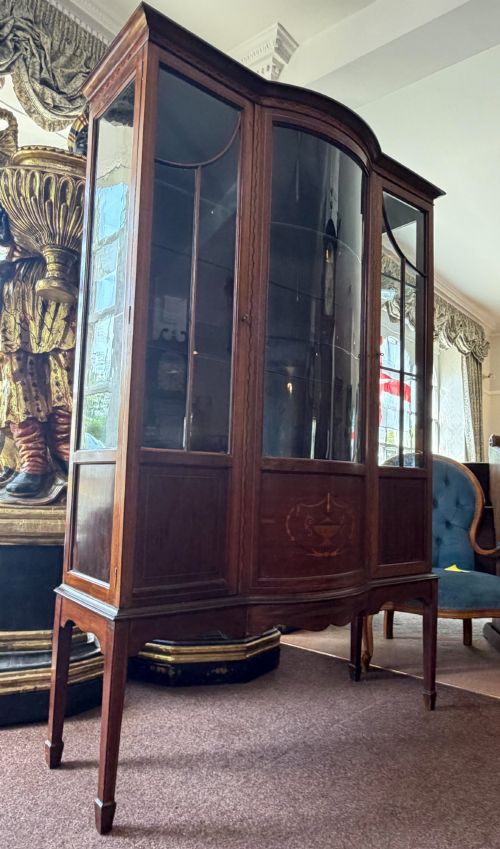
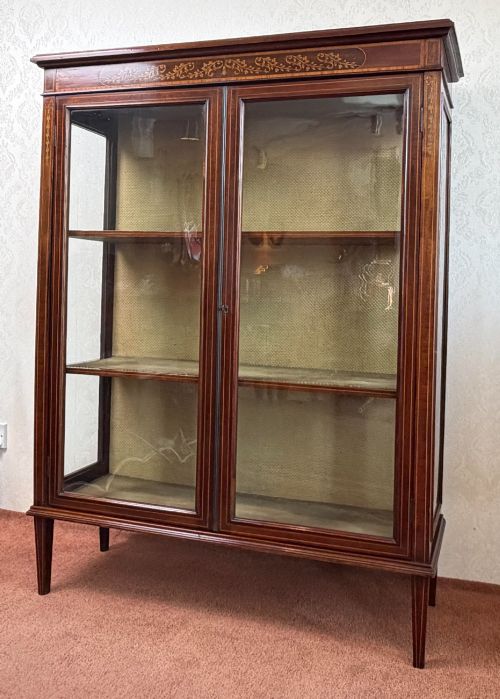
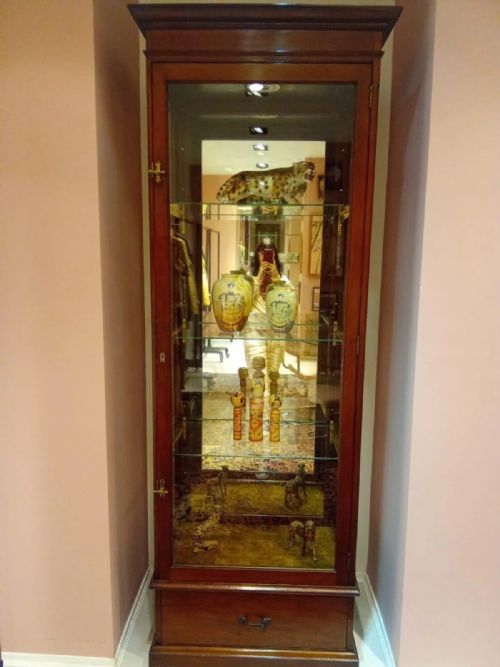
A victorian curio cabinet encompasses freestanding vitrines, wall-mounted display units, table-top cases and low bijouterie tables designed to exhibit small treasures. These pieces emerge primarily from the nineteenth century, spanning from the eighteen-sixties through the Edwardian transition.
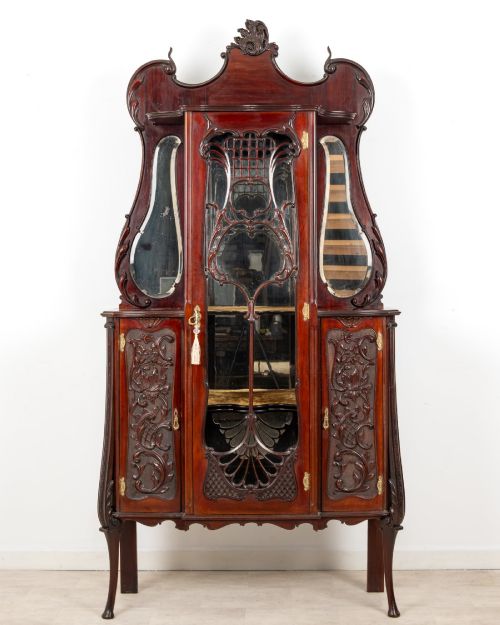
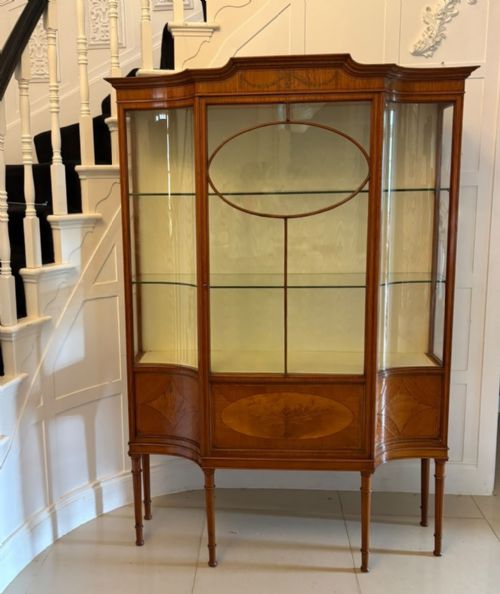
Mahogany forms the structural core of most examples on this page, frequently enriched with satinwood, burr walnut, or kingwood veneers. Makers adapted styles ranging from straightforward bow fronts to French Louis Revival, Sheraton Revival, and occasional Art Nouveau interpretations.
The buyer encounters everything from tall two-door freestanding vitrines to compact miniature cabinets and specialised apothecary boxes. Each format serves the fundamental purpose of framing objects safely behind clear glass panels while protecting them from dust.
How they were made
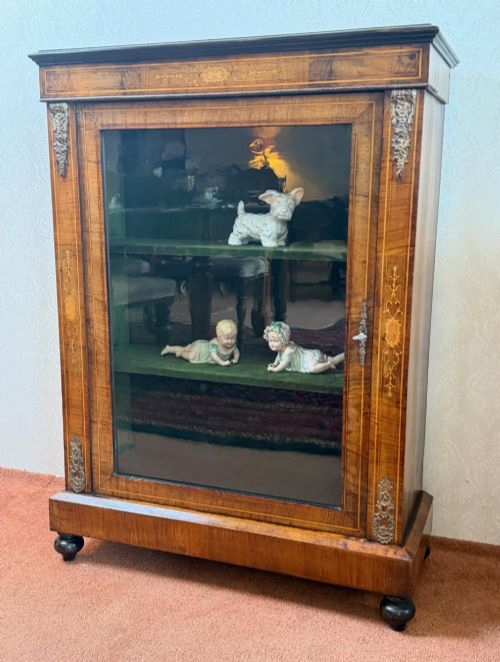
Cabinet makers built carcasses from solid mahogany or walnut, applying fine fruitwood, satinwood, and marquetry inlays to flat and serpentine surfaces. Brass stringing and gilt bronze ormolu mounts frequently accent the door frames, cornices, and feet.
Glass panels are fitted into delicate timber frames or curved bow fronts, while interior shelves rest on adjustable supports. Tables and lower cabinets incorporate velvet or fabric linings to cushion delicate specimens and miniature items.
Surface finishing relied on French polishing to build a warm, reflective sheen across the timber grain. Parcel-gilt and ebonised highlights appear on select metropolitan pieces, contrasting sharply with natural wood tones.
Listings feature mahogany, satinwood, burr walnut, and kingwood timbers alongside brass, ormolu, and velvet upholstery.
What varies in quality
Quality separates standard utilitarian storage from ambitious parlour display through the precision of the timber selection and the complexity of the veneer work. Finer examples display intricate fruitwood inlay, matched burr walnut figures, or continuous serpentine shaping rather than plain flat panels.
The choice of decorative hardware dictates the rank of the piece, with substantial cast ormolu mounts and finely chased brass fittings elevating the cabinet above simple brass hinges. Structural grace, such as genuine bow-front glass or bomb-shaped contours, marks the upper tier of nineteenth-century cabinet making.
Edwards and Roberts·Liberty and Company
The Victorian Curio Cabinet Glossary
- Vitrine
- A glass-fronted display cabinet intended for the exhibition of fine porcelain, curiosities, or decorative objects. These freestanding cases rely heavily on large glass panels to maximise light penetration.
- Bijouterie table
- A low display table featuring a glazed top and a shallow velvet-lined compartment designed for jewellery, medals, and small trinkets. They sit comfortably in drawing rooms as both furniture and display case.
- Ormolu
- Gilt bronze mounted onto furniture frames as decorative feet, corners, or mounts. The technique involves applying a mercury and gold amalgam to bronze before firing.
- Marquetry
- Elaborate decorative wood inlay forming pictorial or geometric patterns across cabinet doors and tabletops. Artisans contrast darker hardwoods with lighter fruitwoods to create depth.
- Serpentine
- A curved line of furniture moulding that undulates inward and outward in a continuous wave. This shape requires considerable skill from the carpenter to fit glass and timber accurately.
Victorian Curio Cabinet: Frequently Asked Questions
Where should I place a victorian curio cabinet?
These cabinets suit drawing rooms, studies, and hallways where natural light can penetrate the glass panels without causing direct sun damage to fragile contents inside.
Freestanding vitrines require firm, level flooring to ensure doors align properly against their frames, while wall-hanging variations need secure fixings into solid masonry or studwork.
How do I clean the interior fabric?
Vacuum velvet or fabric linings gently with a soft brush attachment to remove dust without disturbing older fibres.
Avoid liquid cleaners near antique timber frames to protect the original French polish finish from water spotting.
Can shelves be adjusted for height?
Many surviving examples feature adjustable wooden or glass shelving supported by traditional rack-and-pinion systems or brass brackets.
Check individual cabinet descriptions to confirm whether shelf heights can accommodate taller ceramic or glass objects.
What is the difference between a vitrine and a bijouterie table?
A vitrine stands vertically as a tall display cabinet with side and front glass panels designed to hold multiple tiers of objects.
A bijouterie table functions horizontally at table height, presenting flat collections under a glazed top surface for close inspection.