
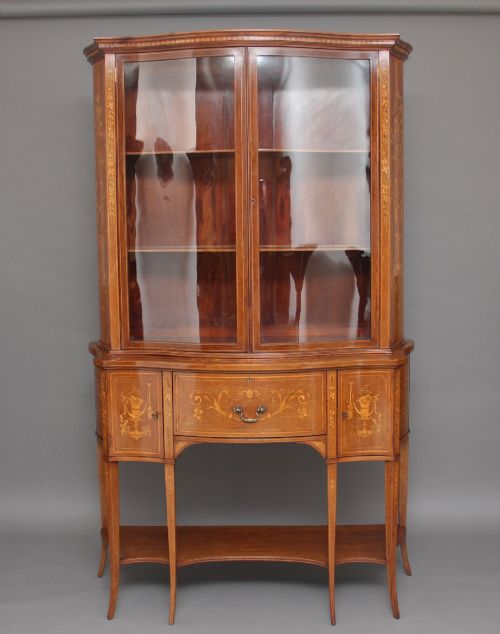
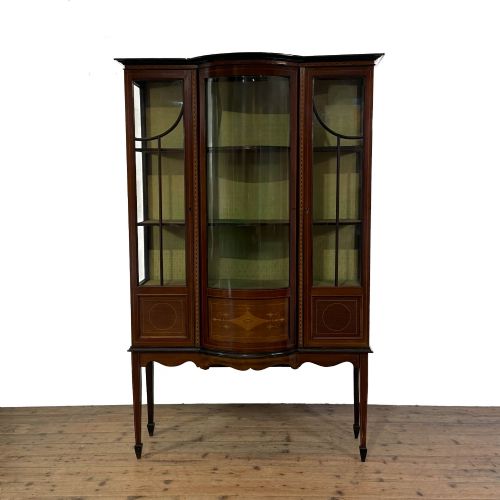


Satinwood Marquetry Vitrine
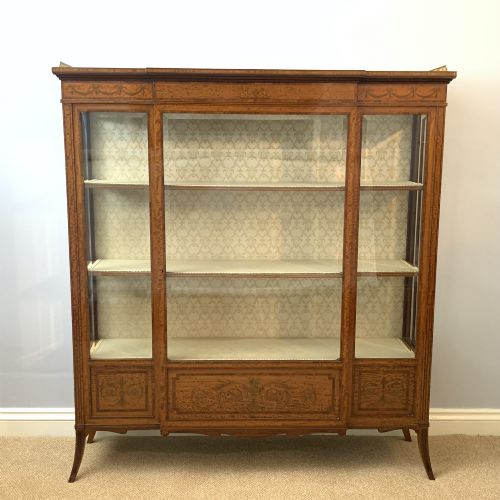
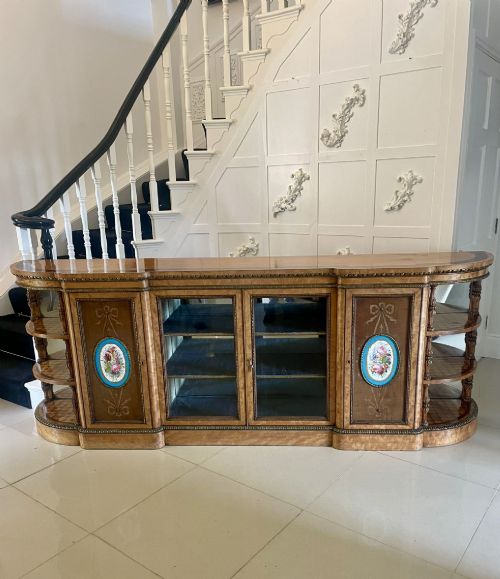
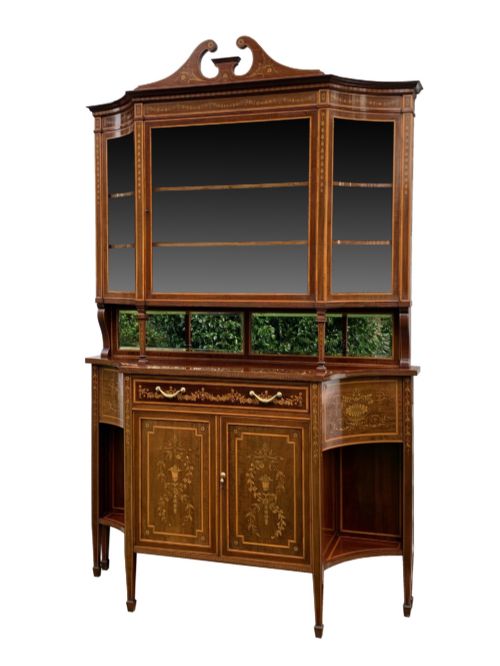
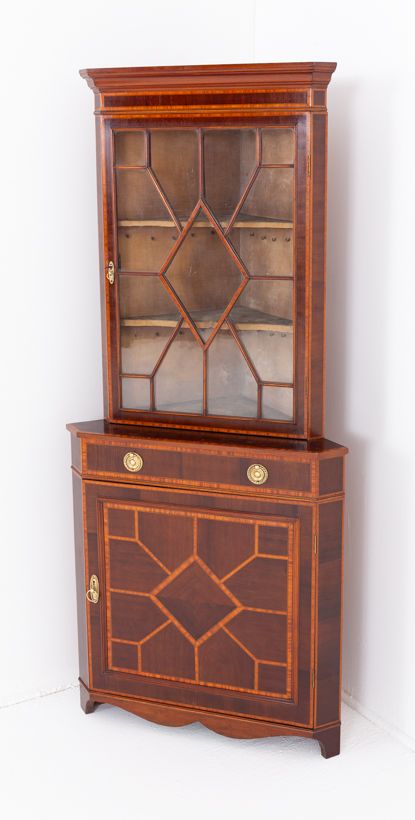
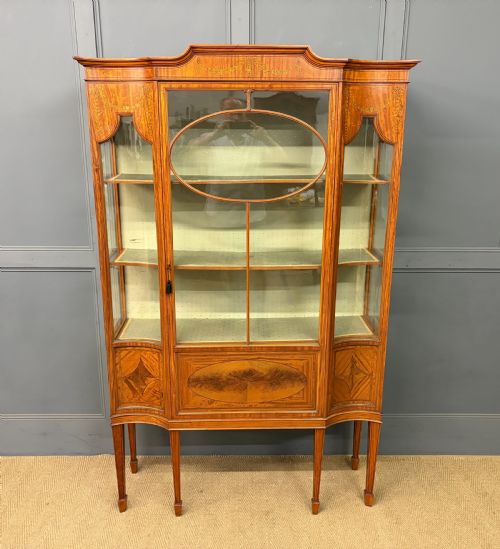
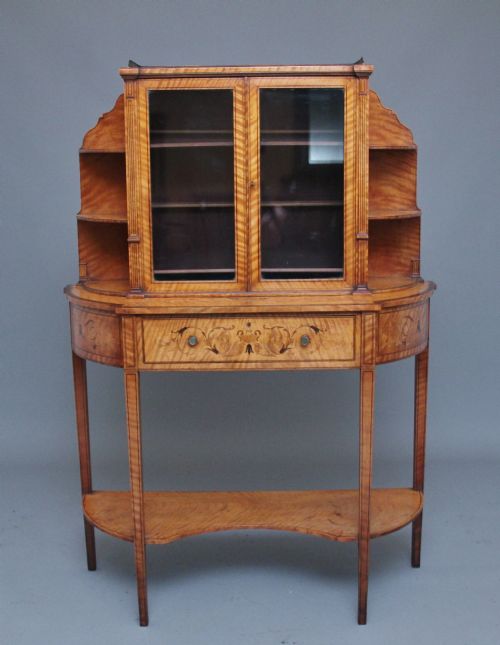
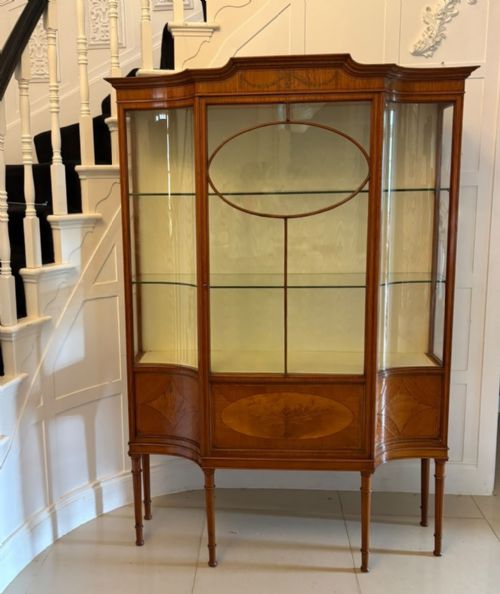
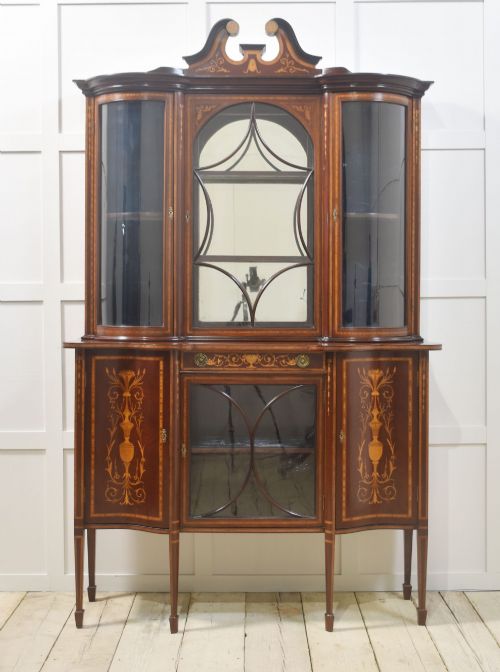
These satinwood marquetry vitrines are glazed display cabinets that showcase treasured objects under glass, combining delicate timbers with precise floral or classical inlays.
Satinwood Marquetry Vitrine
A satinwood marquetry vitrine brings together the light, blonde glow of satinwood timber with detailed wood inlay, appearing most frequently in Edwardian, Victorian and Sheraton Revival forms from the nineteenth and early twentieth centuries. These pieces function primarily as display cabinets, corner cabinets, credenzas and bijouterie tables designed to protect precious items behind glass.
The pieces on this page span several decades, running from mid-nineteenth century Victorian examples through to Edwardian interpretations created around nineteen hundred. Makers during these periods utilised classic revival styles, drawing heavily on French Empire and Louis XVI motifs alongside standard British cabinet-making traditions.
Materials and construction methods
Makers constructed these cabinets using a foundation of mahogany or other secondary timbers, applying smooth satinwood veneers to the visible exterior surfaces. The characteristic inlays consist of contrasting fruitwoods and various tinted veneers assembled by hand to form intricate marquetry patterns.
Structural embellishments frequently include cast or chased ormolu, brass mounts and glazed doors that require precise joinery to house the glass securely. Interior linings often incorporate fabric or mirrored backs designed to reflect light through the displayed objects.
Some bijouterie tables include velvet-lined interior trays designed specifically to prevent delicate pocket watches from rolling around.
Judging the standard of execution
Quality rests heavily on the depth and crispness of the marquetry work, where superior examples display tight joints and subtle shading within the fruitwood inlays rather than stamped or printed substitutes. The selection of the satinwood veneer itself plays a major role, with figuring and grain pattern determining visual impact.
Secondary details such as the weight of the cast ormolu mounts, the precision of the brass hardware and the overall rigidity of the glazed door frames distinguish master cabinet-making workshops from standard production items.
Edwards & Roberts·Maple & Co.·James Hicks
The Satinwood Marquetry Vitrine Glossary
- Satinwood
- A lustrous tropical timber known for its pale yellow colour and natural sheen, used extensively as a veneer on fine nineteenth-century furniture.
- Marquetry
- Decorative patterns formed by fitting together contrasting pieces of wood veneer onto a structural panel, creating pictorial or floral designs.
- Vitrines
- Glass-fronted display cabinets or tables built specifically to exhibit porcelain, silver and small curiosities.
- Ormolu
- Gilt-bronze decorative mounts applied to furniture edges and corners, popular in French-influenced revival designs.
- Bijouterie
- Small glass-topped display tables or cabinets created to hold jewellery and miniature collectibles.
Satinwood Marquetry Vitrine: Frequently Asked Questions
What is a satinwood marquetry vitrine used for?
These cabinets were built for nineteenth-century drawing rooms to exhibit porcelain, silverware and personal collections behind protective glass doors.
The glazed panels and mirrored interiors allowed owners to showcase their prized possessions while keeping dust away from delicate surfaces.
How do I distinguish Victorian from Edwardian pieces?
Victorian examples often display heavier proportions and robust ormolu mounts, sometimes drawing on French Empire or Louis XVI revival styles.
Edwardian pieces generally lean towards lighter Sheraton Revival forms with delicate satinwood veneers and restrained fruitwood inlay.
Where were these display cabinets manufactured?
The majority of these pieces originated in British workshops during the nineteenth and early twentieth centuries, influenced by classical cabinet-making traditions.
Certain items incorporate French design elements reflecting continental taste popular among wealthy patrons of the period.
How should I care for satinwood furniture?
Keep the timber away from direct sunlight and steady heat sources to prevent the delicate satinwood veneer from fading or drying out over time.
Apply gentle, wax-based polishes sparingly and dust the glass panels regularly using a soft, dry cloth.