



Dutch Marquetry Commode
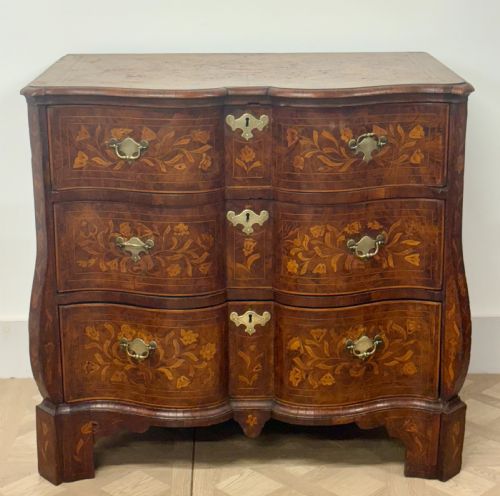
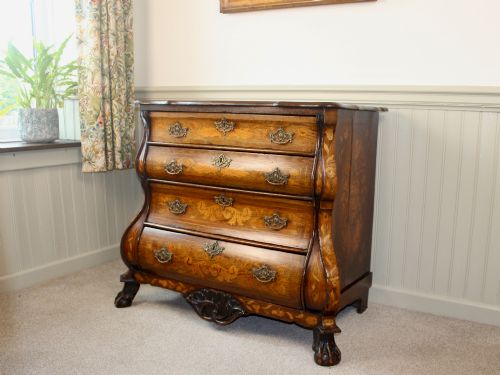
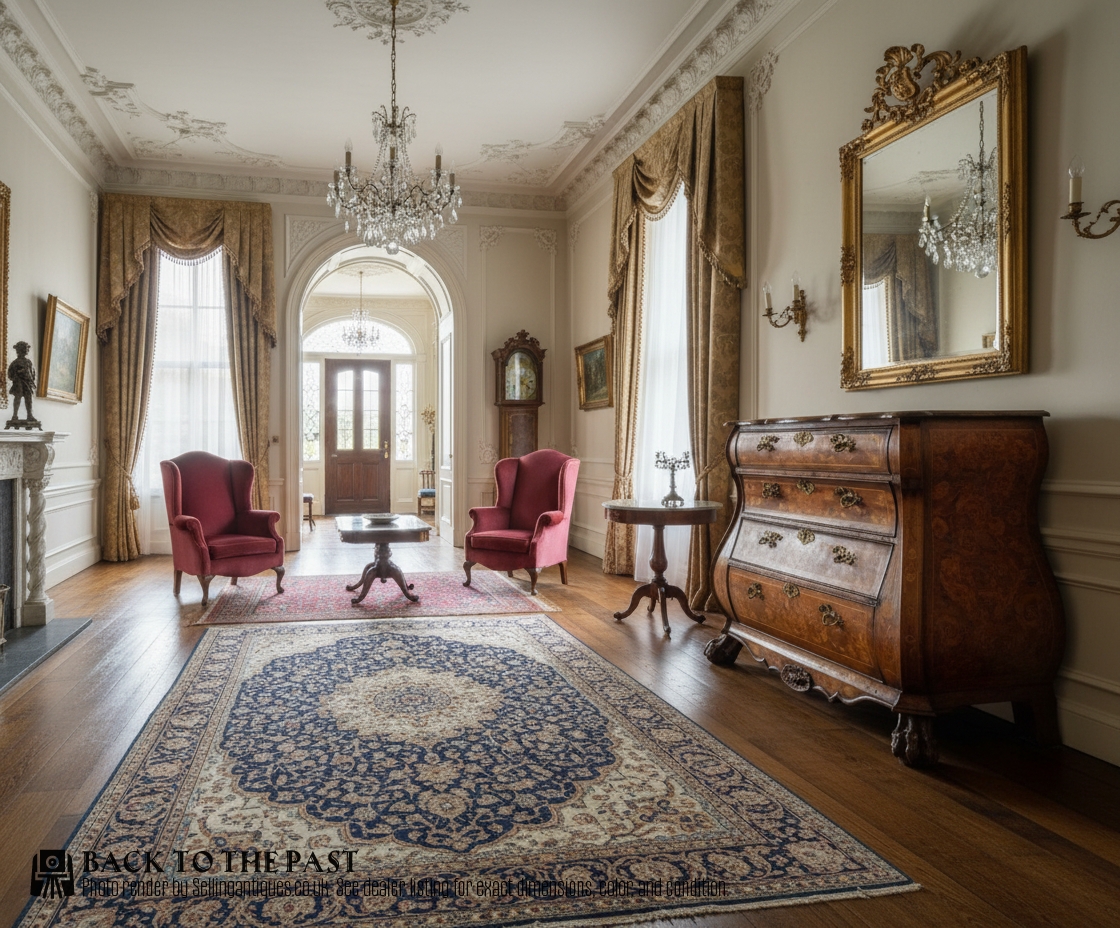
These dutch marquetry commode pieces bring bold floral inlay and sweeping bombe lines into a room, offering generous storage alongside striking cabinet work.
Dutch Marquetry Commode
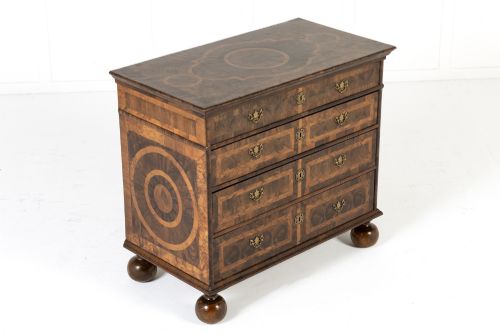
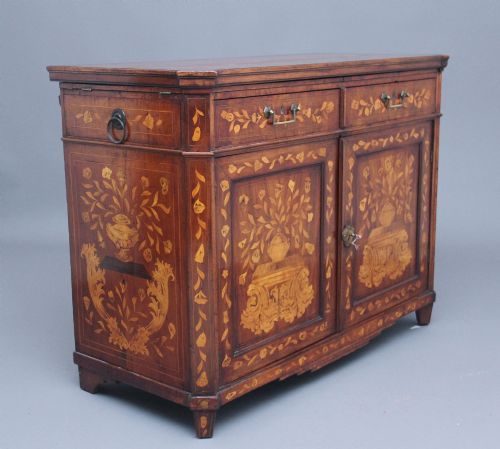
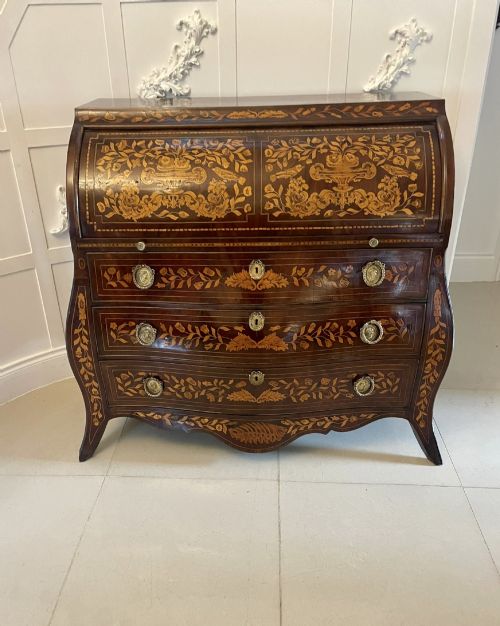
A dutch marquetry commode stands as a statement piece of Continental furniture, typically taking the form of a chest of drawers, bombe chest, or bureau. The examples found here span from the seventeenth century through to the early twentieth century, capturing distinct shifts in continental taste.
You will most frequently meet eighteenth-century chests and commodes showing serpentine or bombe profiles. These pieces combine practical drawer space with elaborate decorative surfaces that reflect the periods of Dutch Baroque, Rococo, and Neoclassical design.
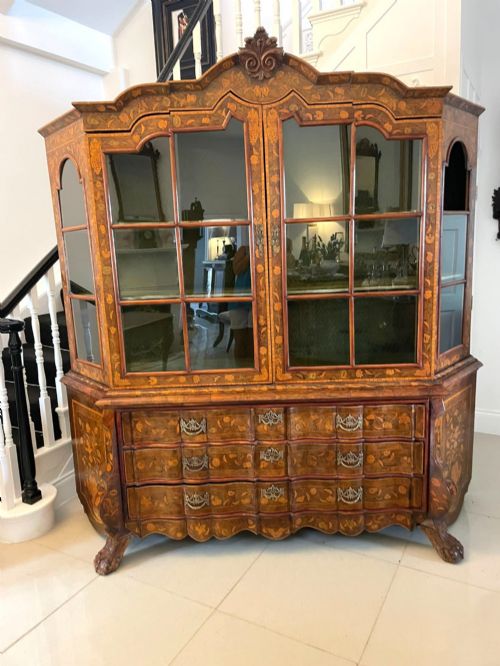
Alongside standard chests, the selection includes related forms such as tallboys, credenzas, and side tables. Walnut, oak, and mahogany provide the structural carcases for these varied designs.
How they were made
Cabinet makers constructed the carcases using solid timbers like oak, walnut, and mahogany, providing a stable foundation for decorative veneers. Drawers and bodies often incorporate secondary woods to build up the complex curved and bombe shapes.
The surface decoration relies on intricate floral marquetry executed in fruitwood and boxwood inlay. Craftsmen carefully pieced together contrasting woods to create detailed urn, floral, and scroll motifs across the drawer fronts and sides.
Dutch Marquetry Commode Retail Price Guide 2026
Typical asking prices for dutch marquetry commode among the pieces listed under this phrase on Sellingantiques today, from the lower quarter to the upper quarter. They describe what is for sale here now, not the wider market.
Cabinet makers hid secret compartments within some bureau interiors, offering a private space for letters and small valuables.
What varies in quality
The sophistication of the marquetry design sets apart the finer examples, with crisper floral details and more naturalistic shading in the fruitwood inlay. Superior pieces display seamless integration of the veneer across curved drawer fronts and bombe angles.
Construction methods and the choice of primary timbers also define the tier of a piece. Robust secondary framing and well-figured walnut or mahogany carcases indicate a higher standard of provincial or urban cabinet making.
The Dutch Marquetry Commode Glossary
- Bombe
- A bulging, outward-curving chest profile characteristic of continental furniture. This swelling shape requires advanced woodworking skill to veneer successfully.
- Marquetry
- The art of forming decorative patterns by fitting together contrasting veneers. Craftsmen utilise fruitwoods and boxwood to build up floral and pictorial scenes.
- Serpentine
- A furniture front curving inward in the centre and outward at the ends. This undulating outline appears frequently on eighteenth-century commodes.
- Tallboy
- A tall chest of drawers made by stacking one chest upon another. These pieces maximise vertical storage space while retaining decorative facades.
Dutch Marquetry Commode: Frequently Asked Questions
How do I clean a marquetry surface?
Dust the surface regularly with a soft, dry cloth to prevent dirt accumulation in the veneer joints. Avoid harsh chemical cleaners or excess moisture, which can loosen the delicate fruitwood inlay.
Apply a traditional beeswax polish sparingly to nourish the timber and protect the old finish. Buff gently with a clean brush to maintain a soft, natural lustre.
Where should I place a bombe chest?
Position the piece against a flat wall in a hallway, bedroom, or living room where its curved profile can be fully appreciated. Keep the furniture away from direct sunlight and heat sources to prevent the wood and veneer from drying out.
Allow sufficient clearance around the drawers so they open smoothly without obstruction. Because these chests have generous proportions, ensure the chosen floor space supports their weight.
How do I tell an 18th-century piece apart?
Examine the construction methods inside the drawers and carcase for hand-cut joinery and signs of age in the timber. Eighteenth-century examples often feature walnut or oak secondary woods with distinct tool marks.
Look at the style of the floral marquetry and the contour of the bombe or serpentine front. Earlier pieces align with Dutch Baroque and Rococo movements, whereas later nineteenth-century versions show modified proportions.
What is the difference between a commode and a chest?
A commode typically refers to a decorative low chest of drawers originating from continental European traditions. These pieces often feature more elaborate shaping and prominent marquetry than standard chests.
Standard chests of drawers can range from tallboys to simpler utility forms produced across various periods. Both serve similar storage functions but carry distinct stylistic expectations in cabinet design.