

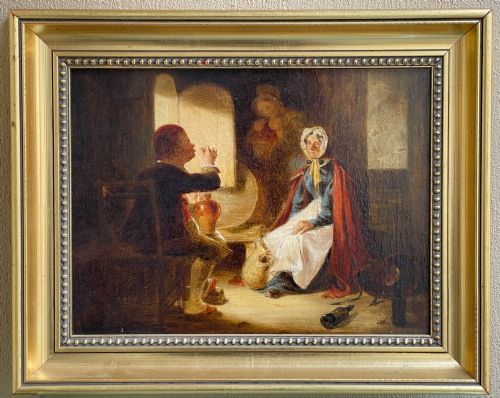


Dutch Interior Oil Painting
A Dutch interior oil painting captures the quiet, domestic drama of domestic life and lively taverns across centuries of European artistry.
Dutch Interior Oil Painting
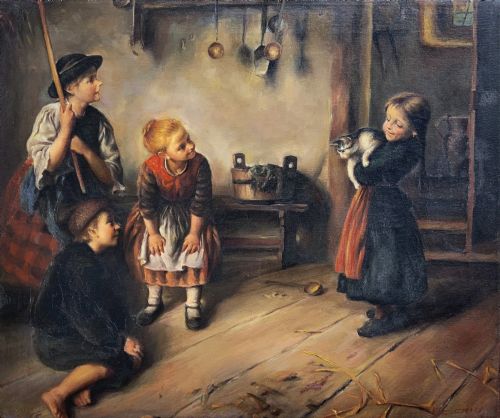
A dutch interior oil painting presents intimate glimpses into domestic spaces, tavern gatherings, and cottage scenes. Buyers encounter works ranging from seventeenth-century Golden Age compositions to nineteenth-century genre paintings and mid-century interpretations.
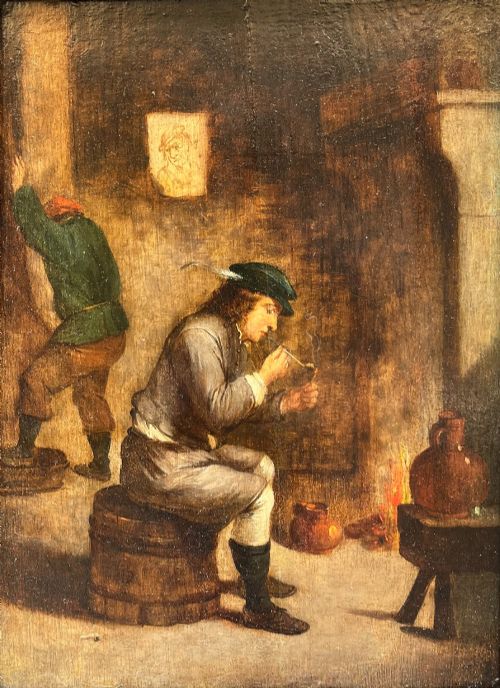
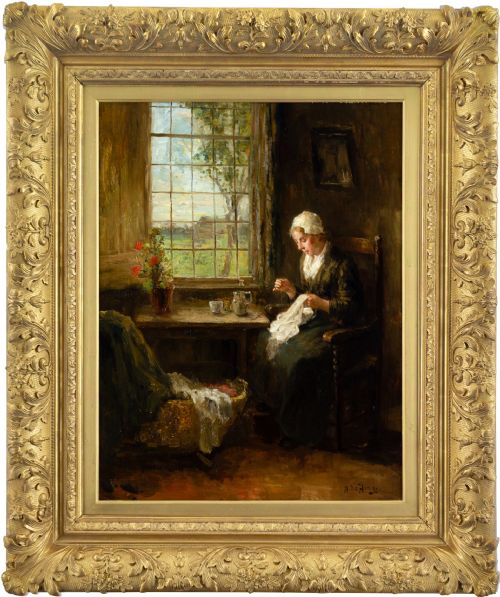
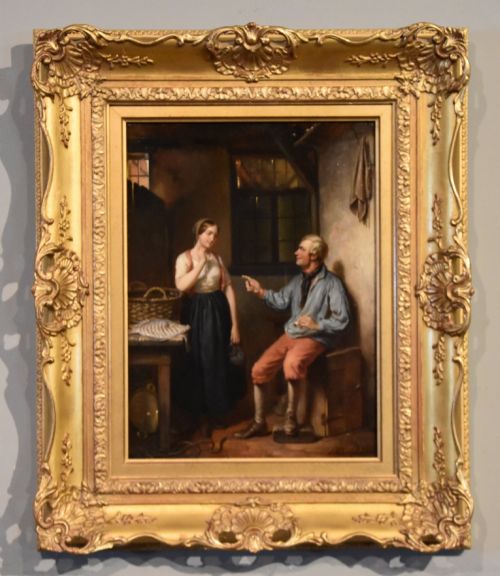
The subjects span quiet hours at the hearth, servants merrymaking in kitchens, peasants reveling, and mothers with children. Many examples reflect the styles of the Dutch Golden Age, Flemish Baroque, and Hague School.
Compositions often arrive framed in period surrounds, utilising wood panels, copper supports, tin, and canvas as foundations for the oil medium.
Materials and methods
Artists built these works using oil paint applied to prepared surfaces including canvas, oak panels, copper, and metal panels. The support materials dictated the texture and preservation of each piece over time.
Frames frequently incorporate giltwood, gesso, and leaf cast details that complement the traditional character of the artwork.
Several tavern scenes prominently feature topers smoking and drinking on barrels.
Assessing quality and execution
Quality rests in the handling of light and shadow, the precision of facial expressions in figures, and the condition of the paint layer upon its panel or canvas. Superior pieces demonstrate confident brushwork that defines fabric textures and interior architecture with clarity.
The relationship between the painting and its original or period frame also influences the overall integrity of the piece.
David Teniers·Bernard De Hoog·Jacob Akkersdijk·Quirijn Van Brekelenkamp·Ludolf de Jongh·Reinier de la Haye·Jan Steen·Cornelis Dusart·Egbert van Heemskerck·Jacob Simon Hendrik Kever
The Dutch Interior Oil Painting Glossary
- Genre painting
- A style depicting scenes from everyday life, typically involving ordinary people in domestic interiors or taverns. These works focus on narrative moments rather than formal portraiture.
- Giltwood
- Wood that has been covered with a thin layer of gold leaf or gold paint. This finish frequently appears on the frames enclosing these oil paintings.
- Oak panel
- A wooden board used as a rigid support for oil painting, common in earlier periods before canvas became dominant. Panels offer a smooth, stable surface for fine detail.
- Oil on copper
- A technique where artists paint directly onto a prepared copper sheet, yielding a luminous surface that preserves fine brushwork exceptionally well.
Dutch Interior Oil Painting: Frequently Asked Questions
What is a dutch interior oil painting?
It is an artwork depicting everyday domestic scenes, tavern gatherings, or cottage interiors, executed in oil paint.
These pieces often reflect historical artistic traditions originating in the Netherlands and Flanders.
What surfaces did artists use?
Creators applied oil paint to traditional supports including canvas, oak panels, copper, and tin.
Each support medium contributes differently to the texture and longevity of the work.
How do I identify different periods?
Dating relies on the style of dress, interior furnishings, and the physical support material, such as early oak panels versus later canvas.
Attributions often point to specific artistic circles or historical movements like the Dutch Golden Age.