




19th Century Dutch School
19th century dutch school paintings capture quiet domestic interiors and luminous landscapes, offering collectors a direct link to a rich artistic heritage.
19th Century Dutch School
When searching for 19th century dutch school, a buyer encounters oil and watercolour paintings depicting landscapes, marine scenes, still lifes, and interior genre studies. The tradition draws heavily on earlier golden age precedents while incorporating the atmospheric effects of the Hague School and 19th Century Realism.
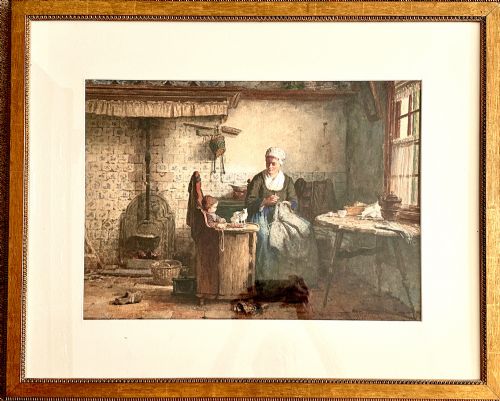
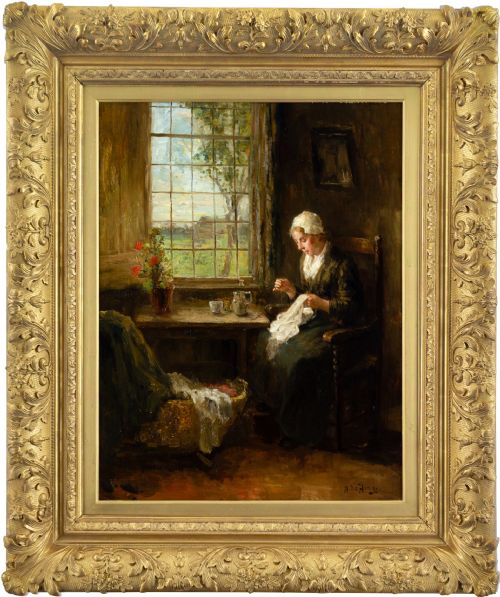
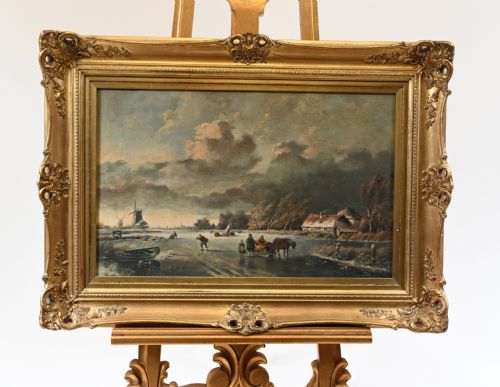
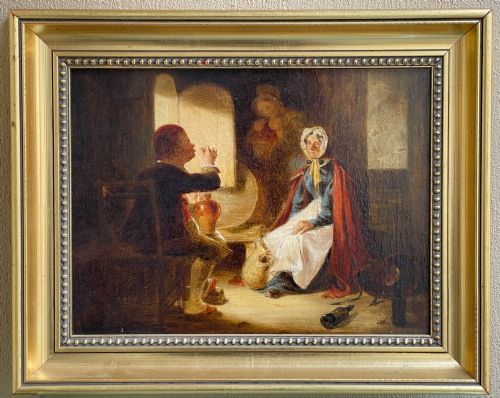
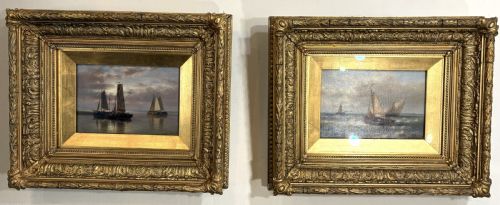
Most pieces on this page take the form of framed oil paintings on canvas, panel, or copper, alongside watercolours. Subjects range from frozen canals with skaters and quiet tavern scenes to pastoral landscapes with cattle and coastal views featuring fishing boats.
Materials and Construction
Artists painted primarily with oil paint on stretched canvas, wood panels, copper sheets, or tin panels, sometimes utilising watercolour on paper. Panels made of oak or metal provided a rigid, smooth support for meticulous detail work in interior scenes and still lifes.
Frames play a significant role in presentation, typically constructed from wood and finished with giltwood or leaf cast plaster details to complement the tonal depth of the canvases.
Listings feature oil on canvas, oil on panel, and watercolour across the 19th century.
Markers of Quality
Quality rests upon the handling of light, brushwork fluidity, and compositional balance within the landscape or interior. Works by listed artists with documented exhibition histories or clear signatures demonstrate superior draughtsmanship compared to anonymous student studies or generalized decorative copies.
The preservation of the original paint layer, minimal craquelure disturbance, and the presence of period-appropriate giltwood frames elevate the desirability and historical integrity of a piece.
Bernard De Hoog·Abraham Hulk I·Pieter Cornelis Dommersen·Cornelis Christian Dommersen·Johannes Philippus Galjaard·Hendrik Willebrord Jansen·Quirijn Van Brekelenkamp·Jozef Israëls·William Raymond Dommersen·Pieter Cornelis Steenhouwer·Louis Smets·Anthonij Anton Mauve·Laurens Plas·E Van Drielst·David Adolph Constant Artz·Jan van Kessel the Elder·Egbert van Heemskerck
The 19th Century Dutch School Glossary
- Genre painting
- A style of painting depicting scenes from everyday life, typically ordinary people in work or domestic settings. These works often show tavern interiors, street scenes, or quiet household moments.
- Hague School
- A group of 19th-century Dutch artists working in The Hague who were influenced by the French Barbizon school. They are known for their sombre tones, atmospheric light, and naturalistic landscapes.
- Oil on panel
- A painting technique where oil paint is applied to a rigid wooden or metal support rather than canvas. Oak panels were frequently used in traditional Dutch practice to achieve fine detail.
- Still life
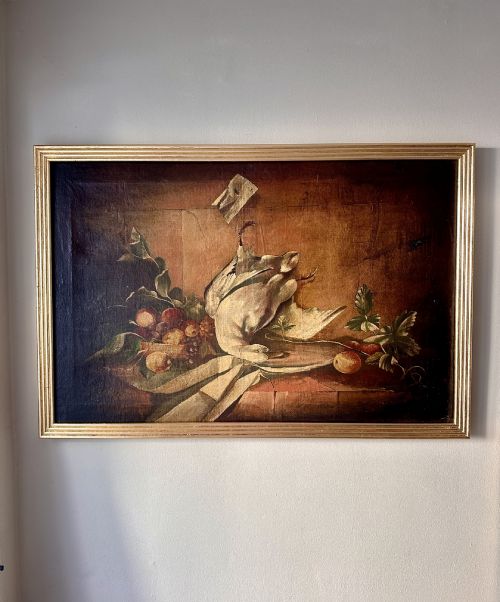
- An artwork depicting mostly inanimate subject matter, typically commonplace objects which may be either natural or man-made. Examples in this tradition often feature dead game, fruit, oysters, and flowers.
- Giltwood
- Wood that has been treated with a thin layer of gold leaf or gold paint for decorative effect. Frames finished in this manner frequently accompany period paintings.
19th Century Dutch School: Frequently Asked Questions
What subjects appear most often?
The selections predominantly feature pastoral landscapes, winter scenes with frozen canals, coastal marine views with fishing boats, and domestic tavern interiors. Artists frequently returned to these regional motifs.
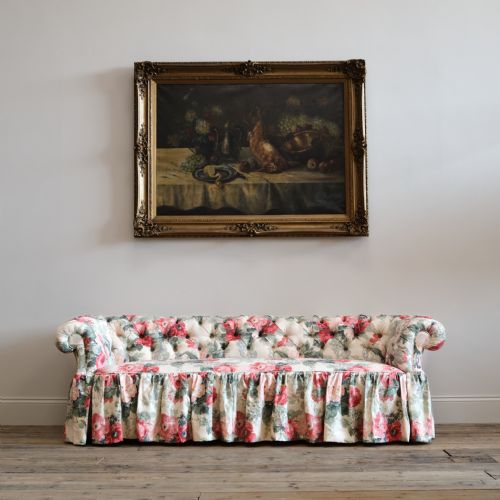
Still life compositions involving game, fruit, and flowers also recur across the selection, reflecting the enduring influence of earlier Dutch traditions.
How do I identify the period?
Dating relies on stylistic markers such as the loose brushwork characteristic of the later Hague School versus the tighter realism of early century works. Canvas preparation, framing styles, and stretcher construction provide additional physical clues.
Signatures, dates inscribed on the reverse, and artist biographies help narrow the window of creation, particularly when dealing with listed nineteenth-century painters.
Are these paintings signed?
Many examples feature legible signatures, monograms, or inscriptions on the front or verso, while others remain attributed based on style and technique. Indistinct signatures are common in older works.
Attributions to the manner or circle of a well-known painter often appear when a work closely mirrors a master's documented output without bearing a definitive signature.
What supports were used?
Artists utilised a variety of supports including traditional woven canvas, wooden panels, and metal sheets such as copper or tin. Each material offered a different surface texture for the oil paint.
Panel paintings on wood or metal often allowed for finer detail work, whereas larger landscapes were typically executed on canvas.
How should I display them?
These works suit traditional interiors, often paired with period furnishings and adequate wall lighting to highlight the giltwood frames. Maintaining stable humidity and temperature protects the oil paint and wood supports.
Keeping paintings away from direct sunlight prevents the fading of pigments and safeguards the integrity of the canvas or panel.