
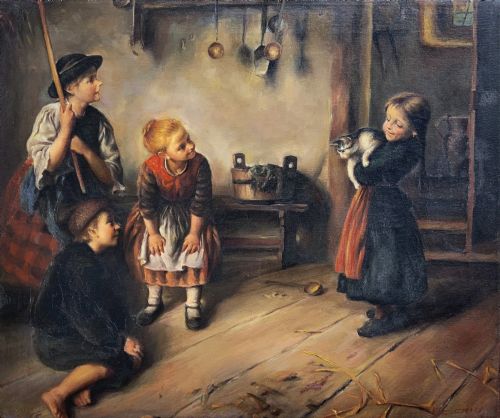
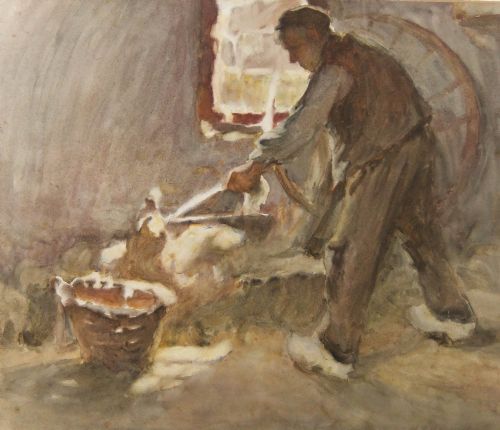
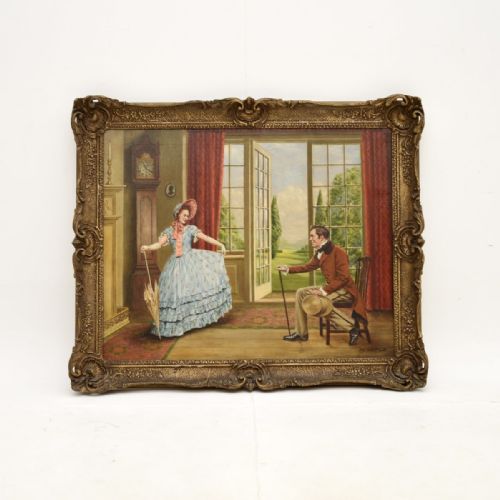
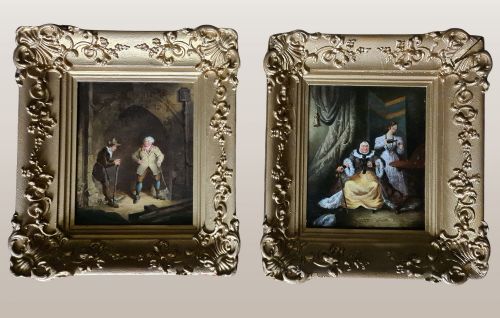
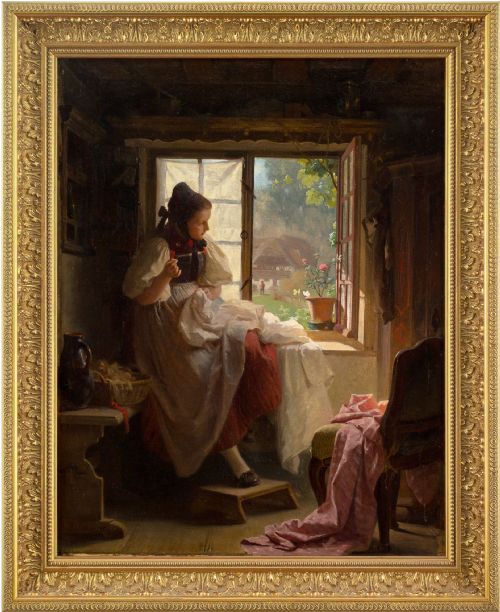
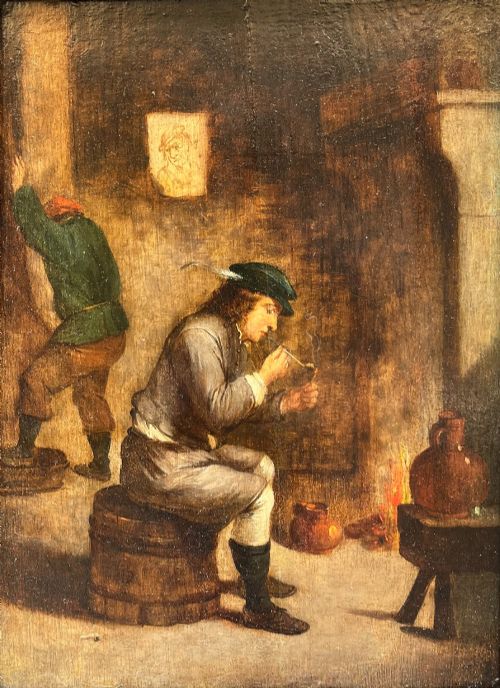
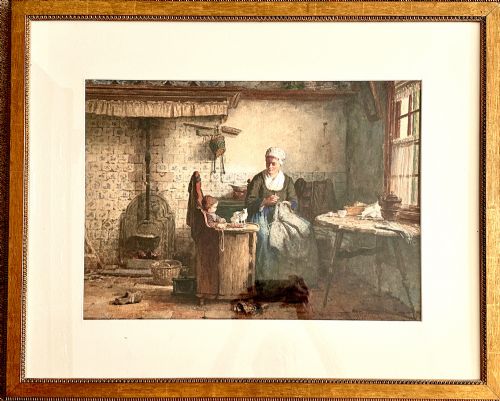
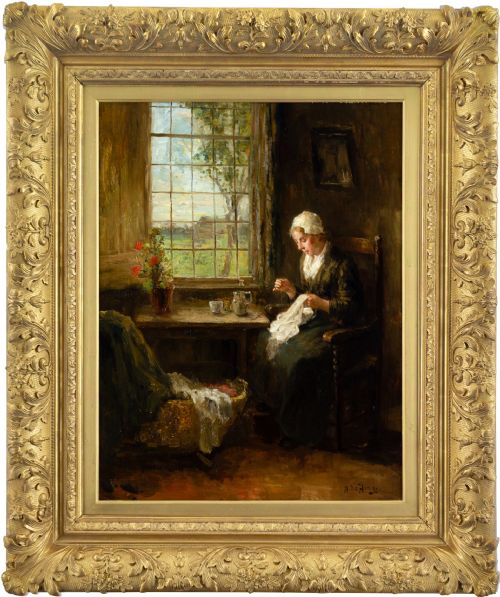

Interior Genre Scene Painting
These pieces capture daily life within domestic and social rooms, bringing domestic narratives and human character into the home through historical works.
Interior Genre Scene Painting
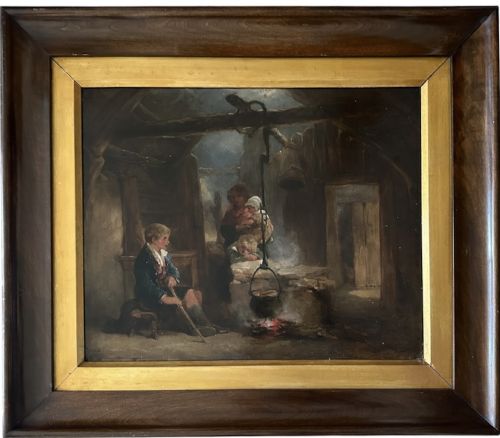
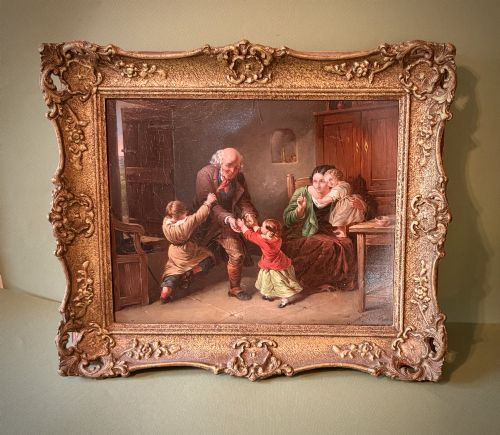
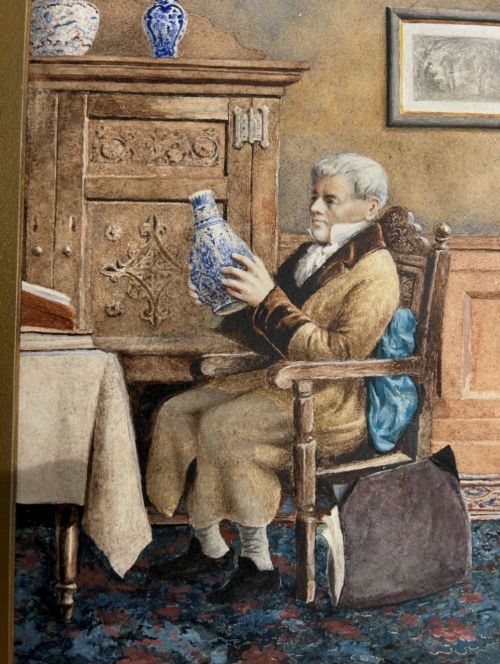
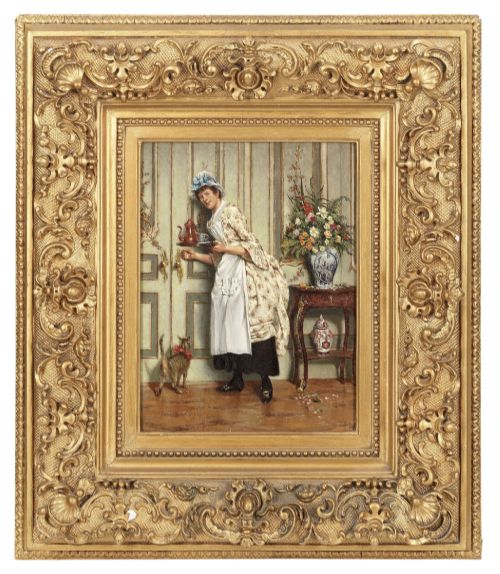
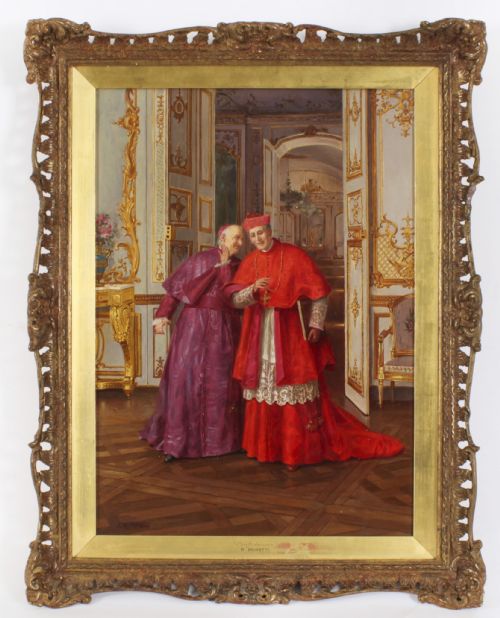
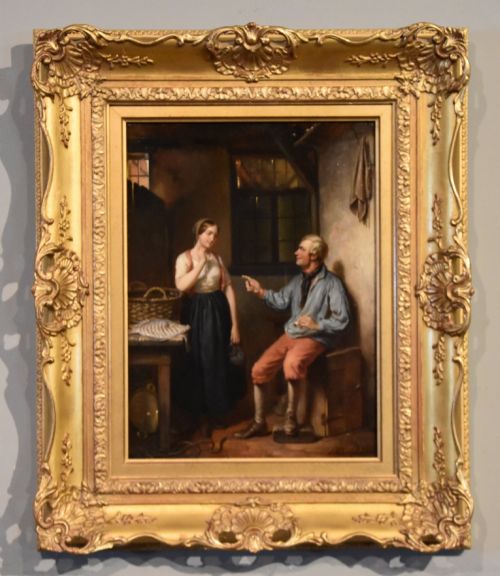
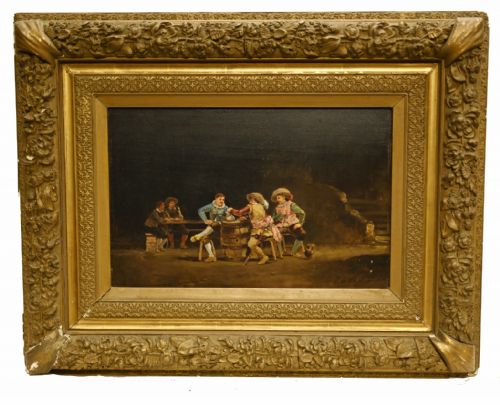
An interior genre scene painting depicts everyday domestic activities, cottage interiors, tavern gatherings, and social moments set within rooms rather than landscapes. A buyer searching this phrase encounters works ranging from intimate watercolours of tea times and fireside rests to larger oil on canvas portraits of figures in country houses and period chambers.
The pieces on this page emerge predominantly from the nineteenth century, alongside representations of Dutch school traditions and later works reaching into the mid-twentieth century. Common subjects involve domestic labour, children playing, gentlemen examining objects, and quiet domestic hours captured by artists working across Britain and continental Europe.
Materials and techniques
Makers utilised oil paint on canvas, wood panels, and occasional board, applying pigment to build figures and architectural interiors with careful attention to light and shadow. Watercolour paintings on paper also appear frequently, often preserved behind glass within framed artwork.
Frames play a structural and aesthetic role in these works, constructed from gesso and wood, frequently finished with gold leaf or giltwood to complement the tonal depth of the paint surface.
Listings feature works spanning the nineteenth century, alongside eighteenth-century panels and mid-twentieth-century interpretations.
Distinctions in quality
Quality rests upon the artist's ability to render human expression, narrative clarity, and the play of light across interior surfaces, such as chiaroscuro effects in tavern scenes. Works by established painters exhibit tighter control over perspective, fabric textures, and anatomical proportions compared to follower pieces or studio copies.
The handling of secondary elements, from furnishings to distant architectural details, separates accomplished compositions from simpler decorative works. Original framing materials like period giltwood also contribute to the integrity of the piece.
Stephen Samuel Lewin·Henry Silkstone Hopwood·Alfred Lyndon Grace·Max Kaltenmoser·David Teniers The Younger·Hendrik Valkenberg·Bernard De Hoog·Renato Moretti·Jacob Akkersdijk·Harry Brooker·Alexander Rosell·Benjamin Eugene Fichel·Haynes King·James Kyd·Robert Alexander Hillingford·George Smith·Edwin Hughes·Thomas Couture·Hans Temple·Théophile Emmanuel Duverger·Henry Spernon Tozer
The Interior Genre Scene Painting Glossary
- Genre painting
- Depiction of aspects of everyday life by depicting ordinary people engaged in common activities. These scenes form the core of the works grouped under this heading.
- Chiaroscuro
- The use of strong contrasts between light and dark, usually bold contrasts affecting a whole composition. Painters utilise this technique to create dramatic illumination within interior spaces.
- Giltwood
- Wood that has been treated with gold leaf or a gold-coloured finish. This material frequently frames nineteenth-century oil paintings and watercolours.
- Gesso
- A plaster-like mixture used as a base for moulding or painting on frames. It supports the decorative gilding surrounding many canvas works.
- Panel painting
- A painting executed on a flat panel of wood rather than canvas. Oak and other sturdy woods serve as the support for earlier domestic scenes.
Interior Genre Scene Painting: Frequently Asked Questions
What defines an interior genre scene?
An interior genre scene portrays everyday people in domestic, tavern, or institutional rooms engaged in ordinary pursuits like sewing, smoking, or taking tea.
Unlike portraiture that focuses on specific sitters or history painting that records grand events, these works capture the human stories of daily life.
How do I care for these paintings?
Protect oil paintings and watercolours from direct sunlight and steady moisture fluctuations to prevent pigment fading and canvas or paper degradation.
Keep the works away from direct heat sources and use a soft, dry cloth or brush to gently remove dust from the canvas and frame.
Are these works original period pieces?
The listings include original nineteenth-century works and watercolours alongside period panels and later interpretations in historical manners.
Signatures, artist biographies, and framing materials often help establish the historical context of each individual piece.
What is the difference between canvas and panel works?
Canvas paintings utilise stretched fabric primed to receive oil paint, allowing for larger compositions and textured brushwork.
Panel works employ solid wood supports, such as oak, providing a rigid surface often associated with earlier domestic interior traditions.