


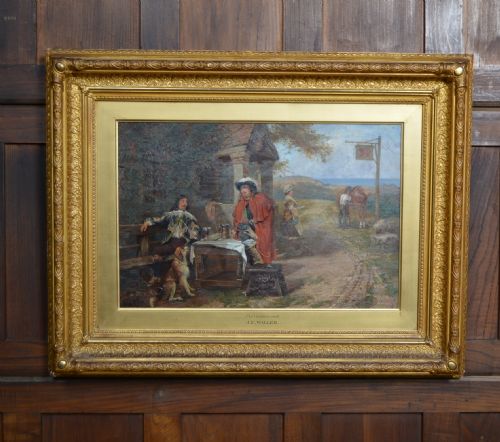


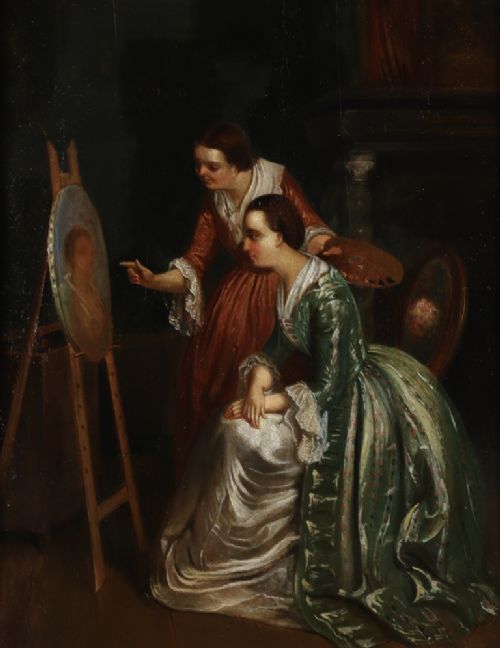
Classical Genre Scene Painting
These classical genre scene painting works capture domestic and historical narratives, offering an intimate window into past lives.
Classical Genre Scene Painting
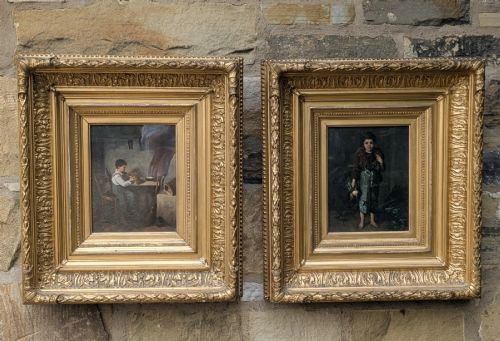
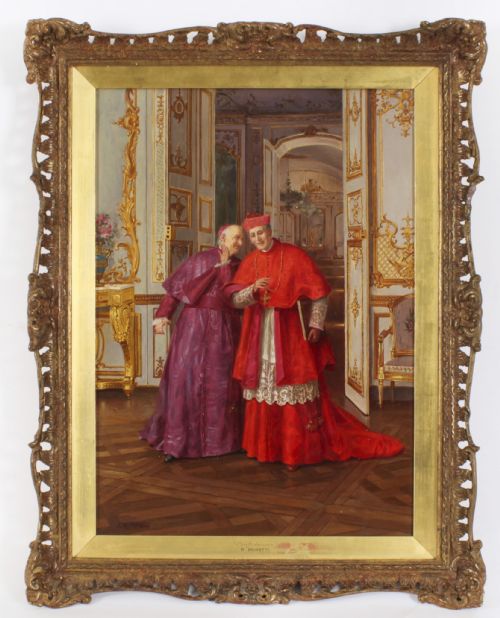
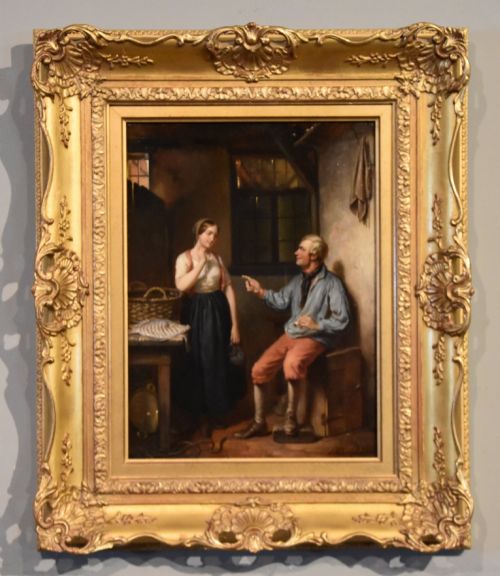
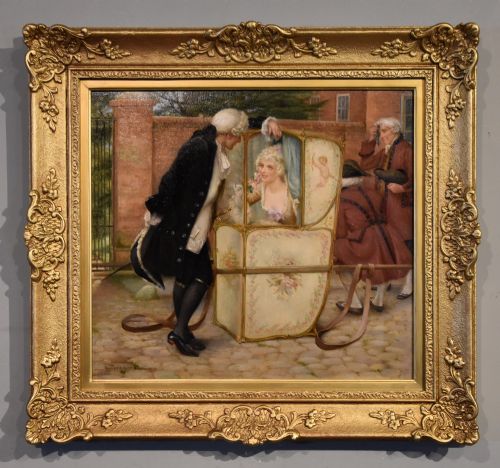
A classical genre scene painting depicts everyday life, historical moments, or intimate interiors rather than grand mythological or religious subjects. You encounter these works rendered in oil on canvas, on board, and as watercolours or chrystoleums. The pieces span periods from the nineteenth century into the twentieth century, reflecting academic realism and rococo revival styles.
Most examples on this page date from the nineteenth century, including works attributed to schools following Dutch Golden Age traditions. Subjects range from domestic tea scenes and musical recitals to historical courtiers playing chess and figures in interiors. These paintings vary from modest watercolours to large-scale Royal Academy historical genre works.
How they were made
Artists applied oil paint to stretched canvas, wooden panels, or prepared boards, often employing fine brushwork to define fabrics, expressions, and architectural interiors. Watercolour works on paper utilise fluid pigments to achieve lighter atmospheric effects in garden and interior settings. Many nineteenth-century and early twentieth-century examples retain original giltwood or gilt wood frames that complement the composition.
Techniques draw on academic realism and Dutch Golden Age style, focusing on light falling across figures and domestic objects. Some pieces adopt the manner of earlier masters such as David Teniers or Jan Steen, while others reflect Parisian academic training. Support materials range from canvas and board to paper and specialised photographic bases finished by hand in chrystoleums.
Listings feature oil on canvas, wood, giltwood, and paper across nineteenth-century and early twentieth-century periods.
What varies in quality
The degree of facial expression, hand articulation, and fabric texture distinguishes a masterwork from a standard studio piece. Superior compositions handle light and shadow with deep contrast, drawing the eye naturally to the narrative centre of the room. Weaker examples rely on formulaic gestures and flat background washes that lack individual character.
The handling of architectural perspective and interior details dictates the overall visual depth of the scene. Higher quality works integrate the figures seamlessly into their surroundings, whether a stately home or a Dutch interior. Framing also plays a role, as period giltwood frames matching the age of the painting enhance the presentation.
Renato Moretti·Jacob Akkersdijk·Delapoer Downing·Martinetti·Arturo Orselli·Joaquín Luque y Roselló·Paul Viry·Willem Johannes Martens·J. E. Waller·Jules Girardet·Robert Alexander Hillingford·Schweninger·Pierre-Louis Bouchard
The Classical Genre Scene Painting Glossary
- Genre painting
- A branch of art depicting scenes from everyday life, typically involving ordinary people in domestic or social settings. These works focus on narrative rather than portraiture or landscape.
- Academic realism
- A style of painting produced under the influence of European academies of art, emphasising precise drawing, smooth finishes, and historical accuracy. This approach governed much nineteenth-century Salon painting.
- Chrystoleum
- A technique for applying watercolour to the reverse side of a convex glass plate placed over a photographic print. The coloured image is then mounted and framed for display.
- Giltwood
- Wood that has been coated with a thin layer of gold leaf or gold paint. Frames utilising this finish were standard for fine art paintings throughout the nineteenth century.
Classical Genre Scene Painting: Frequently Asked Questions
What is a classical genre scene painting?
It is an artwork portraying daily life, historical moments, or interior narratives rather than portraits or landscapes. These pieces focus on human interaction within domestic, musical, or social environments.
Subjects range from tea ceremonies and music recitals to courtiers playing chess and historical elopements. The style derives heavily from nineteenth-century academic training and Dutch Golden Age traditions.
How do I date a 19th-century genre painting?
Dating relies on the artist's recorded working period, framing styles, and the specific material support utilised. Canvases, boards, and watercolours often carry signatures, exhibition stamps, or inscriptions on the reverse.
Stylistic cues such as rococo revival clothing or academic realism techniques also point to specific decades between eighteen-fifty and nineteen-twenty. Comparing the handling of light and subject matter to known dated works helps narrow the timeline.
Where should I hang an oil painting?
Select an interior wall away from direct sunlight and excessive temperature fluctuations to protect the canvas and pigment. Stable humidity prevents the wood or canvas support from warping over time.
Pairing the painting with appropriate lighting allows the giltwood frame and brushwork to stand out. Ensure the wall structure securely supports the weight of framed oil paintings.
What is the difference between oil and watercolour genre scenes?
Oil paintings utilise pigment suspended in drying oil applied to canvas or board, allowing for rich colour depth and layered textures. Watercolours use water-soluble pigments on paper, producing a luminous and immediate effect.
Oil works generally require protective varnishes and heavier frames, while watercolours need glazing to shield the paper from environmental moisture and dust.